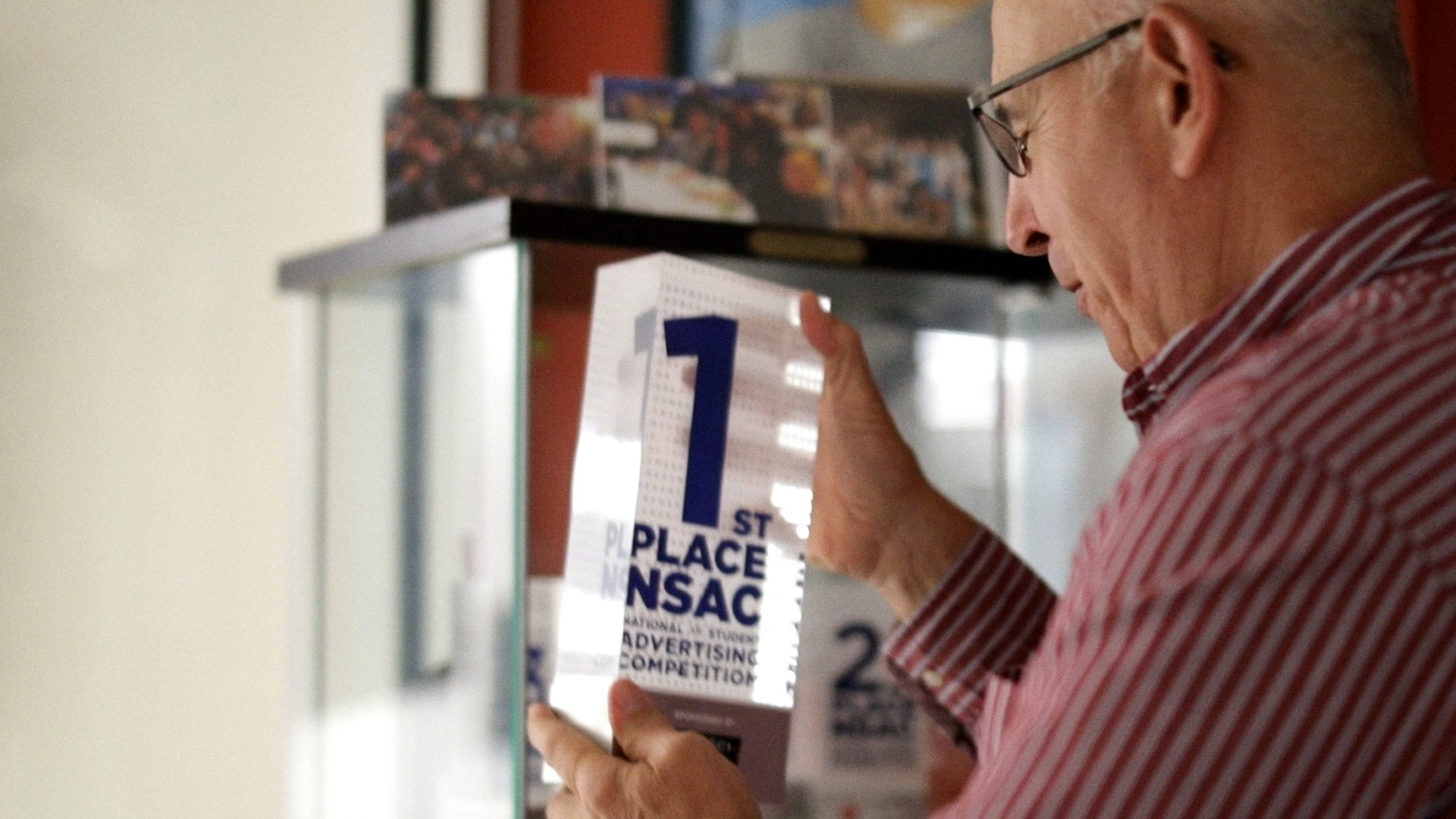
To longtime colleagues he is known as “The Legend.” In a group of decision makers concerned with finance and operations, Richard Kosh, Ph.D was often the lone voice of academics.
“A contrarian with courage and conviction who provided a lot of valuable input,” says Chairman of the Board John Yena ’06 Hon. Dick Kosh and Jack Yena first met in grade school in West Warwick, R.I. When their paths crossed later in the early 1970s, Yena was helping run Johnson & Wales and offered him a part-time job teaching anatomy and physiology.“I didn’t think he was going to be the right kind of fit. He had his Ph.D. in biology and we were a career-oriented school.” says Yena. “He proved early on he understood the Johnson & Wales position in higher eduation.” In his 35 years at JWU, Kosh became the catalyst that would elevate a business college to an accredited academic institution of global renown.From teaching nights, he moved to supervising programs for veterans, with as many as 5,000 in attendance — GIs returning from Vietnam. Kosh became academic administrator, hiring and evaluating hundreds of instructors and proctors. With the retirement of legendary Dean Cecelia Ranallo, Kosh took her place. When he’d arrived, the institution was a small business college housed in two or three buildings downtown. As the school grew, Kosh’s penchant for quality brought substance to a basic curriculum.When Johnson & Wales reached university status in 1980s, Kosh was its first dean. He found a mentor in culinary Dean Robert Nograd ’99 Hon. who introduced him to the food service industry. In return, Kosh helped move the department to what Nograd calls “a more democratic” approach that set the framework for teaching universitywide. Firm but fair, Kosh championed the needs of faculty in a tug of war with bottom-line focused management. On no front was his voice more solitary than as “the agitator for accreditation,” says Yena, then a vocal opponent.JWU lacked regional accreditation, the measure of a university. Problems arose transferring credits and attracting international applicants. Arguing on its rewards for students, Kosh prevailed and spearheaded the process, earning initial five-year accreditation from the New England Association of Schools and Colleges in 1993. When JWU opened its North Miami Campus, he stepped in as vice president to Donald McGregor, J.D. and was instrumental in shaping the university’s second full-service campus, putting systems and people in place and “making the tough calls,” says McGregor. He repeated the exercise as the university grew and the first international campus in Sweden opened gateways for students and sent faculty into the international arena.Over the years, Kosh’s teacher’s perspective and love of people earned the respect and trust to move an educational institution forward. When the time came to foster next-generation leaders from within, his involvement in Senior Management Academy helped produce a cadre of future deans, vice presidents and administrators, and a collaborative culture that crossed campuses.“Dr. Kosh’s name is synonymous with academics at Johnson & Wales,” says Provost Designate Veera Gaul ’91 M.S., his admiring successor. “Because of his tenacity, we have options today that we did not have as an institution 10 or 15 or 20 years ago.”Now as Kosh sees the university through its third NEASC accreditation, he is ready to retire. A father of sons, Steven and Jason and grandfather of three, he is still a hometown boy, living in West Warwick with wife, Inez, a JWU computer lab supervisor for 20 years. It is his balance as a work-hard, play-hard, consummate professional that most impresses his friends. “He’s a fox-hole buddy who knows how to enjoy life,” says Yena, part of his well-heeled band of compatriots.“At the end of the day it wasn’t about me,” says Kosh, “I always wore my Johnson & Wales hat.” And for a reason. “Not every student makes the grade, but those that do, when you see them walk across the stage as graduates, you see you’ve helped to polish the apple and you share their collective success,” Kosh says. “That’s what education is all about.”