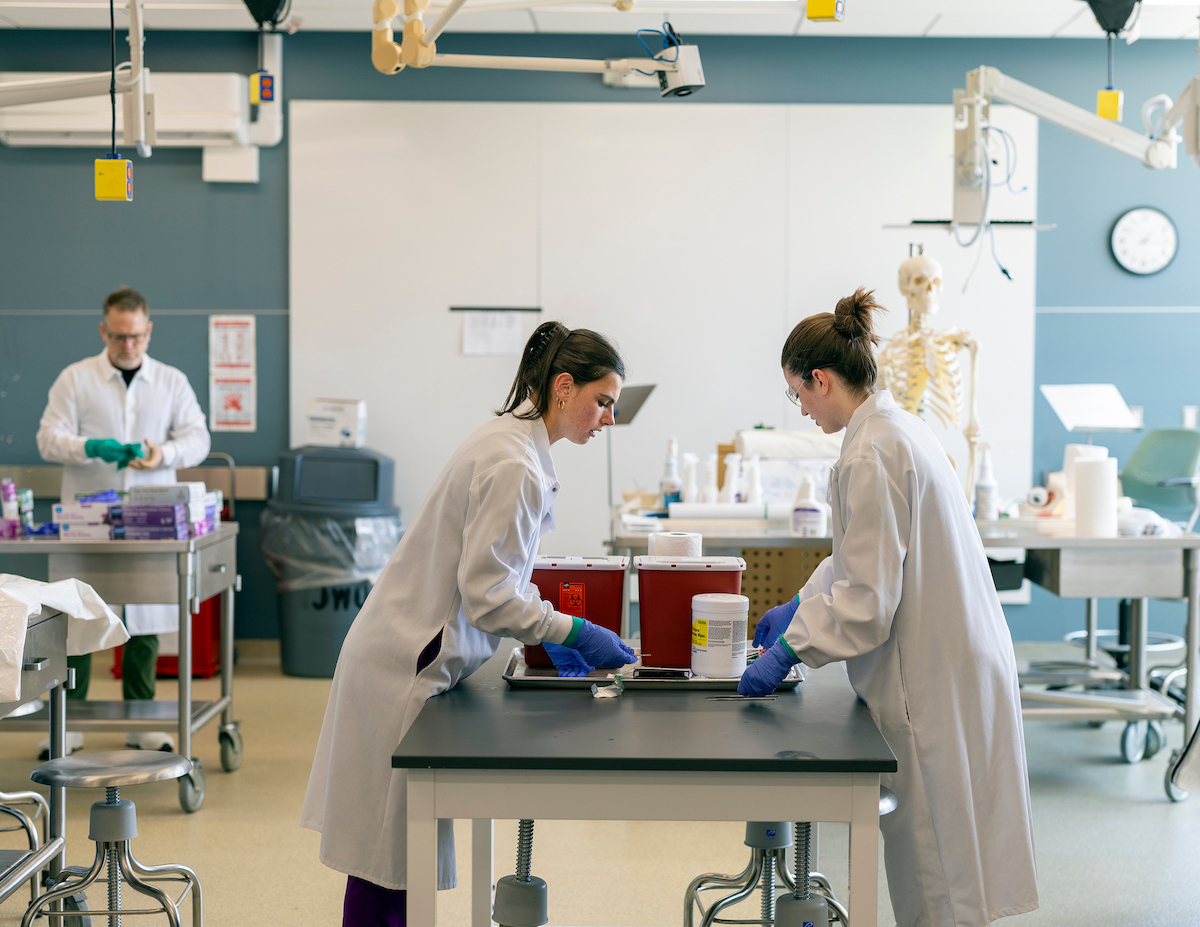
JWU’s PA Studies program is housed in the LEED-certified Center for Physician Assistant Studies, an 18,000-square-foot facility dedicated to the health sciences and located in Providence’s Knowledge District.
Developing the skills to become a physician assistant (PA) takes hard work, dedication and an educational facility that meets the complex needs of this increasingly sophisticated field.
The Center is a fully-customized space that contains everything our students need to strengthen their skills, collaborate with their peers and grow into their profession as practitioners.
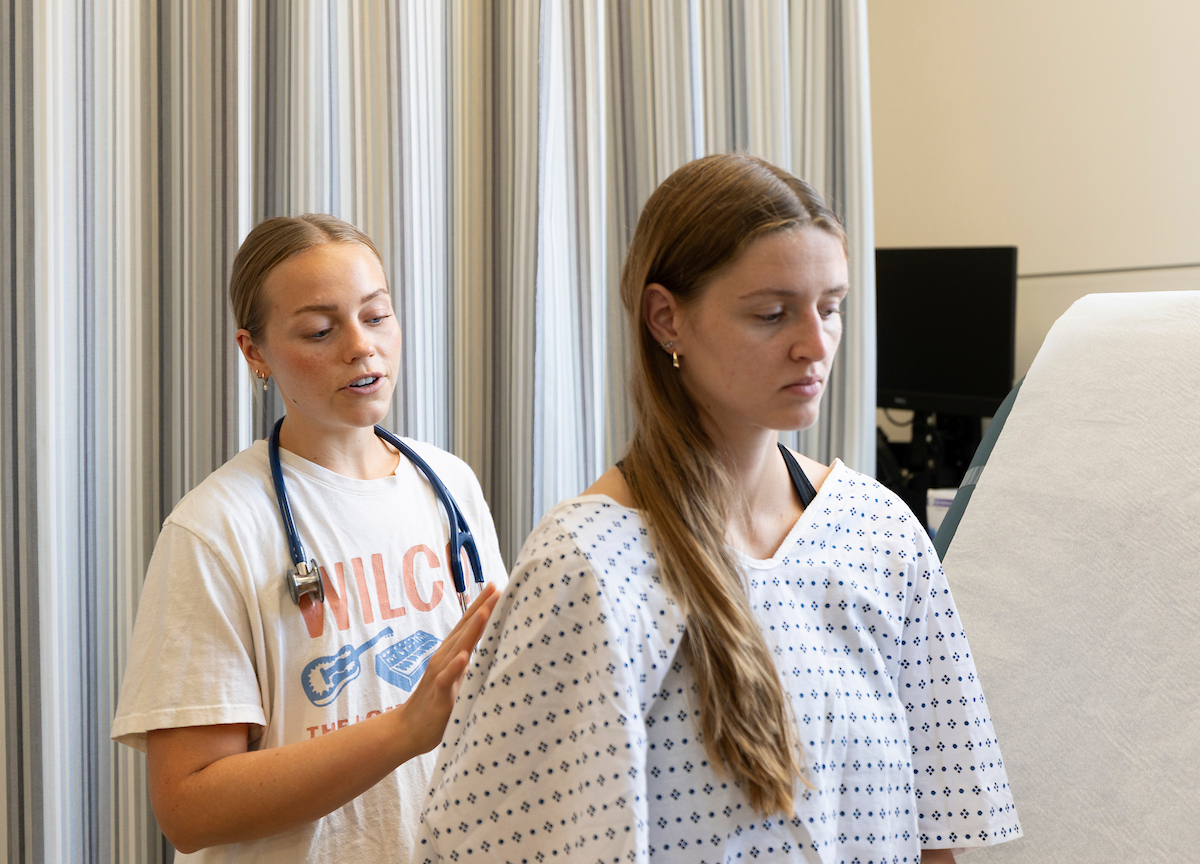
I firmly believe that the PA building and patient care lab, the numerous stations and exam tables, and all of our opportunities to practice physical exam skills were key to my comfort and ability to work with patients during my rotations.”
Lecture halls with global teleconferencing capabilities and lecture capture
“Active learning” classrooms that can be easily reconfigured for group work or lectures, depending on the need
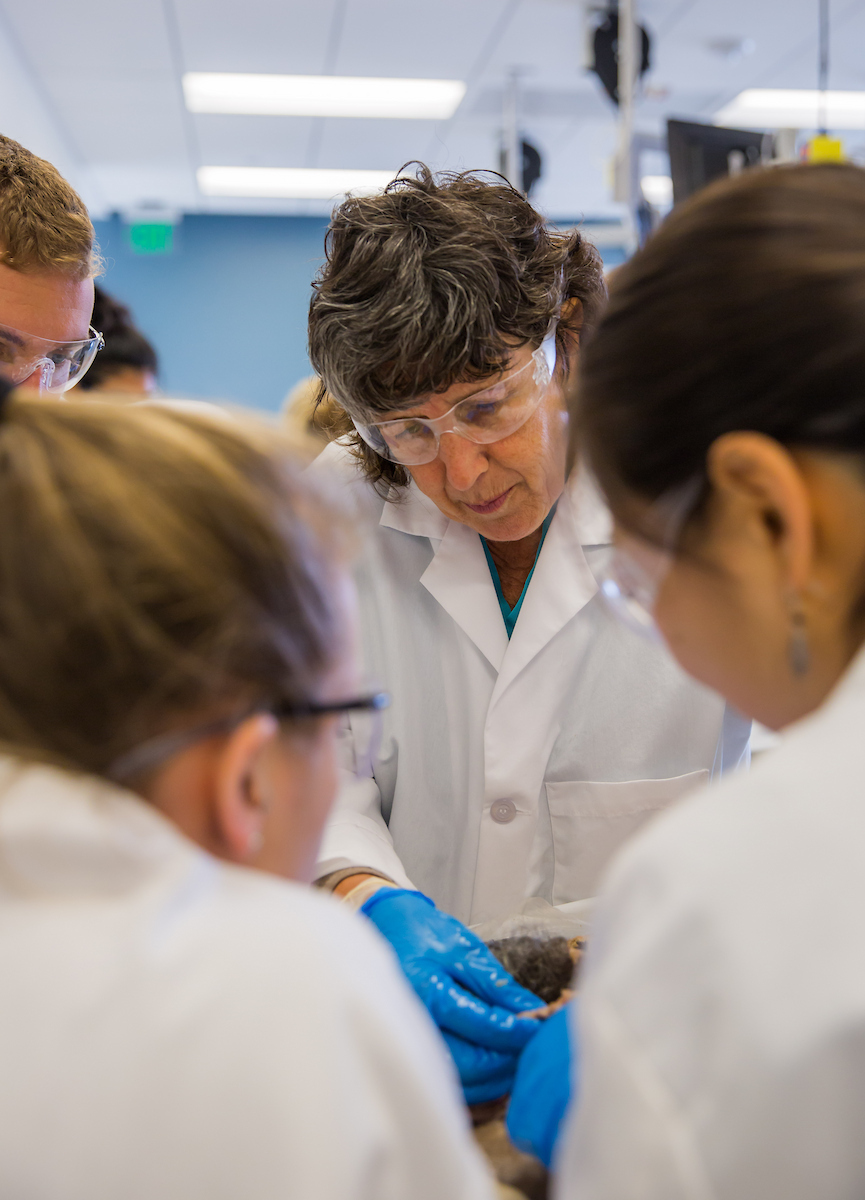
Cadaver-based anatomy lab with access to e-study guides at each dissection station
Conference rooms for small group meetings
Student lounges and study areas
Clinical practice center similar to a hospital emergency room
Learning Without Interruption
The Center is designed to transition you seamlessly from morning to night — from the locker room where you can safely stash your valuables to the spacious learning commons where you can study with fellow students after hours. You won’t have to leave the building unless you choose to.
Why is this important? Those first 12 months of preclinical instruction are especially rigorous, and the building will enable you and your cohort to learn without interruption — whether you’re studying cardiovascular systems in the anatomy lab, documenting cases in the clinical practice center or attending virtual grand rounds in our lecture hall.
Sharing classrooms and common spaces also enhances the sense of community, enabling you and your fellow students to progress through the first year as a supportive group.
Become a Clinical Preceptor
Clinical preceptors are essential to training our graduate-level PA students during their 5-week supervised clinical practice experiential rotations. Preceptors work with students at their practice location and guide them through patient encounters across the lifespan in varying stages of health.
PA students work under a preceptor’s supervision, learning from their advice and example in order to develop the skills and clinical judgment necessary to become a practicing PA.
Learn how to join our team of educators, discover opportunities for professional development, find support resources, and get answers to frequently asked questions.
If you are interested in collaborating with JWU’s Physician Assistant program as a clinical preceptor, please complete and submit the preceptor interest form below. A member of the clinical education team will reach out to you via your preferred method.
We will set up a meeting with you to discuss the supervised clinical practice experience and to visit your practice. Nurse Practitioners, Nurse Midwives, and other health care professionals must be licensed and board certified in their area of specialty, if applicable. A copy of your CV is required. Physician preceptors should be board certified, and Physician Assistants must be NCCPA certified. Preceptors must hold a valid license that allows them to practice at the clinical site.
How often do I have to precept?
There is no minimum number of students or rotations that you are required to precept. This is up to you and your practice to decide what you are comfortable with.
How much paperwork is involved?
We utilize a web-based software system to track and evaluate the clinical year student. Preceptors receive an email with a link to complete evaluations on the student. Preceptors are asked to complete two evaluations (one mid-rotation and one upon completion of the rotation) per student. In addition, preceptors are encouraged to reach out directly to clinical faculty should there be any issues during the rotation.
Does the preceptor have to award grades?
Preceptors are not asked to award a grade, although the final rotation evaluation contributes to a component of the student’s final clinical rotation grade. Evaluations are structured based on clinical rotation type but generally, the preceptor will assess the student’s knowledge, clinical reasoning skills, and professionalism. Preceptors are also encouraged to provide students with honest and constructive feedback, which is important to help students refine their skills and grow into successful health professionals.
What is required of students during the clinical experience?
Each clinical rotation type has a course syllabus containing instructional objectives that guide the experience. These syllabi are provided to both the preceptor and the student in advance of the rotation. On the first day of a rotation, preceptors should meet with the student to discuss mutual expectations.
Is there assistance for this work?
In terms of both training and ongoing support, yes. Preceptors are encouraged to reach out directly to clinical faculty with any questions or concerns. Preceptors are also provided a preceptor handbook and other clinical education resources.
Do I earn CME credits for being a preceptor for JWU’s PA program?
Category I CME Only Physician Assistant preceptors are eligible to earn CME credit at this time. JWU PA Program may award two (2) AAPA Category 1 CME credits per student for each 40-hour week of clinical teaching. Preceptors may earn up to 10 credits for a five-week rotation with a JWU PA student. Category II CME The time a PA preceptor spends educating students can be recorded as Category 2 CME. Category II credit does not require documentation from the PA program.
Location & Contact
Center for Physician Assistant Studies 35 Claverick Street Providence, RI 02903