
Applied Food Science B.S.
Degree: B.S.
Location(s): North Carolina
Length: 4 years
Credits: 123.5
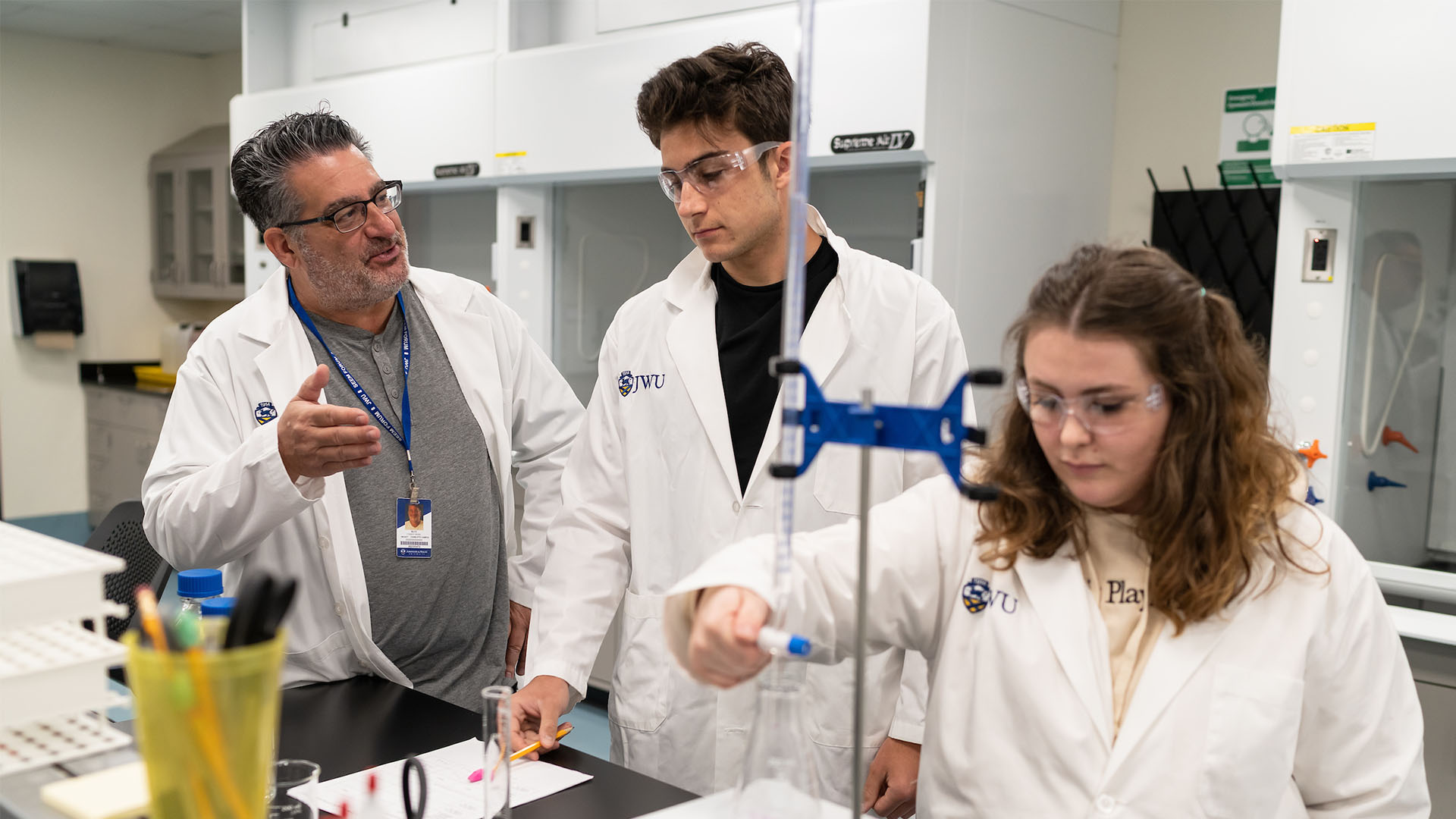
Use Science to Improve Food Products
Imagine turning salmon scraps into an innovative new product or reverse-engineering an existing product in a food science lab.
JWU Charlotte’s Applied Food Science bachelor’s degree combines the strength of culinary arts and food science to prepare students for careers in food product research and development (R&D), quality assurance and food technology.
Learn in North Carolina’s Food Innovation Hub
JWU Charlotte’s program is situated in North Carolina’s growing food innovation hub, the fourth largest in the U.S. Our students have put their ideas into practice at the N.C. Food Innovation Lab (NCFIL), McClancy Foods & Flavors, Acme Smoked Fish, and more.
Admission is contingent upon meeting the technical standards for this program.
| First two years: | 61 | |
| in Baking & Pastry Arts | ||
| OR | ||
| in Culinary Arts | ||
| Third and fourth years: | ||
Credits Major Courses | ||
| FSC3010 | Food Quality Assurance | 3 |
| FSC3020 | Food Chemistry | 3 |
| FSC3040 | Food Ingredients & Formulations | 3 |
| FSC3050 | Fermentation Science & Functional Foods | 3 |
| FSC3060 | Principles of Food Microbiology | 3 |
| FSC3065 | Principles of Food Microbiology Laboratory | 1.5 |
| FSC4010 | Sensory Analysis | 3 |
| FSC4020 | Principles of Food Processing | 3 |
| FSC4040 | Product Research & Development | 3 |
| Related Professional Studies | ||
| BIO2201 | General Microbiology | 3 |
| BIO2206 | General Microbiology Laboratory | 1 |
| CHM2040 | Introduction to General and Organic Chemistry | 3 |
| University Core Curriculum | ||
| Connecting | 3 | |
One course with the Connecting attribute (ECNG), at the 4000 level | ||
| Experiencing | 6 | |
| Ethics: A Global Perspective | ||
Additional course with the Experiencing attribute (EEXP) in a different discipline | ||
| Measuring | 3 | |
| Statistics I | ||
| Interacting | 6 | |
| Introductory Psychology | ||
Additional course with the Interacting attribute (EINT) in a different discipline | ||
| A&S Electives | 3 | |
One course with the Arts & Sciences elective attribute (EASC) | ||
| Free Electives | ||
| 9 credits selected from 1000-4999 numbered offerings within the university | 9 | |
| Total Credits | 62.5 | |
All students interested in entering the Applied Food Science degree program must complete and submit an application to the program lead faculty member, Professor Robert Lothrop.
Applications will be accepted from Culinary Arts and Baking & Pastry Arts A.S./A.O.S./A.A.S. degree holders and students transferring from other culinary, baking or food science programs that meet JWU’s academic requirements. All applicants are required to submit the following items:
- Application
- Résumé
- 3 recommendations
• 2 from chef, nutrition or food science instructors
• 1 from academic instructor - Change of Status form: Only needs to be filled out by currently enrolled JWU students.
- Interview: Telephone interview to be scheduled by program director.
- Student Degree Progress: Indicating a 3.0 GPA or Higher in current program. Currently enrolled students can obtain their audit from the Grad Planning System (GPS) through jwuLink. Students applying from outside of JWU will need an official transcript.
Questions about your application?
Robert Lothrop, Ph.D., professor, 980-598-1535 or robert.lothrop@jwu.edu
Sunil Atreya, associate professor and college chair, 980-598-1524 or sunil.atreya@jwu.edu
Note: Students are encouraged to refer to the graduation requirements of the Applied Food Science program by reviewing the catalog description or by contacting SAS (or the Admissions department if you are transferring from another institution). This will prevent any unforeseen complications or delays when applying to this program.
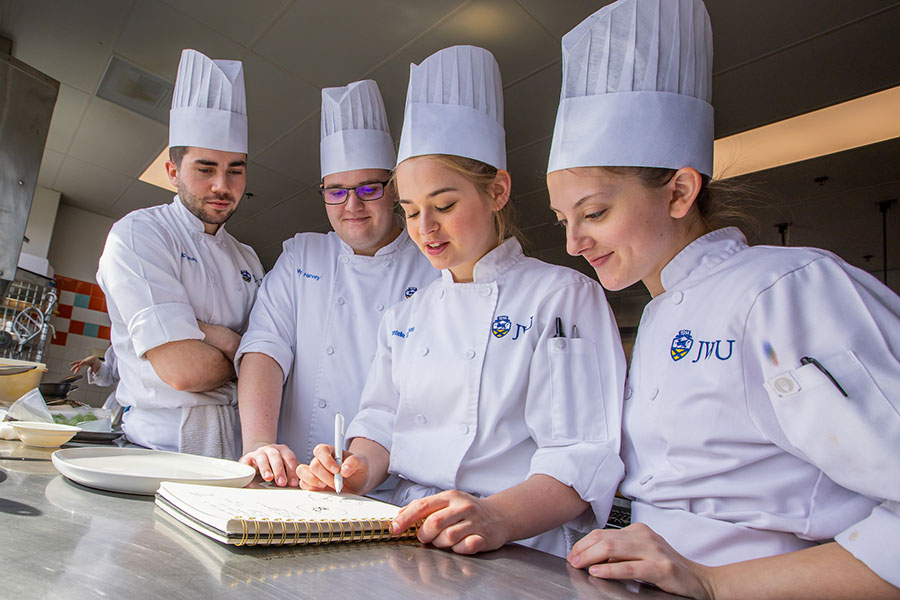
Turning Fish Trim into a Shelf-Ready Product
Applied Food Science students spent a term working on a real product challenge from ACME Smoked Fish, a leading U.S. smoked salmon producer. Working with Professor Robert Lothrop ’98, Ph.D., students took salmon or tuna trim that would otherwise go to waste and built an appetizer around it — one that has to be at least 15% fish, hold a 30-day shelf life and meet kosher and clean-label standards. Recent results include smoked salmon croquettes and smoked tuna soup dumplings. The ACME partnership has run for three years.
Plant-Based Futures
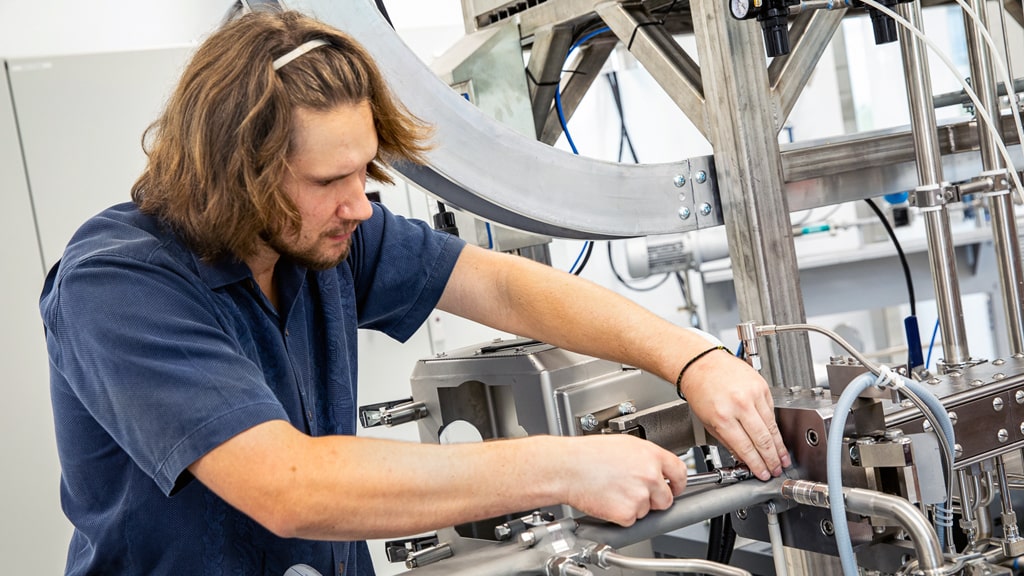
Chris Patillo ’21 and Emilize Momplaisir ’21 landed internships at the North Carolina Food Innovation Lab (NCFIL), a Good Manufacturing Practice (cGMP) facility accelerating plant-based food research.
“I’m part of a something that is leading the food industry in plant-based beverages and meat alternatives,” Patillo explained. “I’m working on an organic powdered fruit beverage and I’m omitting harmful and unnecessary ingredients and developing a 100% clean label.”
During a tour of the facility, Momplaisir exclaimed, “I feel like a kid in a candy store! Every day. I love it here. If you’re a food science nerd like me, this place is like Chuck E. Cheese!”
Jodi Wood, JWU Charlotte experiential education coordinator, says, “This internship will help to propel them towards their career goals within the food science industry. With North Carolina being home to 24 of the 50 largest food and beverage companies in the U.S., food science is a growing and exciting field.”
Why JWU Charlotte’s Applied Food Science Program Is Unique
Start by completing a two-year degree in either culinary arts or baking & pastry arts before applying to the two-year food science program.
Through Applied Food Science coursework, build your understanding of every step involved in creating new food products, from concept to product optimization. You’ll learn in classrooms and labs focusing on the core competencies prescribed by the Institute of Food Technologists: food chemistry and analysis, food safety and microbiology, food processing and engineering, and applied food science.
As you advance, you will learn to:
- Apply food chemistry and scientific principles to the development of food products.
- Apply principles of food technology and processing in food systems.
- Apply food safety and microbiological knowledge to identify and solve problems related to food and food products.
I can’t tell you how great [our] JWU interns have been. They already have the tools to know about food safety and preparation, production and sanitation.”
Faculty Contact
Professor Robert Lothrop, Ph.D.
980-598-1535
robert.lothrop@jwu.edu