JWU’s FIT Symposium Explores How to Improve the Food Service Industry
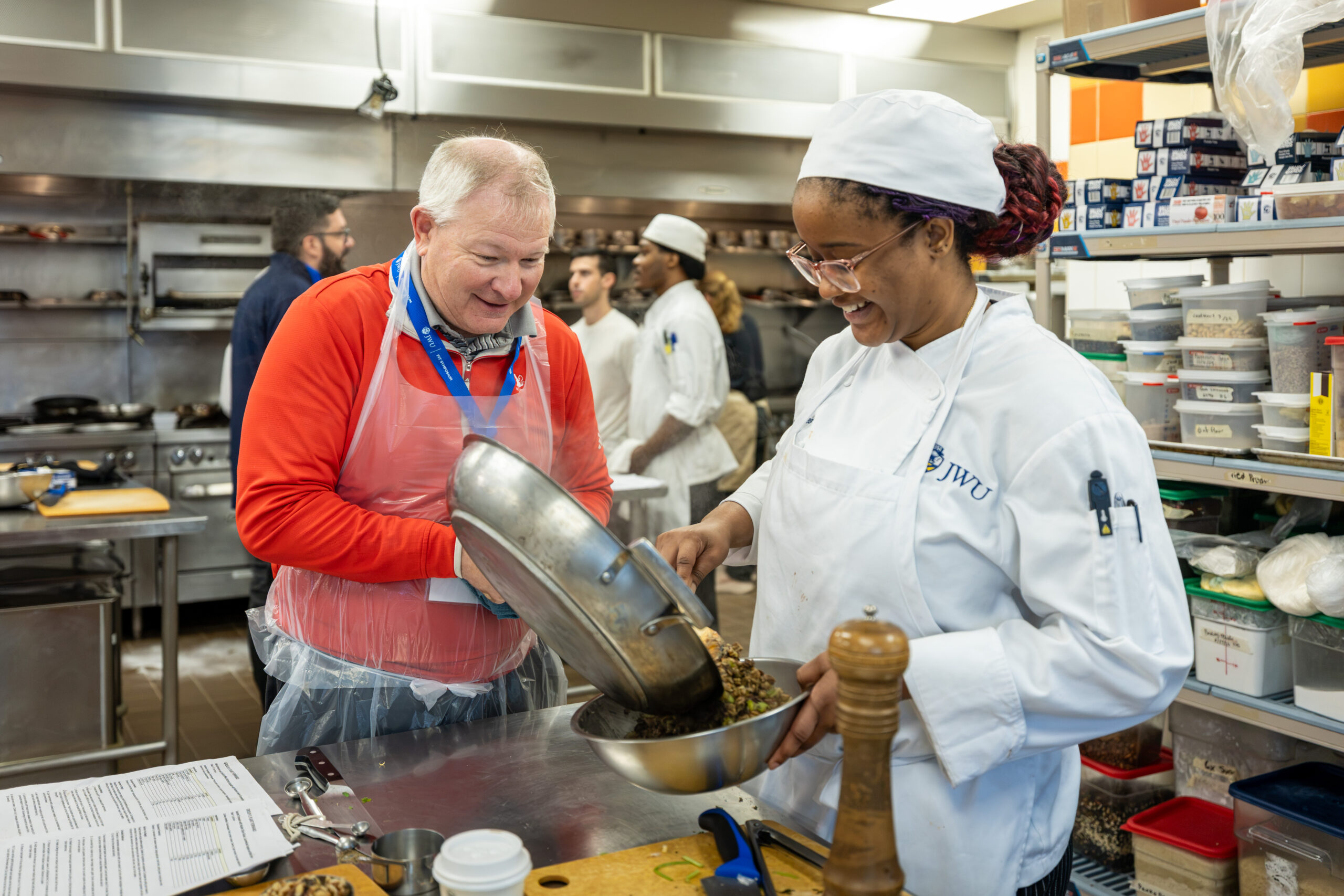
JWU’s sixth annual FIT Symposium, hosted by the College of Food Innovation & Technology (CFIT), brought educators, industry leaders, and food and hospitality students from around the country together to discuss topics and trends in the field. This year’s theme, “Mind, Body, Menu,” explored the connections between mental health, physical wellness and how both can translate to what ends up on the plate.
“This year’s theme, in particular, speaks to how important it is that everybody in the food industry, food education and food thought leadership understands the challenges and the opportunities that lie ahead for making food and food service better, as well as incorporating lifelong wellness into menus, product development and how we run businesses,” said Jason Evans, Ph.D., dean of CFIT.
Connecting the Mind, the Body and the Menu
The “menu” component was obviously an important part of the symposium, with speakers and workshops that covered topics like fermentation, artisanal chocolate, grain harvesting, pasta making and more.
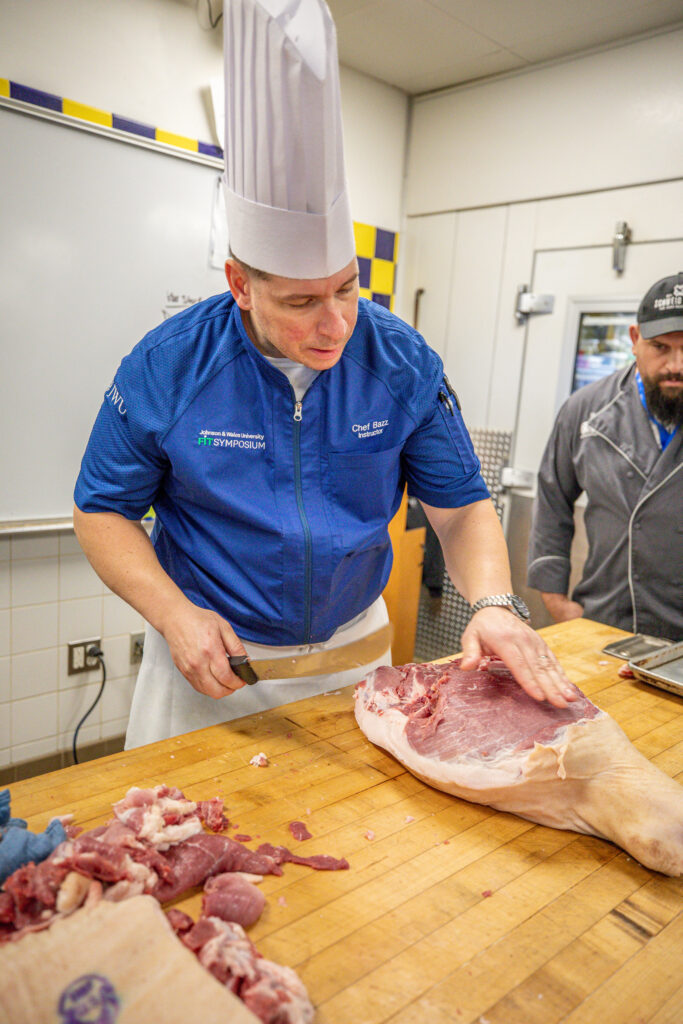
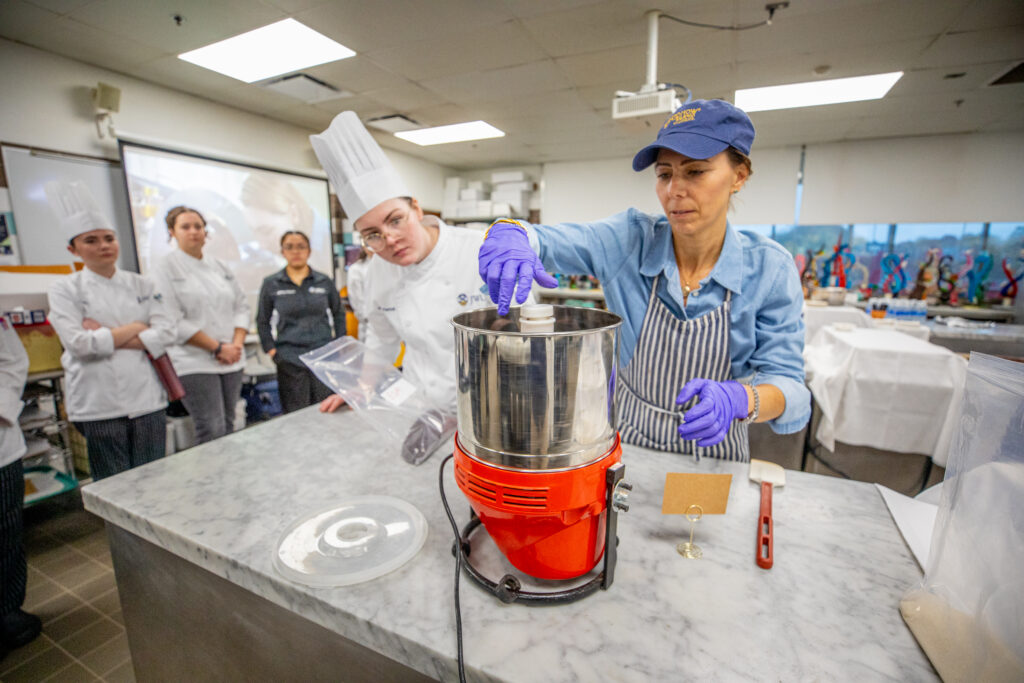
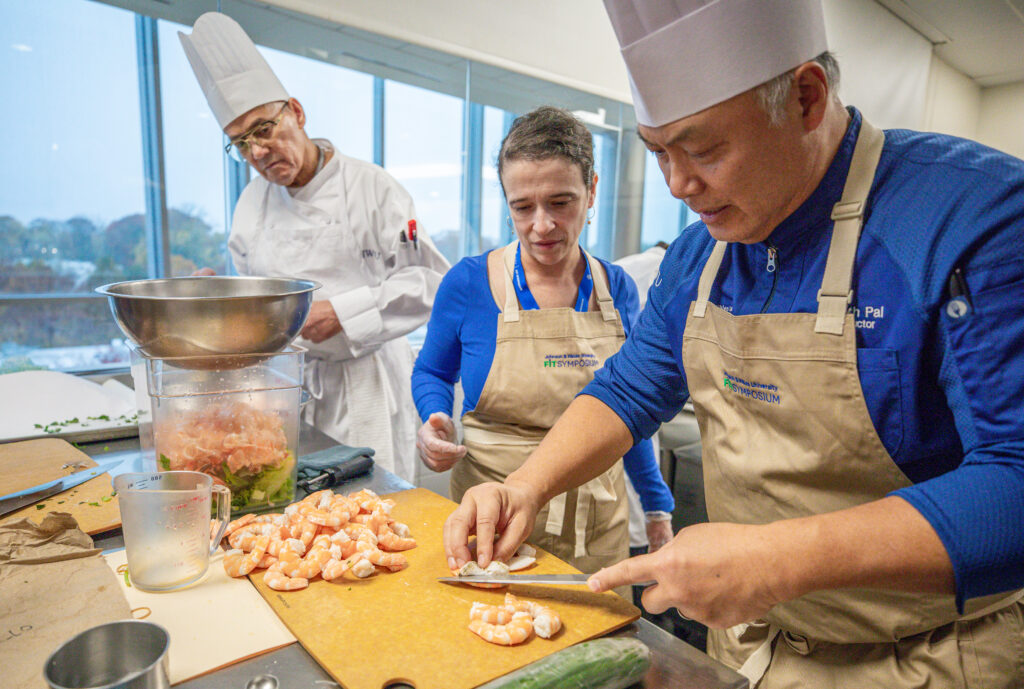
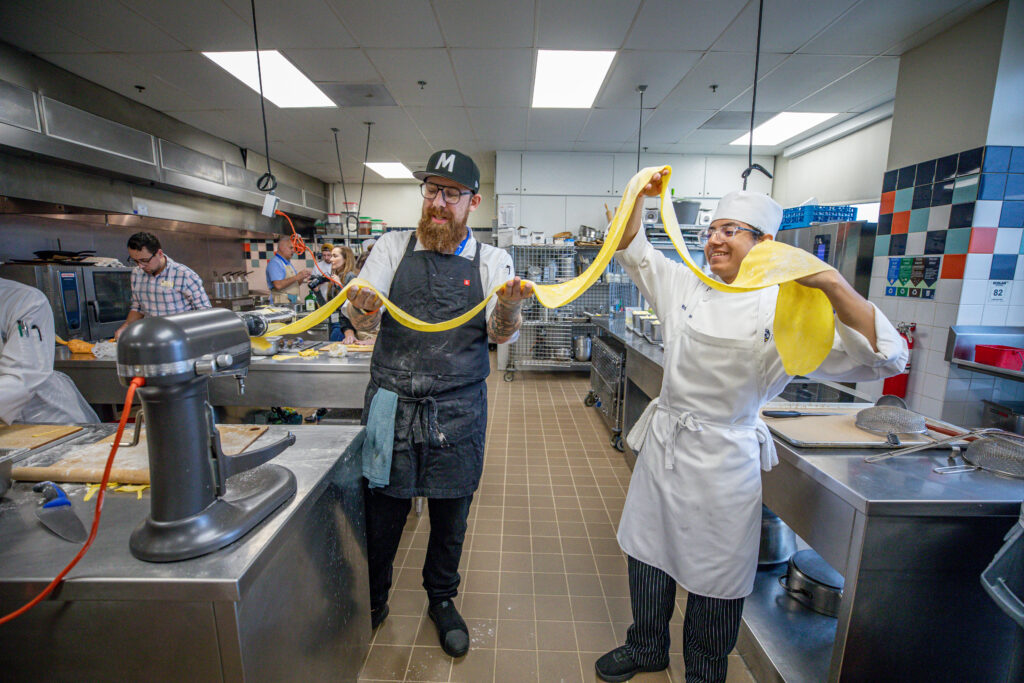
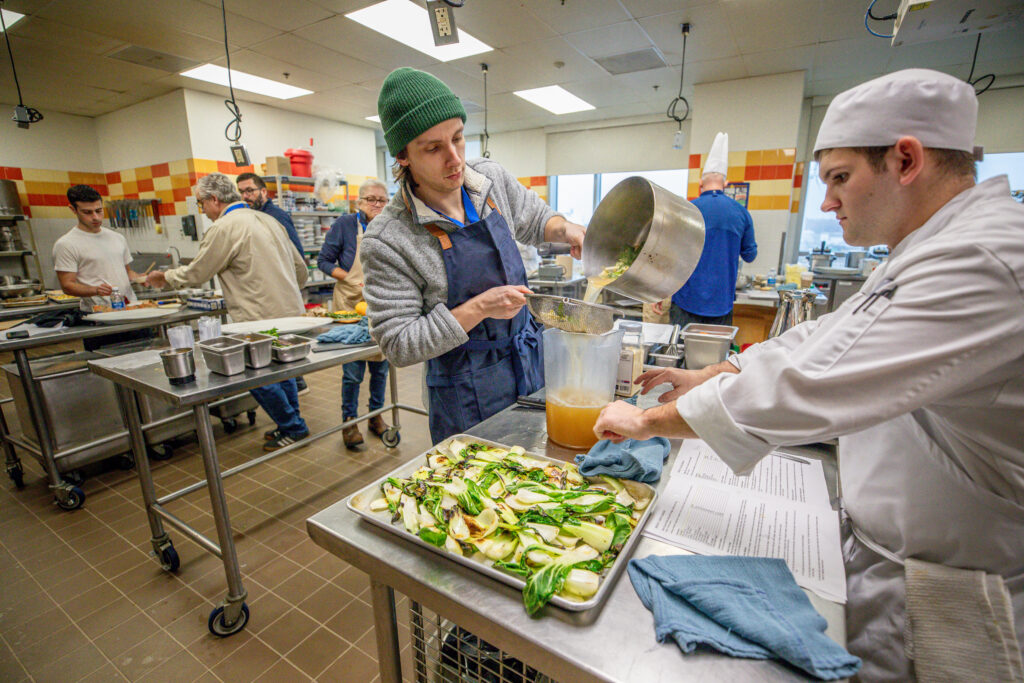
Crafting the right menu for wellness and teaching the average person how to do it was a key part of the “body” component. Teaching Kitchen Collaborative founder David Eisenberg, M.D., spoke at length about the evolution of teaching kitchens, which are learning labs for teaching people important life skills like how to cook nutritious meals. Teaching kitchens have been popping up in schools, hospitals and work sites around the country and have made incredible strides in the prevention of chronic diseases.
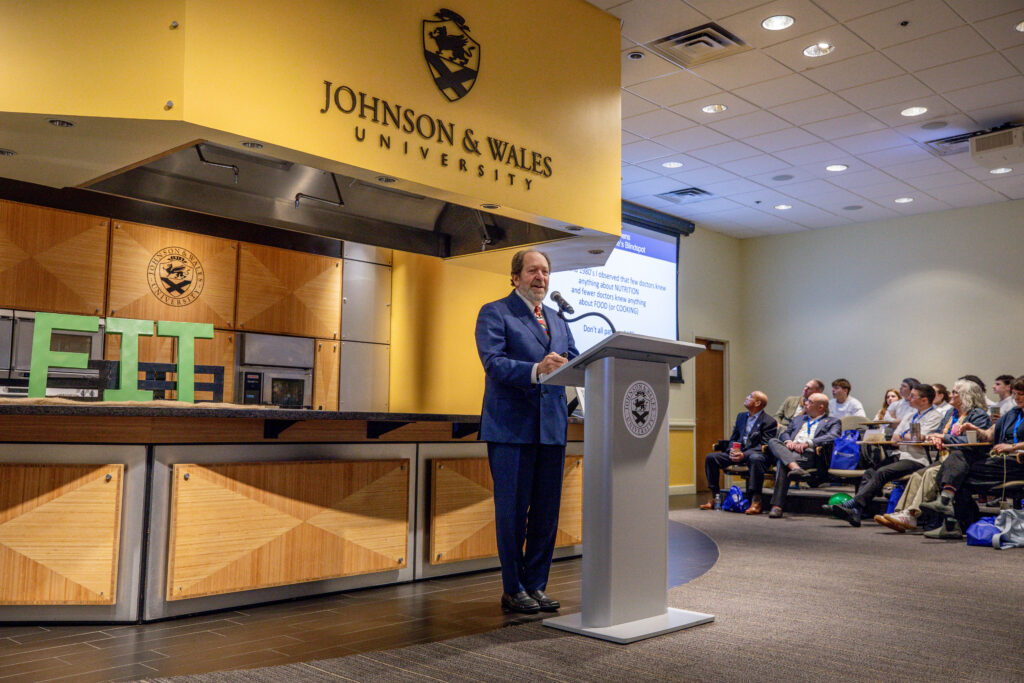
But perhaps the most powerful stories and takeaways came from the focus on the “mind,” with discussions around improving mental health in the industry’s workforce.
“The food, beverage and hospitality industry has a ‘push through’ culture that other industries don’t typically have,” said speaker Jasmin Parks-Papadopoulos during her workshop, “86 The Stigma: Practical Tools for a Healthier Hospitality Workplace.” “In no other industry do we tell the person, ‘Hey, you’re suffering, but go ahead and put a smile on your face for the next eight hours and focus on the next person’s experience.’”
Mental Health Issues in the Industry (and What the Next Generation is Already Doing About it)
In addition to Parks-Papadopoulos’ workshop, other speakers also touched on the unique culture of the industry, especially in relation to substance abuse.
“I’m here to discuss the lack of conversations around drugs and alcohol in our restaurants, our hotels, cafes and shops,” began Chef Sam Diminich during his talk, “Hospitality Without Hangovers.” Diminich himself is a recovered alcoholic coming up on 12 years of sobriety. He is also the Charlotte, North Carolina chapter leader of Ben’s Friends, a sober fellowship for hospitality professionals.
“Restaurants have always been the easiest place to hide out as an addict or alcoholic,” said Diminich. “You have easy access to drinks, very easy access to drugs and late and long hours. And one of the things we don’t talk about enough is our central nervous system always operating in extremes. Very rarely are we regulated.”
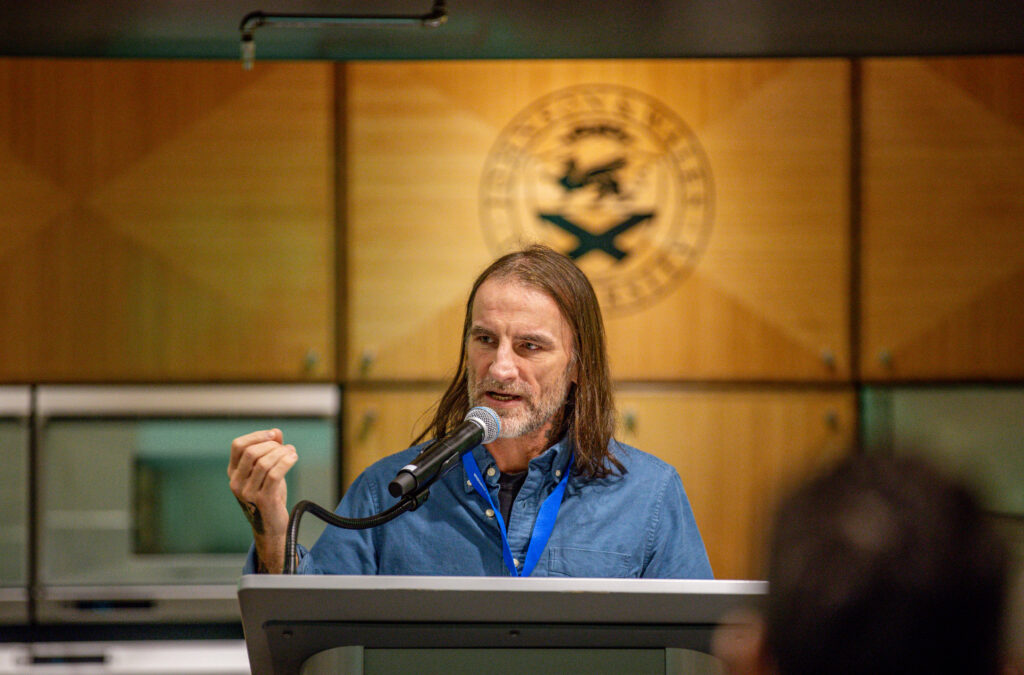
He also highlighted some staggering statistics – of the 14 million hospitality workers in the U.S., 17% have reported abusing substances, which is the highest rate of any industry. Diminich noted that many cases go unreported, so in reality, the rate is probably even higher. What can the next generation of hospitality professionals entering the industry do about this industry-wide problem?
“In my mind, the highest form of hospitality is to be of service to each other, the professionals that are in this industry,” said Diminich. “If it begins with us, it’ll translate to the guest.”
Parks-Papadopoulos echoed a similar sentiment in her workshop, where she also discussed her work with Culinary Hospitality Outreach and Wellness (CHOW), an organization dedicated to supporting workplace wellness in the food, beverage and hospitality industry.
“When people walk into the workplace, what are they bringing with them outside of their knife or their uniform, and does it belong in the workplace?” she asked. “My take, and CHOW’s take, is that 100% it belongs in the workplace. We are an incredibly resilient bunch when we allow people to be people and bring their personhood to work.”
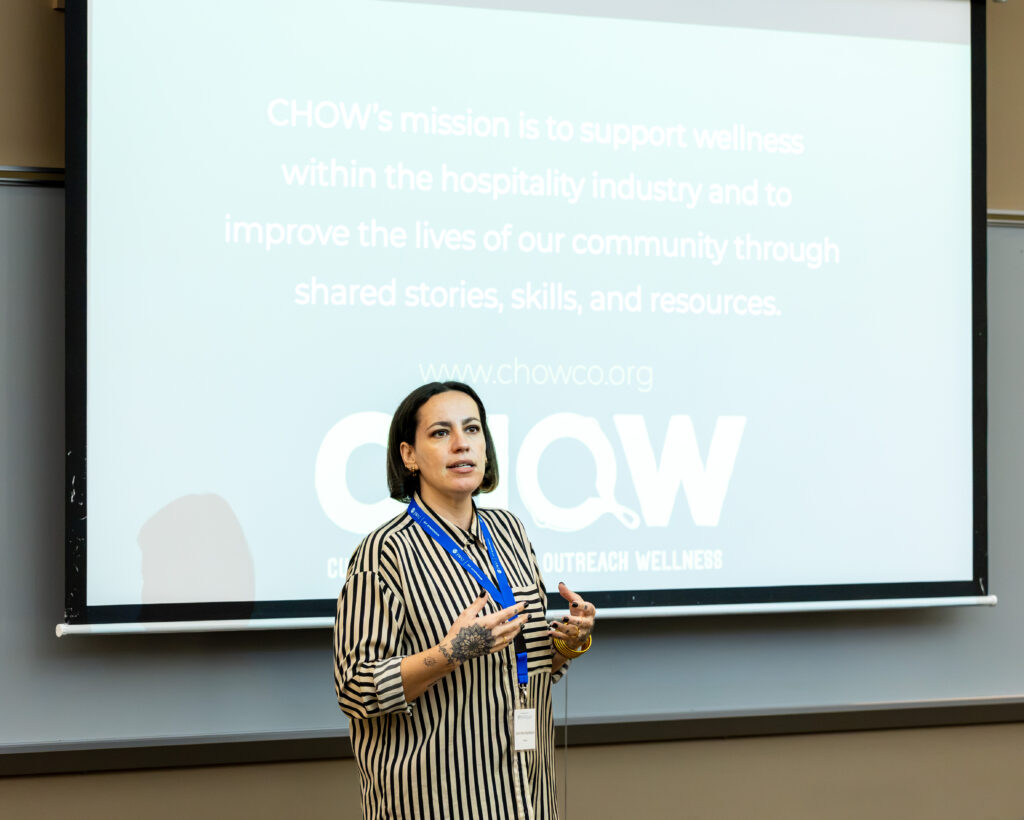
She also highlighted the importance of knowing about resources and having them in your back pocket for when you need them. “It’s similar to doing prep for service — you never prep during the rush; you prep ahead of time because you know you’re going to need it,” she said. “When we accept that mental health is health, we build mental health into the plan. We build capacity into the plan.”
Bridging the Gap Between Generations
As CHOW’s chief growth officer, Parks-Papadopoulos works with a variety of restaurant groups, hotels and other businesses in the industry to offer tools and resources that aim to improve the employee experience and build a sustainable workforce. With a new generation entering the field and an overall cultural shift towards better work-life balance, she has also seen a dramatic shift in the industry, but that has come with some friction between the new generation and the “old guard.”
“A lot of the work that we are doing is showing the older generation how they are an instrumental part of that change because they are the culture leaders,” said Park-Papadopoulos. “They are the ones that are setting the tone in the kitchen. So, when they can be affected by this new generation and can make room for those conversations, we’ve got a kitchen that is in tip-top shape and has beautiful balance.”
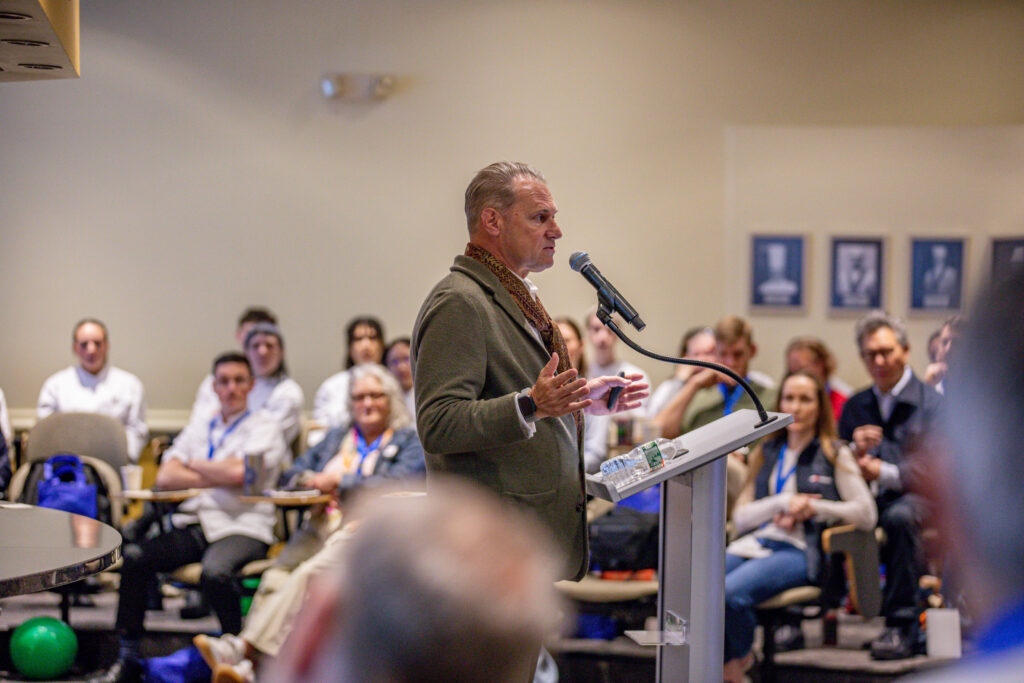
Keynote speaker Dan Kish is a prime example of how mentoring the next generation can be transformative to both parties. Kish has more than 40 years of experience in the field as a chef, educator, business owner and consultant for food brands. He said that having a mentor and later becoming a mentor have shaped the entire trajectory of his career.
“What excites me most about mentorship is that it’s a two-way street,” Kish said. “I get more out of mentoring and learn more about myself by seeing the world through the eyes of younger folks.” His mentee, Jake, was in attendance to support. Kish left the audience with a parting quote that summed up not only his keynote speech about feeding potential, but also an overarching theme for the symposium.
“Perhaps the most important thing we ever serve isn’t what’s on the menu. It’s the opportunity we give someone to become more than they thought they could be.”