
Culinary Nutrition B.S.
Degree: B.S.
Location(s): Rhode Island, North Carolina
Length: 4 years
Internship: Required, 12 credits
Credits: 122
Food as Preventive Care
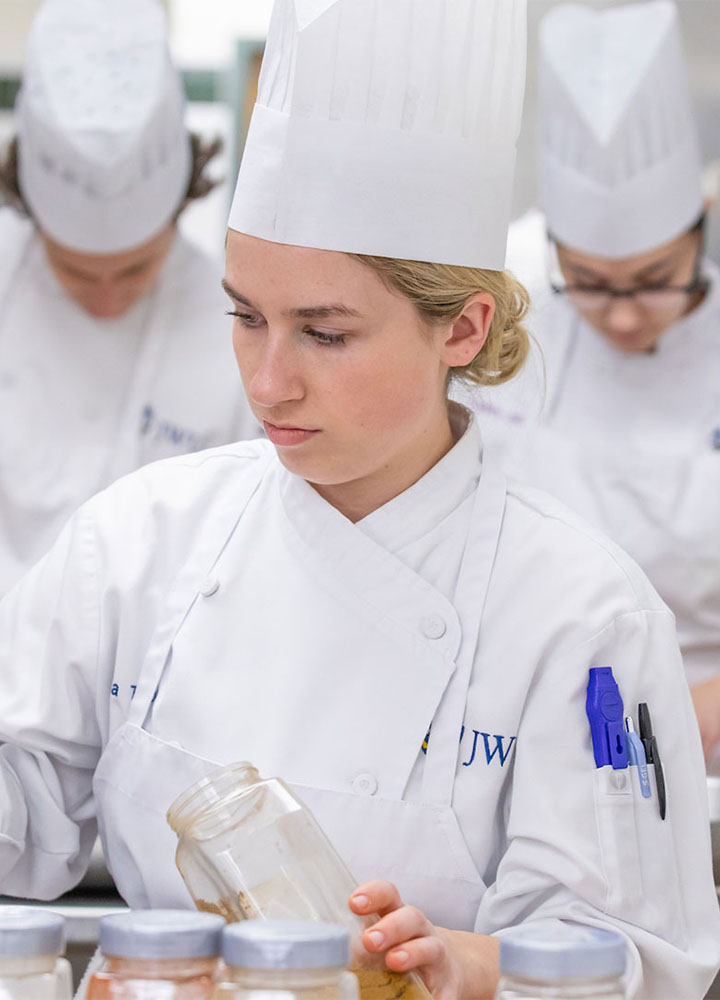
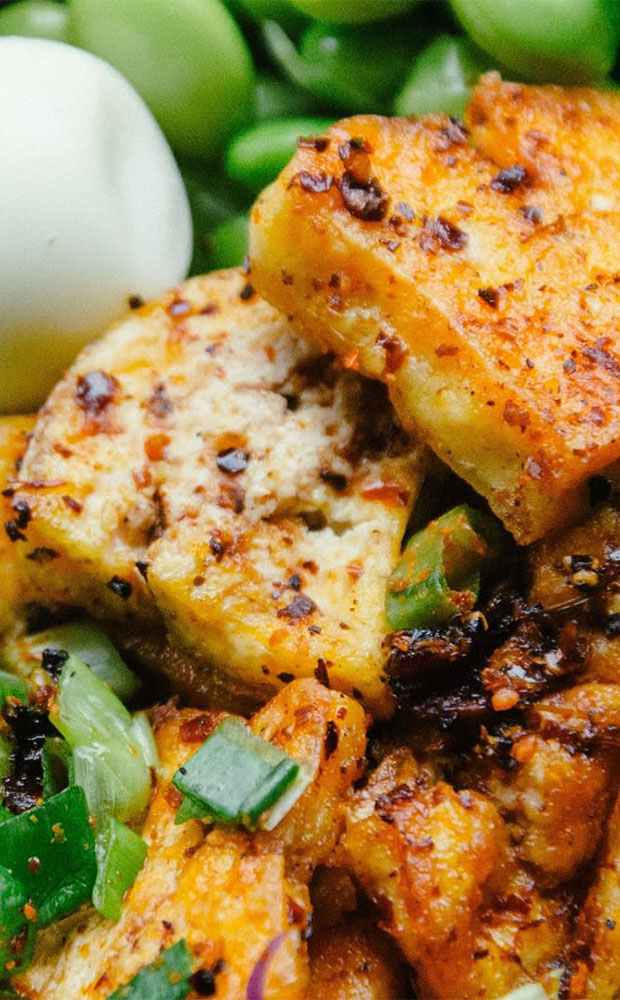
What foods make the most effective fuel for athletes? How can food prevent disease and prolong good health? Learn to harness food’s therapeutic power in JWU’s Culinary Nutrition bachelor of science degree program.
Gain the skills and expertise to meet the growing demand for healthy cuisine in restaurants, healthcare, athletics and other settings.
The foundational courses in your first two years (choose from baking & pastry arts or culinary arts tracks) build your expertise and techniques, leadership and other essential skills. From there, transition into career‐focused courses focused on improving the way people eat, including applied culinary nutrition, food science and athletic performance cuisine. As a junior or senior, strengthen your skills through an advanced internship or study abroad experience.
Curriculum and Degree Requirements
Students in the College of Food Innovation & Technology will apply and adapt their knowledge in innovative ways through the Food Innovation & Technology Experience.
In addition to classes, free elective credit can be applied to a number of options, such as internships, minors, or study abroad. You are encouraged to contact an advisor before scheduling free elective credits.
Credits Foundation Courses | ||
| Choose Culinary or Baking & Pastry Arts Foundation | 18 | |
| Culinary Arts | ||
| Introduction to Culinary Skills and Techniques | ||
| Breakfast & Lunch Cafe | ||
| Elements of a la Minute Cooking | ||
| Contemporary Cooking & Leadership Functions | ||
| Contemporary Restaurant Operations and Management | ||
| Global à la Carte | ||
| Baking and Pastry | ||
| Foundations of Baking and Pastry | ||
| Principles of Cake Production and Design | ||
| Plated Desserts | ||
| Artisan Bread & Viennoiserie I | ||
| Artisan Bread & Viennoiserie II | ||
| Chocolate, Confections & Mignardise | ||
| Major Courses | ||
| CULN1010 | An Introduction to the Fields of Food, Food Service and Nutrition | 1 |
| CULN2020 | Applied Culinary Nutrition | 3 |
| CULN2230 | Designing Healthy Desserts | 3 |
| or BPA2720 | Artisan Cafe | |
| CULN3155 | Vegetarian Cuisine | 3 |
| CULN4165 | Therapeutic Cuisine | 3 |
| CULS2210 | Food Science | 3 |
| DIET2070 | Lifespan Nutrition | 3 |
| DIET3080 | Community Nutrition | 3 |
| FSM3175 | Advanced Food Safety, HACCP and Special Processes | 3 |
| FSM3215 | Culinary Operations and Facility Management | 3 |
| Choose one of the following: | 3 | |
| Athletic Performance Cuisine | ||
| Health & the Harvest | ||
| Applied/Experiential Learning | ||
| Choose 12 credits from the following: | 12 | |
| College of Food Innovation & Technology Advanced Internship | ||
Study Abroad | ||
| Related Professional Studies | ||
| FSM1165 | The Food Safety Manager | 1 |
| FSM2045 | Introduction to Menu Planning and Cost Controls | 3 |
| FSM2210 | Operational Management in Healthcare | 3 |
| University Core Curriculum | ||
| Communicating | 9 | |
| Rhetoric & Composition I | ||
| Rhetoric & Composition II | ||
| Communication Skills | ||
| Connecting | 6 | |
Two courses with the Connecting attribute (ECNG), one at the 2000 level, one at the 4000 level | ||
| Experiencing | 6 | |
| A Multicultural History of America | ||
Additional course with the Experiencing attribute (EEXP) in a different discipline | ||
| Measuring | 6 | |
| A Survey of College Mathematics (or higher, based on student’s placement) | ||
| Introduction to Biostatistics | ||
| Exploring | 3 | |
| Nutrition | ||
| Interacting | 6 | |
| Introductory Psychology | ||
Additional course with the Interacting attribute (EINT) in a different discipline | ||
| A&S Electives | 6 | |
| Introduction to Technical Communication | ||
One course course with the Arts & Sciences elective attribute (EASC) | ||
| Free Electives | ||
| 12 credits selected from 1000-4999 numbered offerings within the university | 12 | |
| Total Credits | 122.0 | |
|
Credits
Foundation Courses |
||
| Choose Culinary or Baking & Pastry Arts Foundation | 18 | |
| Culinary Arts | ||
| Introduction to Culinary Skills and Techniques | ||
| Breakfast & Lunch Cafe | ||
| Elements of a la Minute Cooking | ||
| Contemporary Cooking & Leadership Functions | ||
| Contemporary Restaurant Operations and Management | ||
| Global à la Carte | ||
| Baking and Pastry | ||
| Foundations of Baking and Pastry | ||
| Principles of Cake Production and Design | ||
| Plated Desserts | ||
| Artisan Bread & Viennoiserie I | ||
| Artisan Bread & Viennoiserie II | ||
| Chocolate, Confections & Mignardise | ||
| Major Courses | ||
| CULN1010 | An Introduction to the Fields of Food, Food Service and Nutrition | 1 |
| CULN2020 | Applied Culinary Nutrition | 3 |
| CULN2230 | Designing Healthy Desserts | 3 |
| or BPA2720 | Artisan Cafe | |
| CULN3155 | Vegetarian Cuisine | 3 |
| CULN4165 | Therapeutic Cuisine | 3 |
| CULS2210 | Food Science | 3 |
| DIET2070 | Lifespan Nutrition | 3 |
| DIET3080 | Community Nutrition | 3 |
| FSM3175 | Advanced Food Safety, HACCP and Special Processes | 3 |
| FSM3215 | Culinary Operations and Facility Management | 3 |
| CULN4155 | Athletic Performance Cuisine | 3 |
| Applied/Experiential Learning | ||
| Choose 12 credits from the following: | 12 | |
| College of Food Innovation & Technology Advanced Internship | ||
|
Study Abroad
|
||
| Related Professional Studies | ||
| FSM1165 | The Food Safety Manager | 1 |
| FSM2045 | Introduction to Menu Planning and Cost Controls | 3 |
| FSM2210 | Operational Management in Healthcare | 3 |
| University Core Curriculum | ||
| Communicating | 9 | |
| Rhetoric & Composition I | ||
| Rhetoric & Composition II | ||
| Communication Skills | ||
| Connecting | 6 | |
|
Two courses with the Connecting attribute (ECNG), one at the 2000 level, one at the 4000 level
|
||
| Experiencing | 6 | |
| A Multicultural History of America | ||
|
Additional course with the Experiencing attribute (EEXP) in a different discipline
|
||
| Measuring | 6 | |
| A Survey of College Mathematics (or higher, based on student’s placement) | ||
| Introduction to Biostatistics | ||
| Exploring | 3 | |
| Nutrition | ||
| Interacting | 6 | |
| Introductory Psychology | ||
|
Additional course with the Interacting attribute (EINT) in a different discipline
|
||
| A&S Electives | 6 | |
| Introduction to Technical Communication | ||
|
One course course with the Arts & Sciences elective attribute (EASC)
|
||
| Free Electives | ||
| 12 credits selected from 1000-4999 numbered offerings within the university | 12 | |
| Total Credits | 122.0 | |
Admission is contingent upon meeting the technical standards for this program.
How Our Program Prepares You
Culinary nutrition career options are wide‐ranging. You might execute the meal plans and recipes prescribed by a registered dietitian, or plan wellness education programs for a community center or public health organization. You could also become a chef for a restaurant, professional sports team, spa, school or healthcare facility — or start a private chef business focused on healthy food.
Why Study Culinary Nutrition at JWU?
- Absorb nutrition theory as applied across the lifespan, while exploring traditional, alternative and specialized diets
- Develop, analyze and execute nutritionally sound food that not only tastes good but adheres to current dietary guidelines.
- Complement culinary skills and nutrition theory with coursework in financial and personnel management
- Apply your skills in an industry setting through a required advanced internship
Problem-Solve for Health
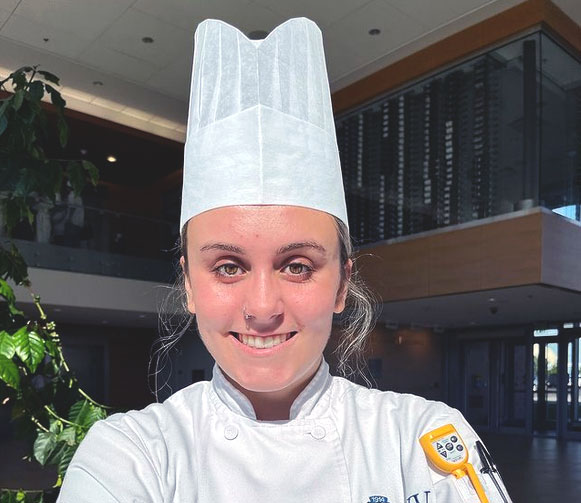
For Culinary Nutrition alum Toniann Rizzuto ’22, making healthy food taste amazing is one of her biggest goals on the job.
“This program is perfect for a chef who wants to be competent in nutrition or a nutrition professional who wants to understand how to cook.”
Peer-to-Peer Learning
The Nutrition Society is open to all JWU students (including culinary nutrition majors) who are interested in better nutrition.
During monthly meetings and special events, students can:
- Network with alums working in the field
- Attend panel discussions to learn from successful nutrition professionals, many of them alums
- Boost your nutrition skills through group activities
What can you do with a Culinary Nutrition degree?
When you graduate, you’ll be ready to create, modify, manage and prepare specialized cuisines in any arena where food and nutrition blend into a healthy lifestyle — making a difference in the lives of many.
Our alums work at influential organizations like the NFL and NHL, Trifecta Nutrition and the US International Olympic Training Center.
Career paths include:
- Catering Chef
- Nutrition Educator
- Corporate Chef
- Private Dining Chef
- Hospital Chef
- School Chef
- Worksite Wellness Manager
Some professions may require additional study, background checks, certifications, licenses, exams and/or experience as required qualifications for employment. Students are responsible for verifying that they can meet the employment requirements of potential employers.

Study Culinary Nutrition at JWU
Faculty Contacts
Rhode Island
Jonathan Poyourow, M.A., RD
Professor
College of Food Innovation & Technology
401-598-4981
Jonathan.Poyourow@jwu.edu
North Carolina
Jennifer Gallagher, CEC, M.S., CWE, DipWSET, CDM
Assistant Dean
College of Food Innovation & Technology
980-598-1479
jennifer.gallagher@jwu.edu