Master Exercise Science, Human Performance and Health
Study how movement, exercise, nutrition and physiology affect health and human performance. Johnson & Wales University’s Bachelor of Science in Exercise and Sports Science degree program combines science coursework with hands-on assessment, laboratory practice, research and internship opportunities to give you an edge.
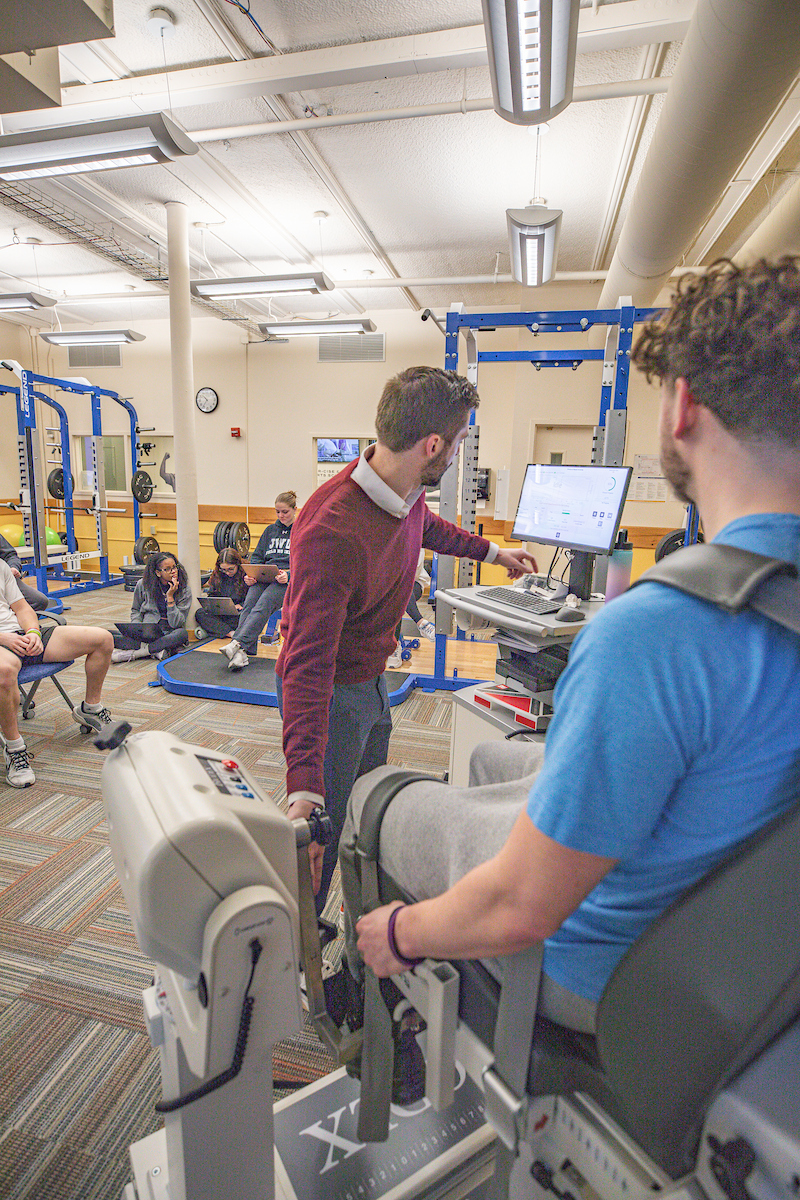
Learn to evaluate fitness and performance, interpret physiological data and develop evidence-informed exercise recommendations for different people and goals. In JWU’s Exercise Science and Human Performance labs, students work with technologies used to assess body composition, cardiovascular response, metabolism, strength, movement and injury risk.
Exercise and Sports Science at a Glance
Sample subjects: Kinesiology, exercise physiology, exercise assessment and prescription, human performance, clinical exercise physiology and sports nutrition
Applied learning: Three curriculum credits through an approved internship or eligible study abroad; internships typically require a minimum of six credits
Additional course with the Arts & Sciences elective attribute (EASC)
Free Electives
9 credits selected from 1000-4999 numbered offerings within the university
9
Total Credits
121.0
Why Study Exercise and Sports Science at JWU?
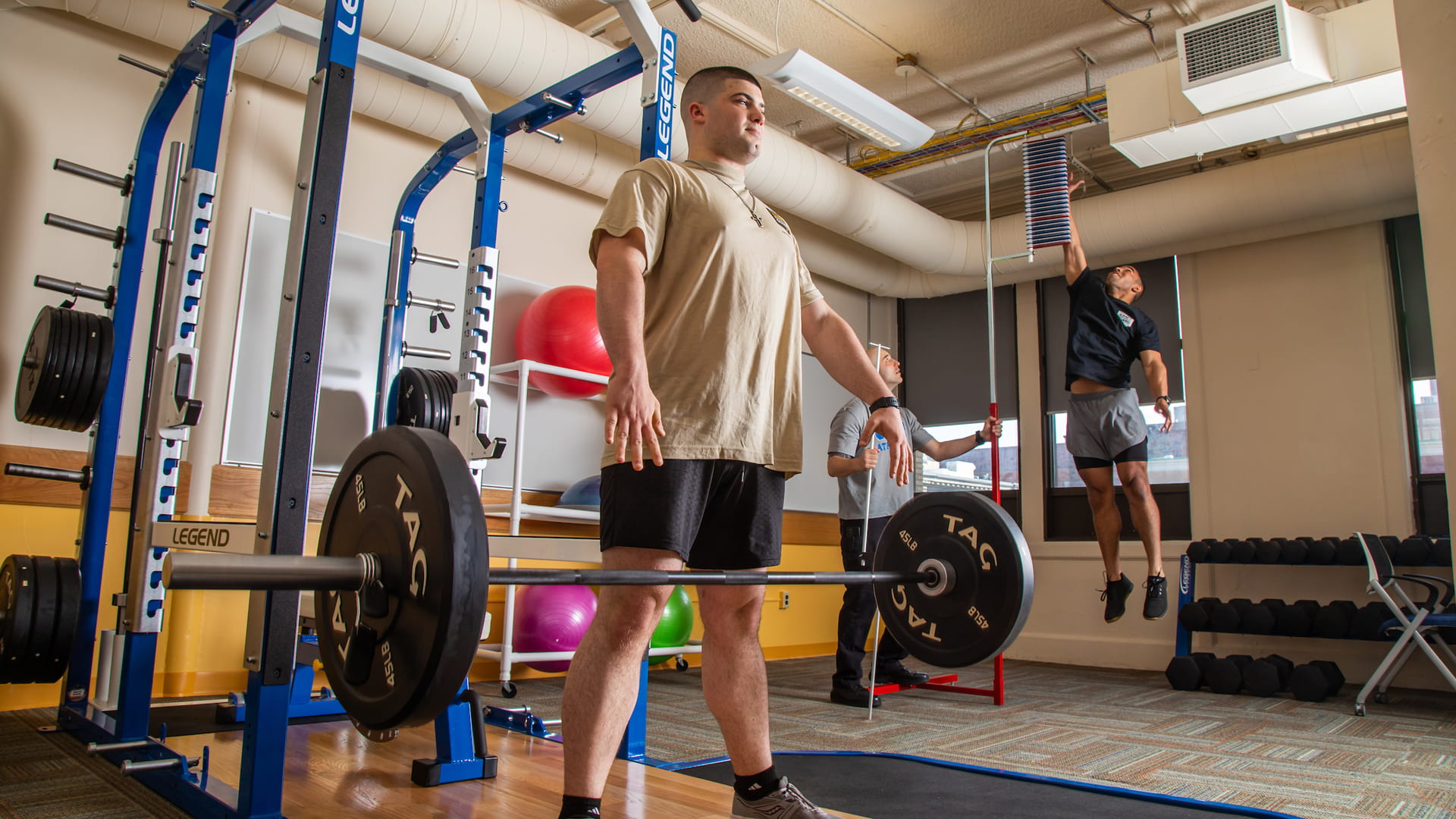
Hands-on, experiential education is at the heart of our Exercise and Sports Science program. Students gain practical skills in our two new labs equipped with state-of-the-art technology, allowing for firsthand clinical practice and groundbreaking research. You’ll assist faculty with evaluating our varsity athletics teams, helping student-athletes reach peak performance, with the same technology used by Olympic athletes.
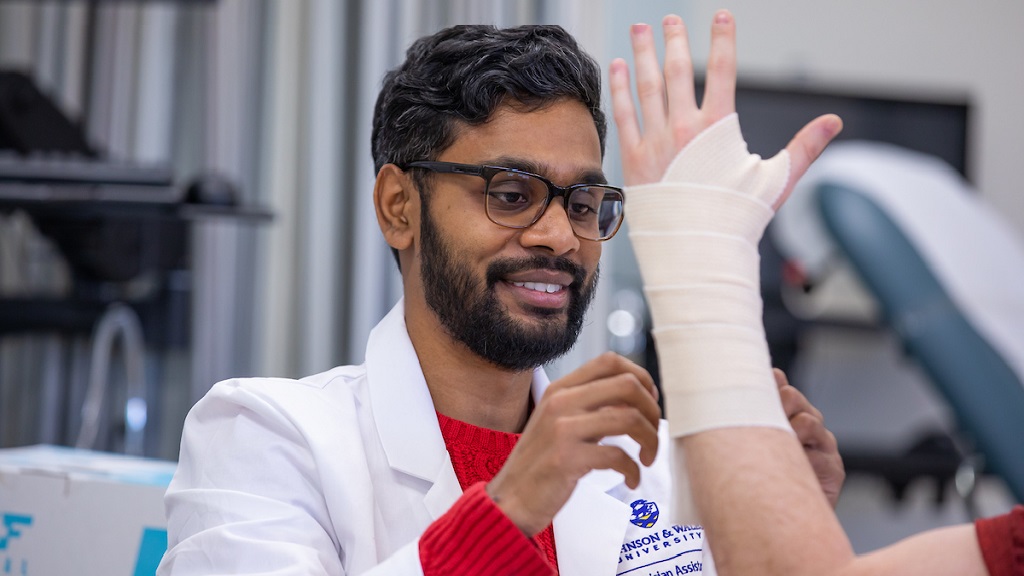
Extensive hands-on experience in classes and internships
Collaboration with faculty on research projects to further enhance your skills
Multiple classes preparing you for certifications such as CSCS and C-EP
Gain applied experience:
Complete exercise assessment and prescription laboratory work.
Support faculty-led research or approved varsity-athletics assessment projects.
Pursue an approved internship or eligible study abroad experience.
Practice collecting, interpreting and communicating health or performance data.
Apply professional, ethical and safety expectations in laboratory and field settings.
Learn in Exercise Science and Human Performance Labs
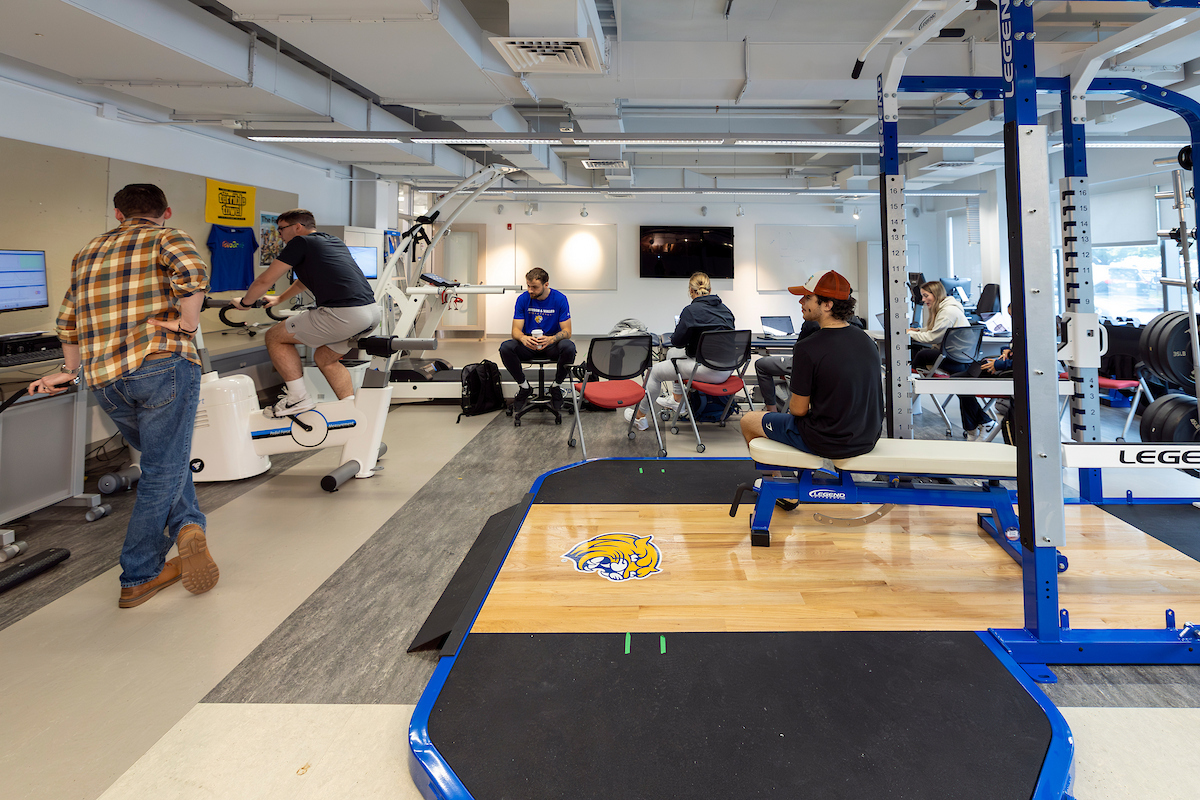
Use laboratory and performance technology to connect classroom concepts with measurable human responses. Depending on the course, students may assess body composition, cardiovascular response, oxygen use, energy expenditure, strength, movement quality, balance, power and injury-risk factors.
The Exercise Science Lab is equipped with state-of-the-art tools like the BOD POD® for body composition analysis, advanced ECG machines for heart health monitoring and cutting-edge metabolic carts for measuring oxygen and energy use.
Human Performance Lab
Located inside the Exercise Science Lab, this space helps athletes develop strength, speed, flexibility, balance and power. It features Olympic-sized platforms, a MEGA power rack, dumbbells, FMS devices for injury risk assessment and a Biodex isokinetic tester for predicting rotator cuff or hamstring injuries.
A Hub for Building Hands-On Skills
“It’s great to have access to this new sports science lab, both as a student and as an athlete, because we get a chance to use some of the industry’s leading equipment and get trained on what we’ll be using in the field.” — Will Hughes ’23, Springfield College Wrestling assistant coach
Prepare for Certifications and Graduate Study
Coursework may support preparation for certifications such as the CSCS or ACSM Certified Exercise Physiologist when current eligibility requirements are met. Students interested in athletic training, physical therapy, occupational therapy, physician assistant studies or other clinical professions must complete the separate graduate, accreditation, examination and licensure requirements for those fields.
If you’re interested in pursuing graduate studies in osteopathy, pharmacy, podiatry or dentistry, JWU has an affiliation agreement with Lake Erie College of Osteopathic Medicine (LECOM) outlining an enrollment pathway for LECOM’s Early Acceptance Program (EAP).
Strength and conditioning or performance-support roles
Personal training or coaching roles with appropriate certification
Exercise physiologist roles when employer and credential requirements are met
Health-promotion or medical-program coordination support
Graduate study in exercise physiology, athletic training, rehabilitation or another health profession
Some professions may require additional study, background checks, certifications, licenses, exams and/or experience as required qualifications for employment. Students are responsible for verifying that they can meet the employment requirements of potential employers.
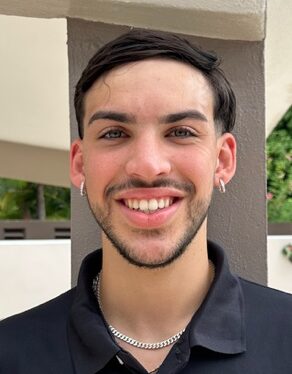
We have state-of-the-art equipment in classrooms, as well as expert professors and mentors leading the program. Most importantly, being able to learn and try things together as a class boosts interest in wanting to learn. This program has allowed me to find my preference of industry and I am eager to continue this amazing path!”
Gabriel Cruz Ramirez ’25, Exercise and Sports Science major
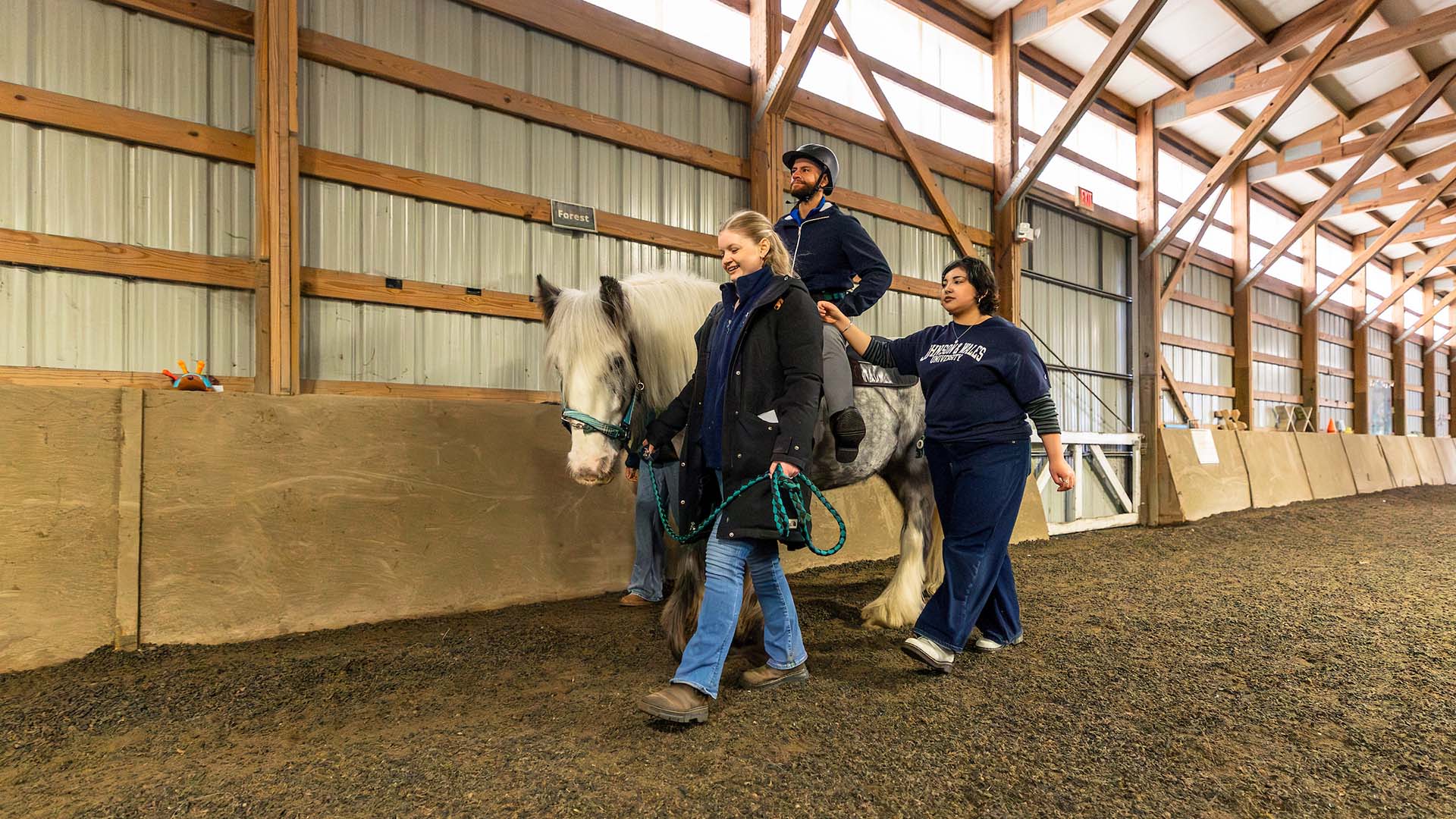
Hippotherapy is a specialized type of therapy that uses a horse’s movement to help treat patients with physical, occupational or speech challenges. (It does not involve hippopotamuses, which was news for this writer.) This spring, students in the Animal Science, Health Science, and Exercise and Sports Science programs experienced this unique type of therapy firsthand on a trip to the The Bridge Center in Massachusetts.
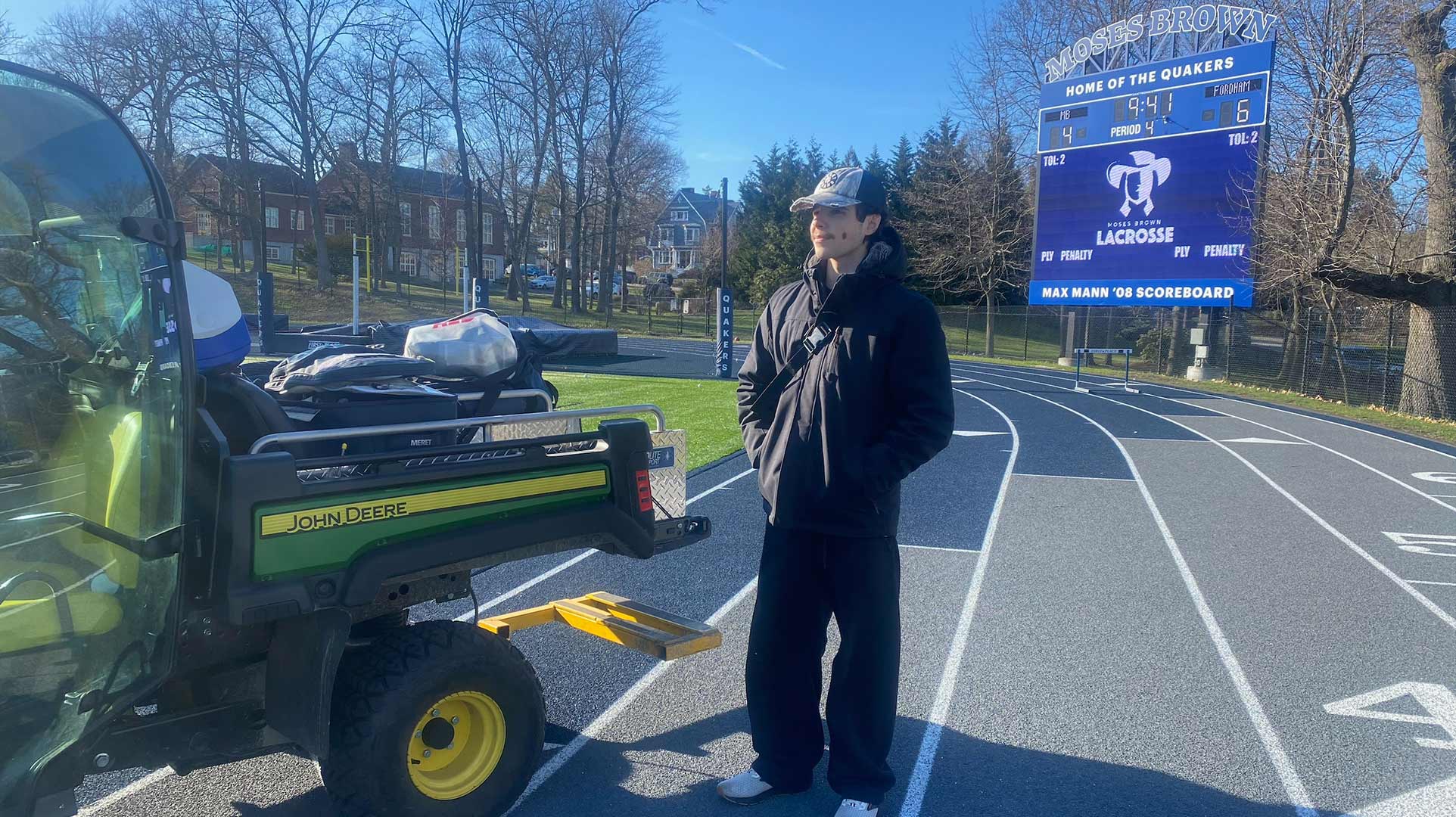
As an Exercise and Sports Science major and an athlete, Maxim Allor ’26 found the perfect opportunity: interning with Moses Brown School’s athletics trainer.
Ten JWU students — some still undergrads, others newly minted alumni — recently saw their names in print, not in a school paper or class project, but in the Rhode Island Medical Journal. The June 2025 issue features a special section of research around the topic of young adult mental health, a growing public health…
What do you learn in JWU’s Exercise and Sports Science program?
Students study kinesiology, exercise physiology, exercise assessment and prescription, human performance, clinical exercise physiology, sports nutrition, anatomy, chemistry, physics and research methods.
How long does it take to earn the Exercise and Sports Science B.S.?
JWU’s Providence program is designed as a four-year degree requiring 121 credits. Completion time may vary based on transfer credits, placement, course load and academic planning.
Does JWU offer hands-on exercise science experience?
Yes. Students complete laboratory courses, use exercise and performance assessment equipment, may collaborate on research or athletics projects, and complete an approved applied-learning option. Availability varies.
Can the program prepare me for the CSCS or exercise physiologist exam?
Selected coursework may support preparation for relevant exams. Certification organizations set separate degree, accreditation, CPR/AED, examination and other requirements that can change. Completing the degree does not automatically award certification.
Does this degree make me an athletic trainer?
No. Becoming an athletic trainer requires completion of an accredited professional athletic training program and applicable certification and state requirements. For new entrants, professional athletic training programs are graduate-level.
What can you do with an Exercise Science degree?
Graduates may pursue fitness, wellness, strength and conditioning, performance, health-promotion or exercise-physiology opportunities when employer and credential requirements are met, or continue to graduate or professional study.
Are there technical standards for the program?
Yes. Admissions is contingent upon you meeting the technical standards for this program. Prospective students should review the current standards and contact JWU with questions.