
Animal Science B.S.
Degree: B.S.
Location(s): Rhode Island
Length: 4 years
Internship: Required, 12 Credits
Credits: 122
What is Animal Science?
In JWU Providence’s Animal Science bachelor of science program, you will study how animal biology, nutrition, behavior, genetics, reproduction, health and welfare shape the care and management of domestic and captive species. The program combines science coursework with laboratory, field and experiential learning across multiple animal-focused settings.
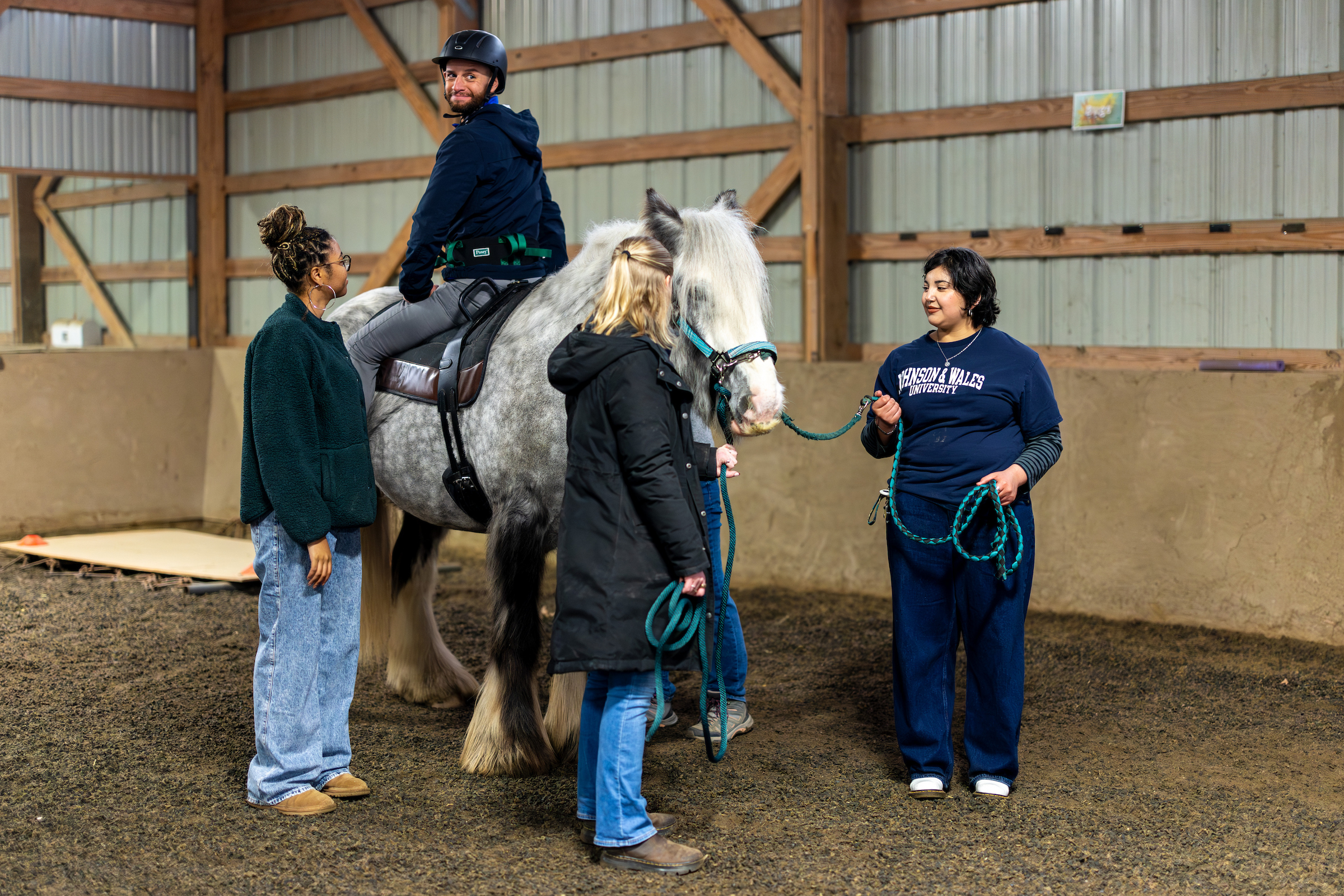
Choose a general course of study or focus your education through the Pre-Veterinary Studies or Equine specialization. Through hands-on coursework, internships and other approved applied experiences, you can build practical skills while preparing for animal science careers or advanced study in veterinary and related fields.
Animal Science at a Glance
- Program options: General course of study, Pre-Veterinary Studies specialization or Equine specialization
- Sample subjects: Animal anatomy and physiology, nutrition, behavior, reproduction and genetics, disease prevention, welfare and management
- Applied learning: Laboratory and field experiences, internships, undergraduate research and eligible study abroad options
Curriculum & Degree Requirements
Credits Major Courses | ||
| ANSC1010 | Introduction to Animal Science | 3 |
| ANSC1015 | Introduction to Animal Science Laboratory | 1 |
| ANSC1050 | Domestic Animal Anatomy and Physiology | 3 |
| ANSC1055 | Domestic Animal Anatomy and Physiology Laboratory | 1 |
| ANSC2010 | Principles of Animal Nutrition | 3 |
| ANSC2030 | Principles of Animal Behavior and Training | 3 |
| ANSC3010 | Animal Reproduction and Genetics | 3 |
| ANSC3110 | Animal Disease and Preventative Health | 3 |
| ANSC3235 | Animal Husbandry and Management Laboratory | 1 |
| ANSC4120 | Animal Welfare, Health and Wellness | 3 |
| Major Electives or Specialization | ||
| Choose 15 credits of the following* or Specialization listed below:† | 15 | |
| Perspectives in Animal-Assisted Interventions | ||
| Laboratory Animal Science and Management | ||
| Special Topics in Animal Science I | ||
| Special Topics in Animal Science II | ||
| Special Topics in Animal Science III | ||
| Plant Cultivation I: Soil, Soil Substitutes and Disease Management and Plant Cultivation I: Soil, Soil Substitutes and Disease Management Laboratory | ||
| Genetics | ||
| General Microbiology and General Microbiology Laboratory | ||
| Molecular Biology and Molecular Biology Laboratory | ||
| Evolution | ||
| Epigenetics | ||
| Coastal Ecology and Coastal Ecology Laboratory | ||
| Fundamentals of Pharmacology | ||
| Plant Cultivation II: Hydroponics, Aquaponics, Tissue Culture, Genetics and Extraction and Plant Cultivation II: Hydroponics, Aquaponics, Tissue Culture, Genetics and Extraction Laboratory | ||
| Comparative Vertebrate Anatomy and Comparative Vertebrate Anatomy Laboratory | ||
| Integrative Biology and Integrative Biology Laboratory | ||
| Functional Histology and Functional Histology Laboratory | ||
| Fundamentals of Immunology | ||
| Foundations in Chemistry and Foundations in Chemistry Laboratory | ||
| General Chemistry I and General Chemistry I Laboratory | ||
| General Chemistry II and General Chemistry II Laboratory | ||
| Organic Chemistry I and Organic Chemistry I Laboratory | ||
| Organic Chemistry II and Organic Chemistry II Laboratory | ||
| Introduction to Organic Chemistry and Introduction to Organic Chemistry Laboratory | ||
| Biochemistry and Biochemistry Laboratory | ||
| Analytical Chemistry | ||
| Workshop in Acquiring Social Research Skills | ||
| Undergraduate Laboratory and Field Research | ||
| Undergraduate Research Experience | ||
| Choose 15 credits of the following* or Specialization listed below:† | 15 | |
| Financial Accounting | ||
| Introduction to Equine Studies and Introduction to Equine Studies Laboratory | ||
| Collegiate Horseback Riding | ||
| Equine Health and Sports Therapy | ||
| Horsemanship, Training and Welfare | ||
| Sport Horse Judging and Competition Management | ||
| Equine Facility Management | ||
| Introduction to Business and Management | ||
| Exploring Cheese | ||
| Exploring Mead and Honey | ||
| An Introduction to the Fields of Food, Food Service and Nutrition | ||
| Introduction to Food Product Development | ||
| Food Science | ||
| Food Processing | ||
| Food Writing | ||
| Introduction to Event Management | ||
| Medical Terminology | ||
| General Physics I and General Physics I Laboratory | ||
| General Physics II and General Physics II Laboratory | ||
| Introductory Psychology | ||
| Environmental Science | ||
| Sustainability Policy and Planning | ||
| Food Sustainability | ||
| Introduction to Food Systems | ||
| Sustainability in the Culinary Kitchen | ||
| Cultivating Local Food Systems | ||
| Applied/Experiential Learning | ||
| Choose 12 credits from the following: | 12 | |
| College of Arts & Sciences Internship | ||
| Undergraduate Research Experience | ||
| Honors Directed Academic Experience | ||
Study Abroad | ||
| University Core Curriculum | ||
| Communicating | 9 | |
| Rhetoric & Composition I | ||
| Rhetoric & Composition II | ||
| Communication Skills | ||
| Connecting | 6 | |
Two courses with the Connecting attribute (ECNG), one at the 2000 level, one at the 4000 level | ||
| Experiencing | 6 | |
Two courses with the Experiencing attribute (EEXP), different disciplines | ||
| Measuring | 6 | |
| Fundamentals of Algebra (or higher, based on student’s placement) | ||
| Statistics I | ||
| Exploring | 4 | |
| General Biology – Cellular and General Biology Laboratory – Cellular | ||
| Interacting | 6 | |
Two courses with the Interacting attribute (EINT), different disciplines | ||
| A&S electives | 7 | |
| General Biology – Organismal and General Biology Laboratory – Organismal | ||
Additional course with the Arts & Sciences elective attribute (EASC) | ||
| Free Electives # | ||
| 12 credits selected from 1000-4999 numbered offerings within the university | 12 | |
| Total Credits | 122.0 | |
Gain Real World Animal Science Experience
Develop practical skills through experiences that connect animal science concepts with animal care, facilities and professional settings.
Depending on the course, pathway and approved opportunity, JWU students may:
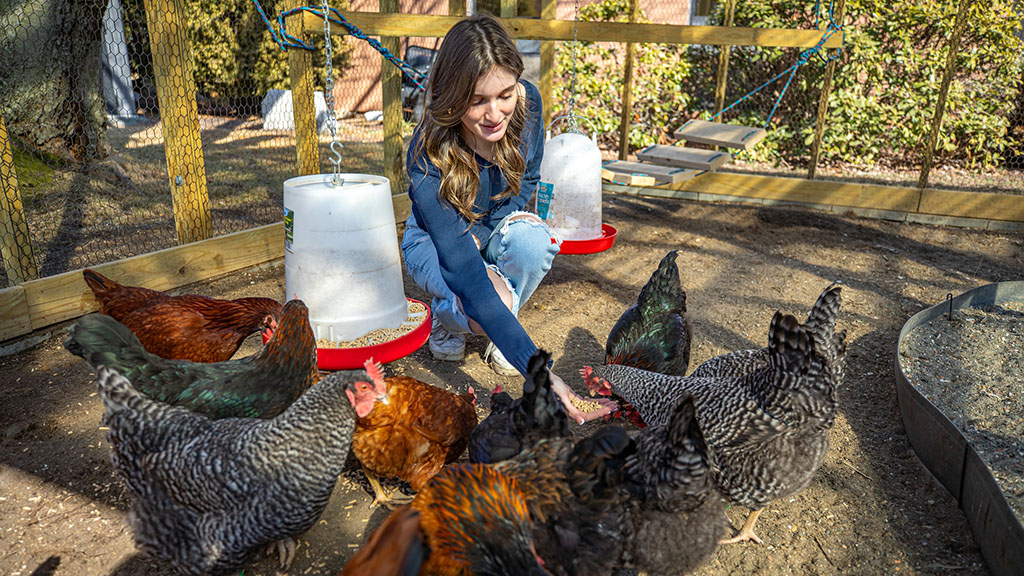
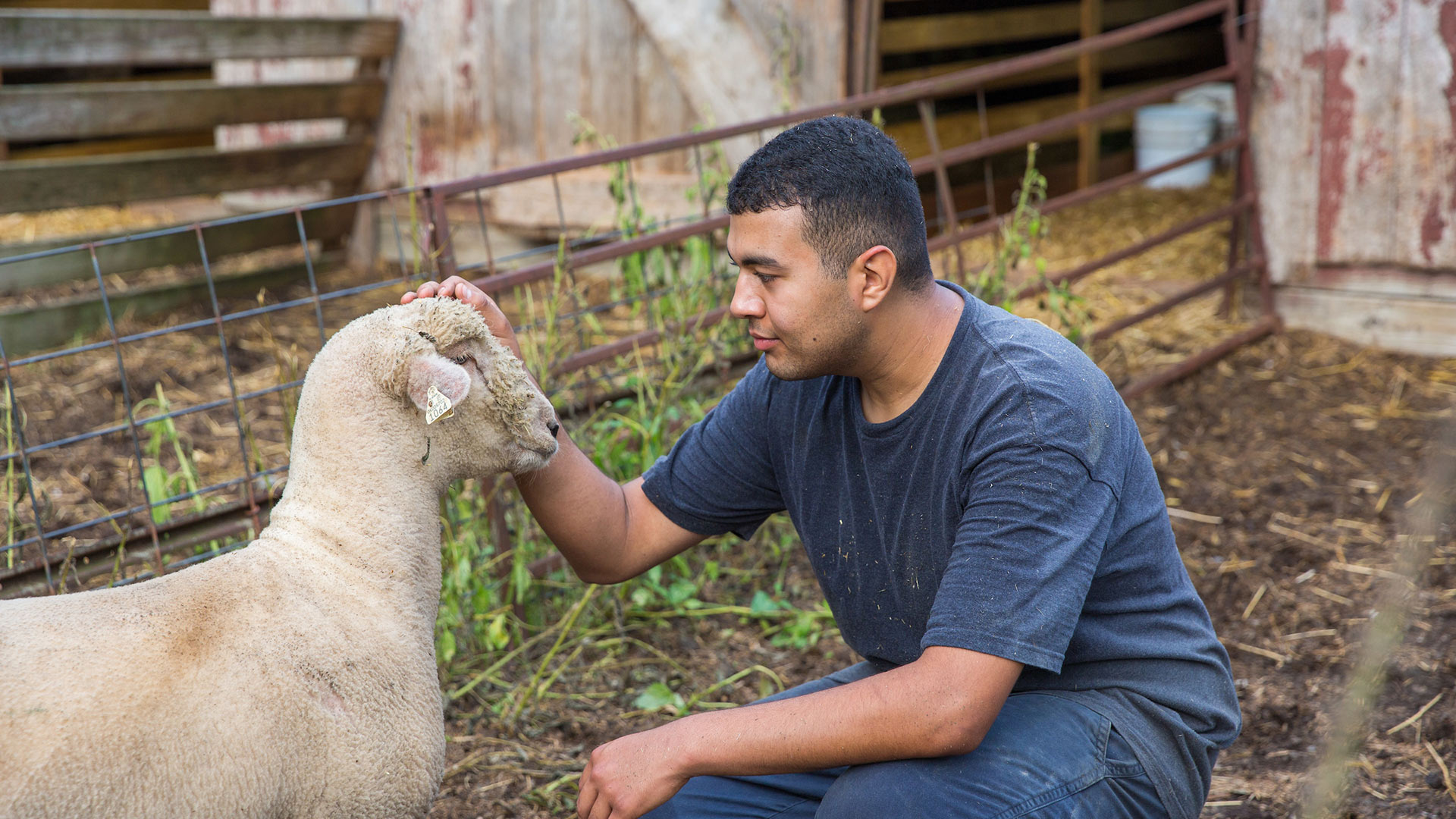
- Practice animal handling, husbandry, health maintenance, nutrition and welfare skills across multiple species.
- Use anatomical models, mammalian specimens and diagnostic imaging in anatomy and physiology laboratory work.
- Complete internships with approved animal science-focused organizations.
- Participate in undergraduate research, field experiences or eligible study abroad opportunities.
- Connect classroom learning with regional experiences such as visiting Cummings School of Veterinary Medicine at Tufts University or interning at Save the Bay.
Hailey Sangillo ’27
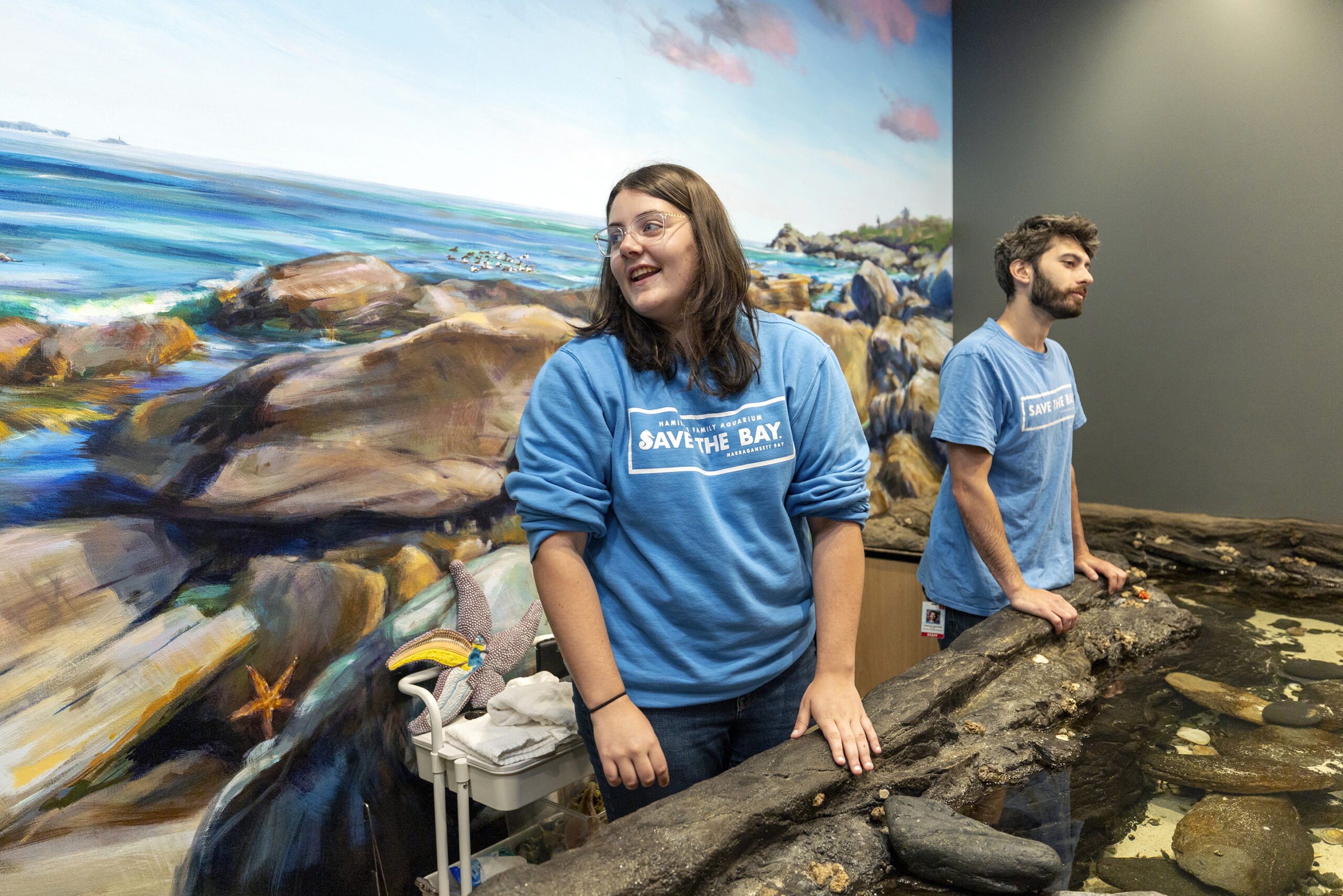
A Coastal Ecology class took Hailey Sangillo out on Narragansett Bay to test water quality with Save The Bay — and connected her to the people who later hired her as an intern. She spent the summer at Save The Bay’s aquarium in Newport, teaching visitors about native Rhode Island species and building care pages for every animal in the collection. Animal Science requires two internships, and this was her first.
Animal Science Careers & Graduate Study
An Animal Science bachelor’s degree can support entry-level opportunities across animal care, research, agriculture, health, welfare and equine settings or prepare you for graduate study.
Potential pathways include:
- Laboratory animal care technician or assistant
- Animal care, husbandry or welfare specialist
- Animal nutrition or feed-industry roles
- Animal product sales representative
- Equine care or facility management roles
- Animal behavior or training support roles
- Veterinary healthcare support roles
- Wildlife, marine, zoo or research support roles
Some professions may require additional study, background checks, certifications, licenses, exams and/or experience as required qualifications for employment. Students are responsible for verifying that they can meet the employment requirements of potential employers.
Admission is contingent upon meeting the technical standards for this program.
The Biology Lab
In the Biology Lab, Animal Science students learn the fundamentals of biology and examine animals through dissection and microscopic study.
We have partnered with various farms and facilities so students can learn in real settings. Our industry partners include:
- Brown University Research Facility
- Roger Williams Park Zoo
- Mystic Aquarium
- Wrights Dairy Farm
- Tufts University Cummings School of Veterinary Medicine
Hands-On Animal Science Learning at Tufts University
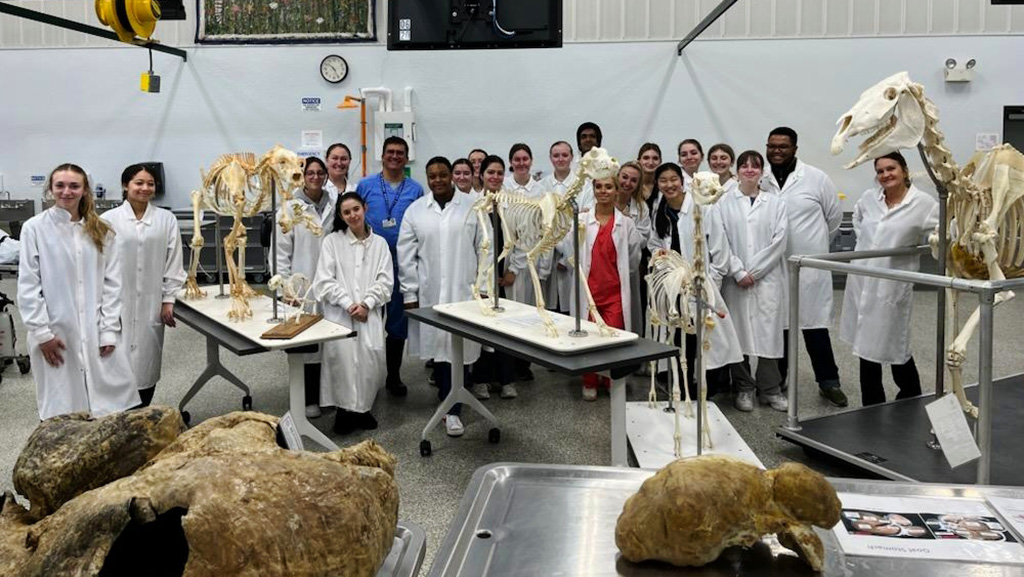
Animal Science students taking the Domestic Animal Anatomy and Physiology Lab course recently visited Tufts University’s Cummings School of Veterinary Medicine to participate in laboratory rotations, including a Small & Large Animal Anatomy lab and Wildlife Anatomy lab.
Study Animal Science in Providence, Rhode Island
Students study animal anatomy and physiology, nutrition, behavior and training, reproduction and genetics, disease prevention, husbandry, health, welfare and management. The curriculum includes science, laboratory and applied-learning experiences across multiple animal species.
The Providence Animal Science B.S. is designed as a four-year program. Actual completion time may vary based on transfer credits, course load, specialization and individual academic planning.
Students may complete a general course of study or choose the Pre-Veterinary Studies or Equine specialization. Students should review the current catalog and speak with an advisor about course requirements and how each option supports their goals.
Animal Science can provide relevant science coursework and experience for students considering veterinary school. JWU’s Pre-Veterinary Studies specialization is designed to help students complete major prerequisite coursework for DVM applications. Requirements vary by veterinary school, and completing the program does not guarantee admission.
Yes. Students gain experience through laboratory and field coursework, internships and other approved applied-learning options. Experiences may include animal handling, husbandry, health maintenance, facilities, nutrition, research and work with animal-focused organizations. Availability and eligibility vary.
Graduates may pursue opportunities in animal care and welfare, laboratory animal care, animal nutrition, equine management, veterinary healthcare support, research support and animal-related sales or services. Some careers require graduate education, certification, licensure or additional experience.
No. Animal Science is a broad bachelor’s program focused on animal biology, care, management, health and welfare. Veterinary technology programs prepare students for credentialed veterinary technician roles and have separate accreditation and licensing requirements. Students should compare programs based on the career they intend to pursue.
Yes. JWU publishes technical standards related to safe animal handling, physical and environmental requirements, protective practices and health risks. Rabies vaccination is strongly encouraged for some coursework and may be required by an external internship or field site. Students should review the current standards and contact JWU with accommodation or participation questions.
Faculty Contact
Christopher Holland, Ph.D.
Program Lead & Assistant Professor
401-598-1081
christopher.holland@jwu.edu