Changing The Recipe
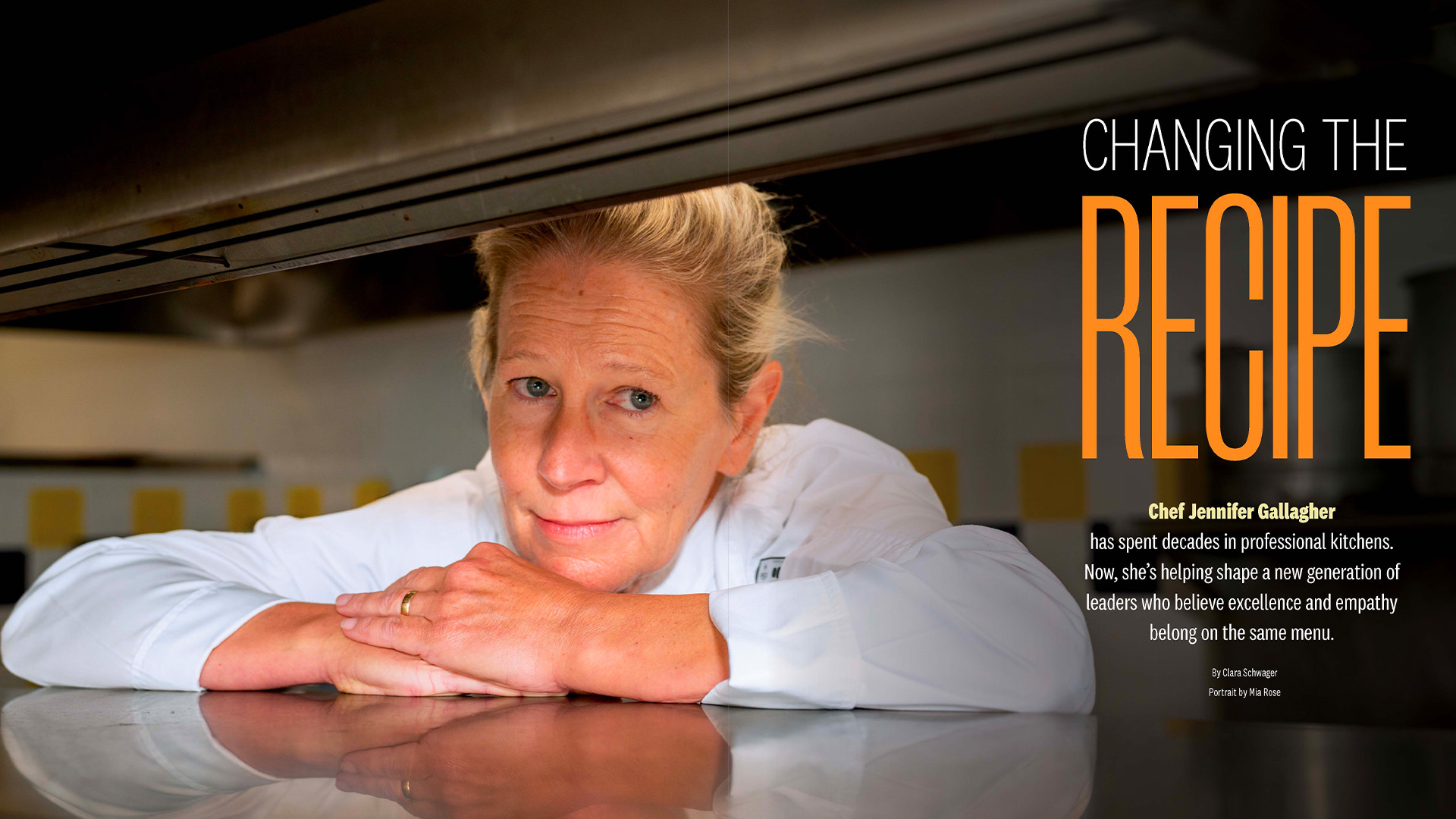
Chef Jennifer Gallagher has spent decades in professional kitchens. Now, she’s helping shape a new generation of leaders who believe excellence and empathy belong on the same menu.
Chef Jennifer Gallagher can still picture the magazine that changed her life.
She was in middle school when her older sister handed her an issue of Gourmet. Flipping through its pages, Gallagher stopped at a photograph of students gathered on the steps of a culinary school. Until that moment, she hadn’t known such a place even existed. In the 1980s, becoming a chef wasn’t a career path most high school guidance counselors talked about. But for Gallagher, the image crystallized something she already knew about herself.
She wanted to cook.
“I’m one of those lucky people,” she says. “I knew what I wanted to do, and I actually got to do it.”
She found her way into restaurant kitchens as soon as she could, quickly falling in love with the rhythm of professional cooking. Every service felt like a performance built on precision and teamwork. There was the adrenaline of a busy dinner rush, the satisfaction of seeing a carefully planned menu come together, and the camaraderie that develops when an entire kitchen moves as one.
“It can be challenging,” she says. “But when you write the menu, select the wines and everything comes together for a great night, there’s nothing better.”
That passion for the profession has never faded. What has changed, however, is Gallagher’s definition of what makes a successful kitchen and, ultimately, a successful career.
When Gallagher entered the food industry, there were certain assumptions that simply weren’t questioned. Long hours were expected. Working 70- or even 80-hour weeks was worn as a badge of honor. Commitment was measured by endurance, and young chefs learned quickly that exhaustion was often treated as proof of dedication.
“It was just the expectation,” Gallagher says. “That’s what everybody thought the career required.”
Today, after more than two decades educating students at Johnson & Wales University, she sees a very different generation walking into culinary classrooms. A generation that’s asking different questions and, in many ways, changing the profession itself.
That realization hit head-on during a guest speaker event several years ago. Gallagher had invited a chef to campus to demonstrate techniques and talk about building a career in the industry. She expected students to ask about recipes, restaurants or career milestones.
Instead, one of the first questions came from an 18-year-old student who simply asked:
What about work-life balance?
Gallagher still laughs at her own surprise. “My head almost spun off,” she recalls.
Younger professionals increasingly expect organizations to invest in their well-being.
Today, after more than two decades educating students at Johnson & Wales University, she sees a very different generation walking into culinary classrooms. A generation that’s asking different questions and, in many ways, changing the profession itself.
That realization hit head-on during a guest speaker event several years ago. Gallagher had invited a chef to campus to demonstrate techniques and talk about building a career in the industry. She expected students to ask about recipes, restaurants or career milestones.
Instead, one of the first questions came from an 18-year-old student who simply asked:
What about work-life balance?
Gallagher still laughs at her own surprise. “My head almost spun off,” she recalls.
Today, she says, it’s one of the most common questions students ask visiting chefs. How many hours do you work? Can you have a family? What does a sustainable career actually look like?
The questions reflect more than changing attitudes inside culinary education. They mirror broader shifts happening across the workforce. According to Deloitte’s 2025 Gen Z and Millennial Survey, work-life balance is the top consideration Gen Z employees evaluate when choosing an employer, ranking ahead of salary for many respondents, while meaningful work and supportive workplace culture continue to rise as defining career priorities. Rather than accepting burnout as inevitable, younger professionals increasingly expect organizations to invest in their well-being; and they’re willing to leave workplaces that don’t.
Gallagher doesn’t see those expectations as unrealistic. She sees them as necessary.
“I think the industry has had to evolve,” she says. “If you want people to work for you — and enjoy what they’re doing — that has to be part of the conversation.”
That evolution is visible not only in restaurants, but throughout the food industry. Employers recruiting Johnson & Wales students increasingly promote predictable schedules, professional development opportunities and workplace cultures designed to retain talented employees. Some openly advertise capped work weeks and benefits that would have been almost unheard of when Gallagher was starting her career.
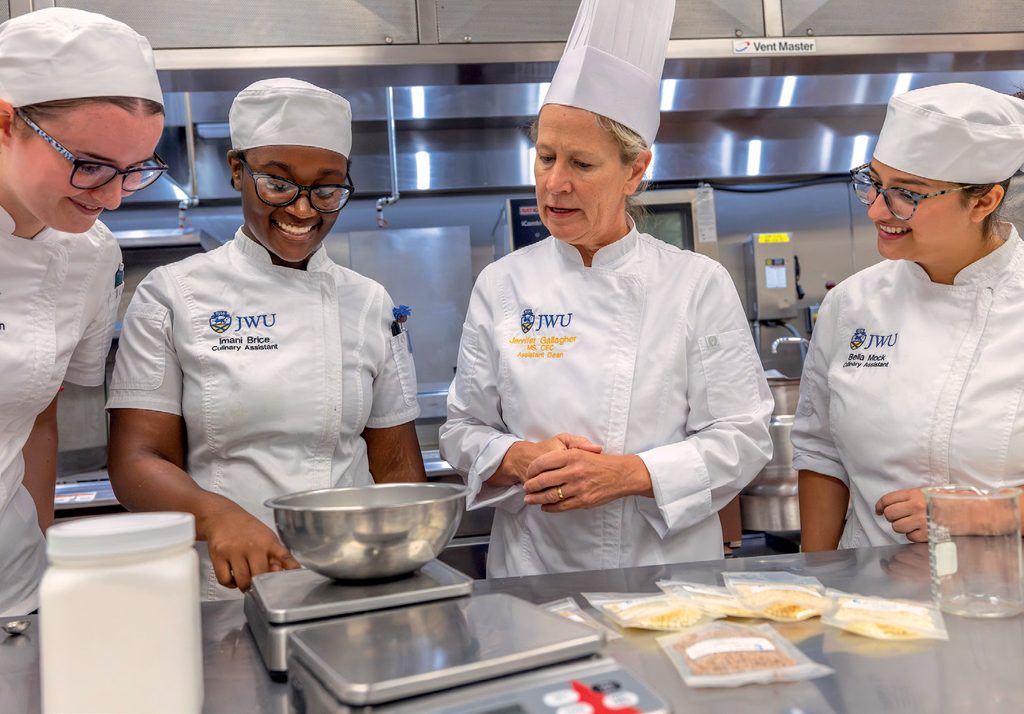
It’s a shift she welcomes, not because the work has become easier, but because the industry has recognized that caring for employees ultimately strengthens the businesses they build.
“We lost a lot of great people,” Gallagher says. “People who loved the work but eventually decided they couldn’t keep living that way.”
Those conversations have also changed the way Gallagher mentors students. Every fall, she meets first-year culinary students who arrive convinced they already know exactly where their careers will lead.
Some dream of opening restaurants; others imagine becoming television chefs. Many have never worked a single shift in a professional kitchen. Within weeks, reality begins to set in — long hours on their feet, fast-paced labs, new techniques. The realization that loving food and thriving in a commercial kitchen are not always the same thing.
“I want them to have options. I want them to build a career, not just have a job.”
-Jennifer Gallagher
Some begin to wonder if they’ve made the wrong decision. Rather than reassuring them they’ll become chefs anyway, Gallagher offers something more valuable: perspective.
She often walks students outside the classroom, looks back through the windows into the teaching kitchens and reminds them that there are countless ways to build a career rooted in food.
Some graduates will become executive chefs. Others will work in nutrition, food science, product development, culinary research, food media, entrepreneurship or education. The goal isn’t to steer students toward one destination. It’s to help them discover the path that fits them best.
“I want them to have options,” she says. “I want them to build a career, not just have a job.” That distinction matters. Careers evolve; jobs end.
Gallagher encourages students to think beyond the role they imagine at 18 years old and prepare for the person they’ll become at 30, 40 or 50. A four-year education, she believes, creates flexibility that allows graduates to continue shaping their futures as both they and the industry evolve.
That philosophy extends beyond the classroom.
Over the past several years, Gallagher has intentionally broadened the voices students hear from throughout their education. Guest speakers and alumni panels increasingly feature professionals working across every corner of the food industry — entrepreneurs, food scientists, product developers, educators and restaurant leaders whose careers reflect the expanding possibilities available to graduates.
Just as important, they speak candidly about workplace culture. Students hear from professionals who have built successful businesses without sacrificing the people who make them successful.
For Ashley Anna Hovis ’17, JWU expanded the definition of a culinary career and helped her see the importance of shaping the culture around it. “It’s about being intentional about the career you build and the culture you create for the people coming up behind you,” says Hovis, director of cafe operations at Community Matters Cafe.
Community Matters Cafe Executive Chef Chayil Johnson ’17 believes high standards and employee well-being can coexist. “We don’t need to substitute a strong work ethic or high standards, but they don’t have to be the reason we don’t stay somewhere long or take care of ourselves,” Johnson says. For Johnson, sustainable leadership means creating a culture where people understand the why behind the work rather than being driven by fear.
Those sentiments reinforce what Gallagher hopes every graduate carries into the profession: that technical excellence and human leadership are inseparable.
“If you’re not compassionate,” she says, “how can you really be successful?”
Gallagher often reminds students that every generation changes the industry in some way. Her generation proved its commitment through relentless effort. Today’s students, she believes, are asking something equally important: Can excellence also be sustainable? Can ambitious careers leave room for family, creativity and longevity? Can leaders build kitchens where people genuinely want to stay?
Gallagher believes the answer is yes. In fact, she believes the future of the food industry depends on it.
“It’s about being intentional about the career you build and the culture you create for the people coming up behind you.”
-Ashley Anna Hovis ’17
“I want them to elevate food,” she says. “But I also want them to elevate the work experience.”
Recipes evolve, menus change — even the best chefs never stop refining their craft. Chef Gallagher believes the food industry should keep evolving, too; building kitchens where excellence and empathy belong on the same menu.