
Design B.S.
Degree: B.S.
Location(s): Rhode Island
Length: 3 or 4 years
Internship: 600 hours of Work Integrated Learning (3-year program); 6 credits of studio, project or internship (4-year program)
Credits: 94 or 123-125
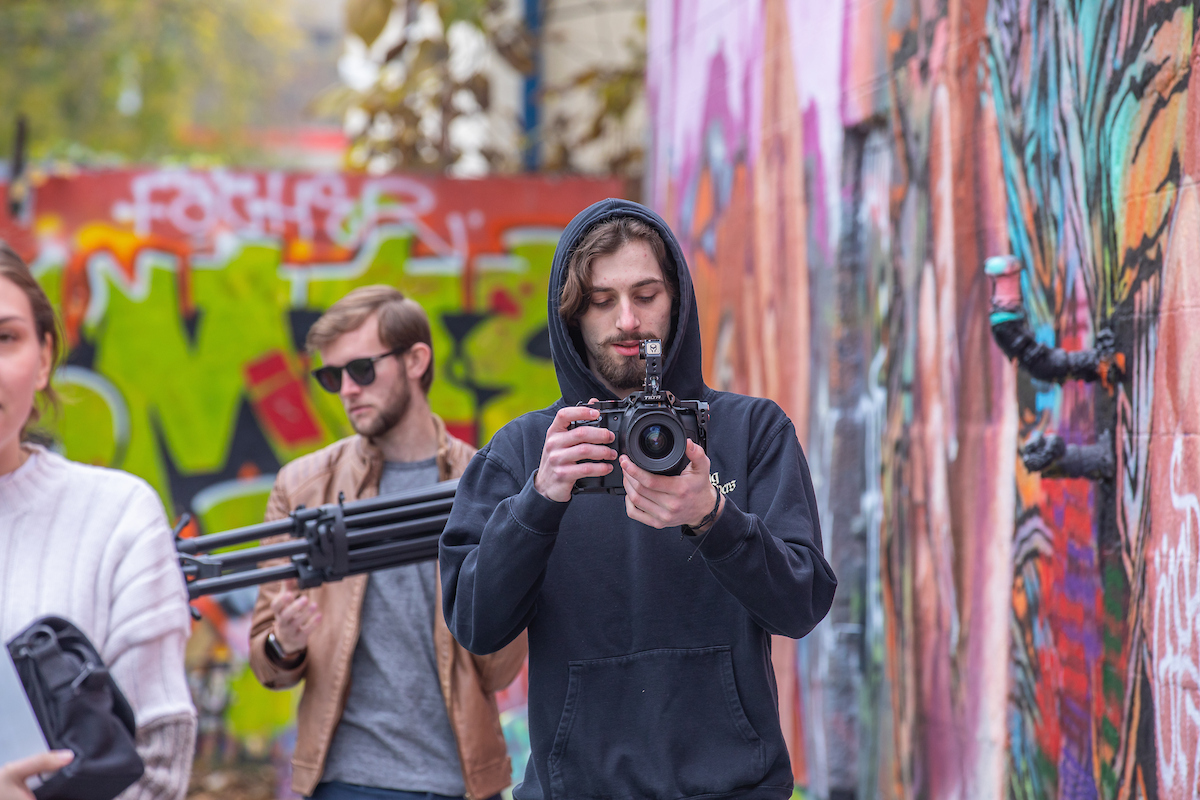
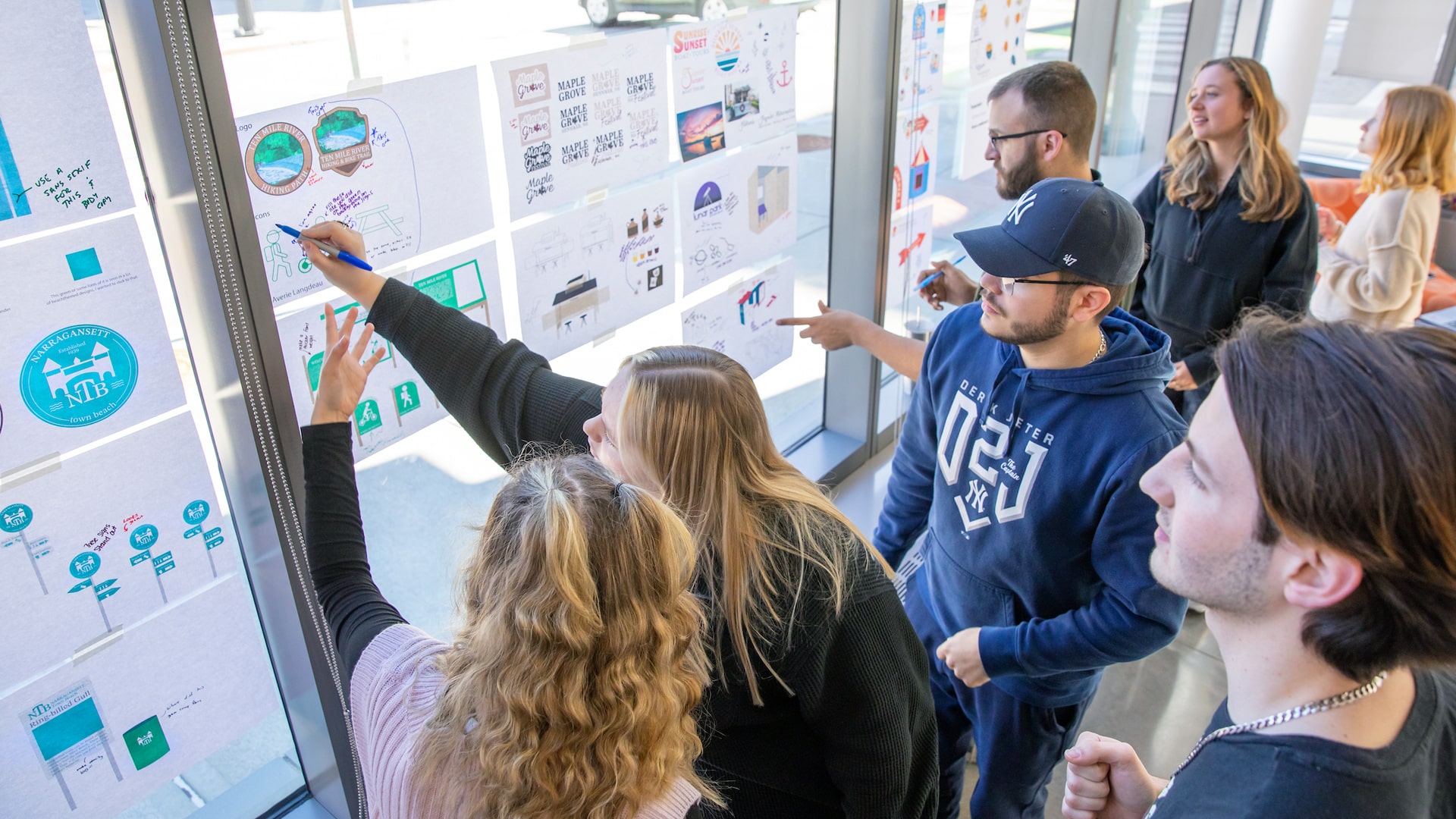
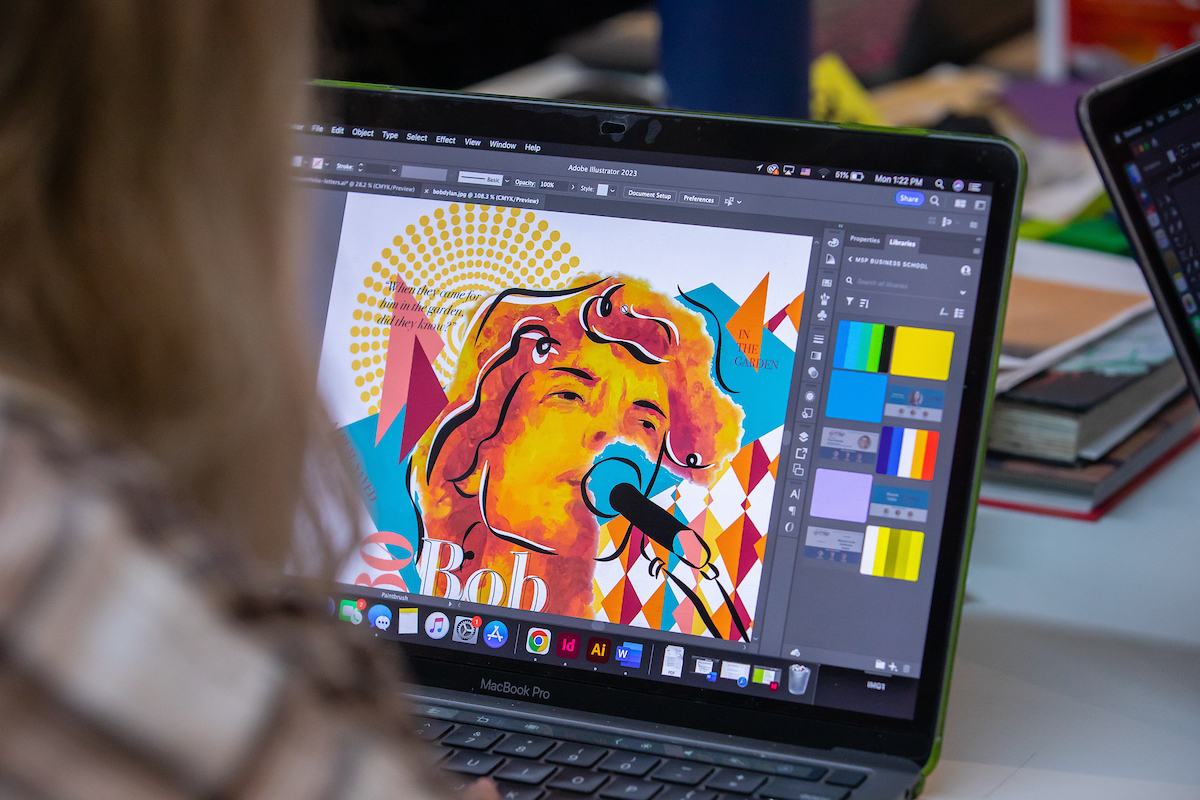
Study Graphic, UI/UX or Product Design at JWU
Turn ideas into visual, digital and physical experiences through the Bachelor of Science in Design at Johnson & Wales University’s Providence Campus. Build a common foundation in design thinking, typography, image-making, user experience and human factors, then focus your work through graphic design, Web/UI/UX design or product design courses.
Develop concepts through project-based studios that reflect professional workflows. Collaborate with community partners and interdisciplinary teams, create portfolio-ready work through Design Team and Design Studio experiences, and bring your skills together in a senior capstone and the Reveal Showcase.
Design at a Glance
- Creative paths: Graphic Design, Web/UI/UX Design and Product Design
- Signature experiences: Design Team, Design Studio, portfolio development, Design Capstone and Reveal Showcase
- Applied learning: Six credits through an approved internship, Design Studio, technical project or eligible study abroad
Choose a Design Path
You’ll also have the option of narrowing down a focus area that aligns with your career goals. Choose a creative path in:
- Graphic Design: Develop visual communication through typography, publication, branding, packaging and environmental graphics.
- Web/UI/UX Design: Study web design, content design, user experience, interaction and digital product interfaces.
- Product Design: Explore human factors, digital modeling, materials, processes and systems for physical or integrated products.
Whether your future career goals include joining a design studio, launching a startup, working for a global brand or building your own venture, your journey begins here.
Curriculum & Degree Requirements
Credits Major Courses | ||
| GDES1010 | Design Thinking & Creative Process | 3 |
| GDES1020 | Design Theory and Practice | 3 |
| GDES1040 | Foundations of Mobile & Web Design | 3 |
| GDES1060 | User Experience and Content Design I | 3 |
| GDES1080 | Vector Design & Image Editing | 3 |
| GDES2000 | Typography | 3 |
| GDES2020 | Motion Design I | 3 |
| GDES2030 | Editorial & Publication Design | 3 |
| GDES2065 | Portfolio Design & Development | 3 |
| GDES3250 | Brand Identity Design and Development | 3 |
| GDES4050 | Design Capstone | 3 |
| IDES2010 | Human Factors | 3 |
| Major Electives | ||
| Choose 9 credits from the following: | 9 | |
Graphic Design | ||
| Advanced Publication & Print | ||
| Package Design | ||
| Wayfinding & Environmental Graphics | ||
Web (Ui/UX) Design | ||
| Web Design & Development | ||
| User Experience and Content Design II | ||
| Web Design & User Experience Studio | ||
Product Design | ||
| Digital Modeling for Product Design | ||
| Materials and Processes | ||
| System Design | ||
| Applied/Experiential Learning | ||
| Choose 6 credits from the following: | 6 | |
| College of Arts & Sciences Internship | ||
| Design Studio | ||
| Technical Solutions Design Project | ||
Study Abroad | ||
| Related Professional Studies | ||
| DMSM1001 | Introduction to Digital/Social/Mobile Media | 3 |
| IDES2070 | Innovation and Design I | 3 |
| Choose 6-8 credits of Design Studio Experiences: | 6-8 | |
| Design Team I | ||
| Design Team II | ||
| Design Studio | ||
| University Core Curriculum | ||
| Communicating | 9 | |
| Rhetoric & Composition I | ||
| Rhetoric & Composition II | ||
| Communication Skills | ||
| Connecting | 6 | |
Two courses with the Connecting attribute (ECNG), one at the 2000 level, one at the 4000 level | ||
| Experiencing | 6 | |
| Art History | ||
Additional course with the Experiencing attribute (EEXP) in a different discipline | ||
| Measuring | 6 | |
| A Survey of College Mathematics (or higher, based on student’s placement) | ||
| Statistics I | ||
| Exploring | 3 | |
One course with the Exploring attribute (EEPL) | ||
| Interacting | 6 | |
| Sociology I | ||
or SOC2005 | Honors Seminar: Social Inequalities | |
Additional course with the Interacting attribute (EINT) in a different discipline | ||
| A&S Electives | 6 | |
| Foundations of Digital Photography | ||
One course with the Arts & Sciences elective attribute (EASC) | ||
| Free Electives | ||
| 18 credits selected from 1000-4999 numbered offerings within the university | 18 | |
| Total Credits | 123.0-125.0 | |
|
Credits
Major Courses |
||
| GDES1010 | Design Thinking & Creative Process | 3 |
| GDES1020 | Design Theory and Practice | 3 |
| GDES1040 | Foundations of Mobile & Web Design | 3 |
| GDES1060 | User Experience and Content Design I | 3 |
| GDES1080 | Vector Design & Image Editing | 3 |
| GDES2000 | Typography | 3 |
| GDES2020 | Motion Design I | 3 |
| GDES2030 | Editorial & Publication Design | 3 |
| GDES3015 | Design Team I | 4 |
| GDES3250 | Brand Identity Design and Development | 3 |
| GDES4050 | Design Capstone | 3 |
| IDES2010 | Human Factors | 3 |
| Major Electives | ||
| Choose 9 credits of the following: | 9 | |
| Graphic Design | ||
| Advanced Publication & Print | ||
| Package Design | ||
| Wayfinding & Environmental Graphics | ||
| Web (UI/UX) Design | ||
| Web Design & Development | ||
| User Experience and Content Design II | ||
| Web Design & User Experience Studio | ||
| Applied/Experiential Learning | ||
| Students in this program are required to complete 600 hours of Work Integrated Learning. | ||
| Related Professional Studies | ||
| DMSM1001 | Introduction to Digital/Social/Mobile Media | 3 |
| IDES2070 | Innovation and Design I | 3 |
| University Core Curriculum | ||
| Communicating | 9 | |
| Rhetoric & Composition I | ||
| Rhetoric & Composition II | ||
| Communication Skills | ||
| Connecting | 6 | |
|
Two courses with the Connecting attribute (ECNG), one at the 2000 level, one at the 4000 level
|
||
| Experiencing | 6 | |
| Art History | ||
|
Additional course with the Experiencing attribute (EEXP) in a different discipline
|
||
| Measuring | 6 | |
| A Survey of College Mathematics (or higher, based on student’s placement) | ||
| Statistics I | ||
| Exploring | 3 | |
|
One course with the Exploring attribute (EEPL)
|
||
| Interacting | 6 | |
| Sociology I | ||
|
or SOC2005
|
Honors Seminar: Social Inequalities | |
|
Additional course with the Interacting attribute (EINT) in a different discipline
|
||
| A&S Electives | 6 | |
| Foundations of Digital Photography | ||
|
One course with the Arts & Sciences elective attribute (EASC)
|
||
| Total Credits | 94.0 | |
Why study design at JWU?
In JWU’s Design degree, you’ll put learning into action on real projects from day one. You’ll work with external partners through Design Team, Design Studio, Web Design Team (client projects), the JWU Entrepreneurship Center and community-based organizations. Every course includes an industry-based component (live briefs, client reviews, pro tools or portfolio-ready outcomes), so your work is seen and used beyond the classroom.
You’ll stand out in the field by:
- Building a standout portfolio: Produce increasingly sophisticated, real-world projects that show process and results.
- Developing your professional identity: Create a cohesive personal brand across your resume, case studies, website and presentation materials.
- Working with real clients: Create, manage, and present projects to community partners and startups — gaining the feedback, timelines and accountability that mirror professional practice.
- Honing in-demand skills: Branding, typography, publication, packaging, motion, photography/video.
Build a Portfolio Through Client and Studio Work
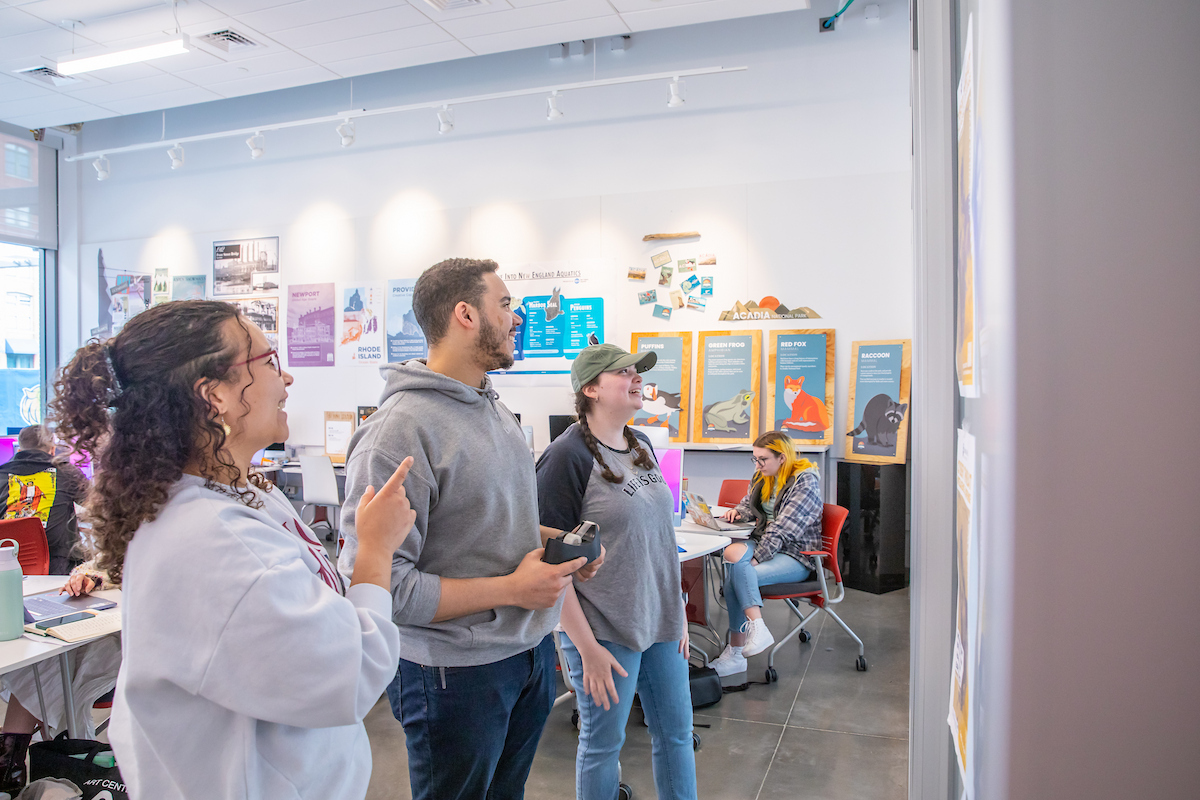
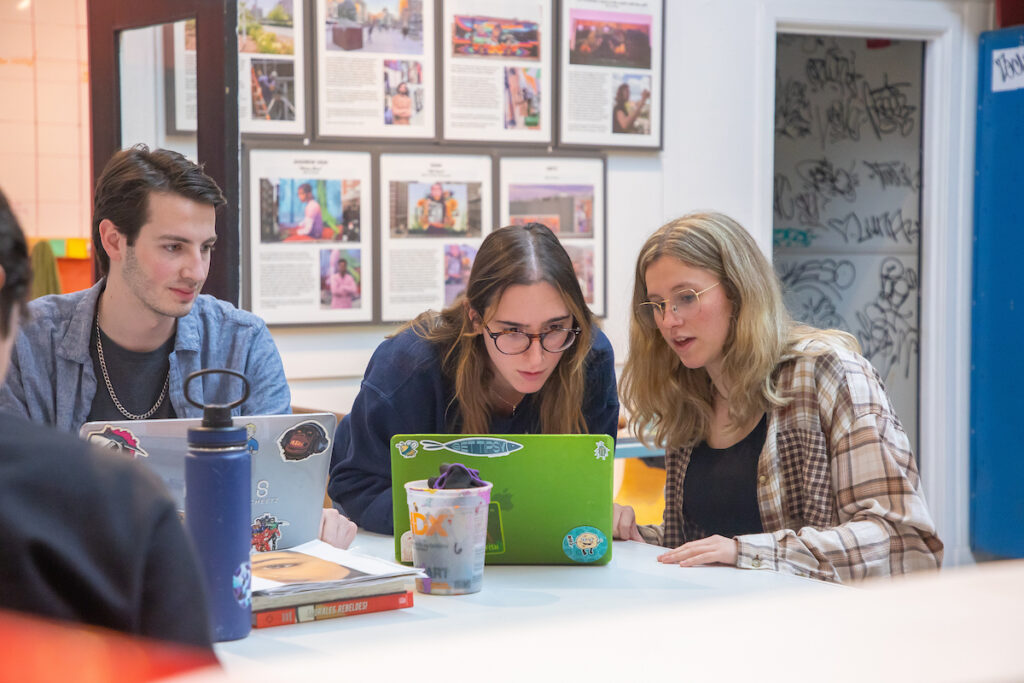
Move from foundational exercises to open-ended briefs, user research, critique, iteration and polished solutions. In client-facing and interdisciplinary experiences, students can practice presenting ideas, responding to feedback, documenting process and delivering work within professional constraints.
Complete a Design Capstone and Present Your Work
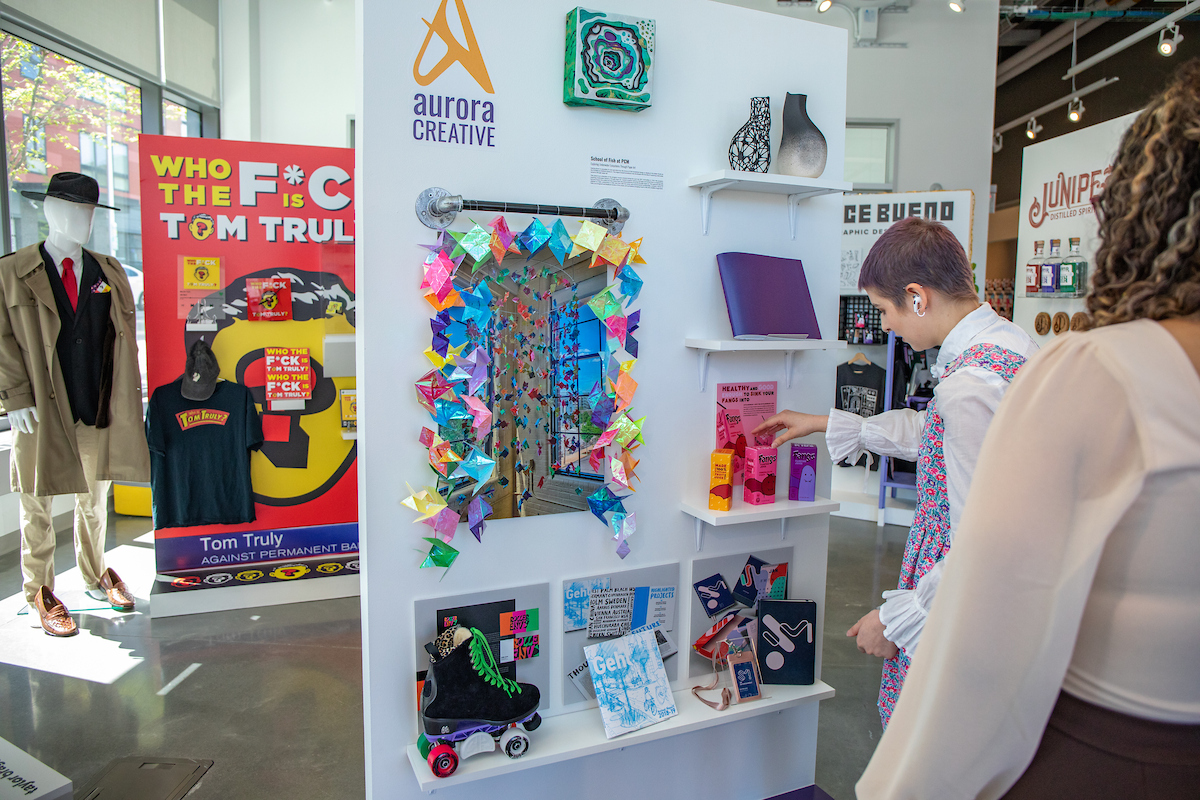
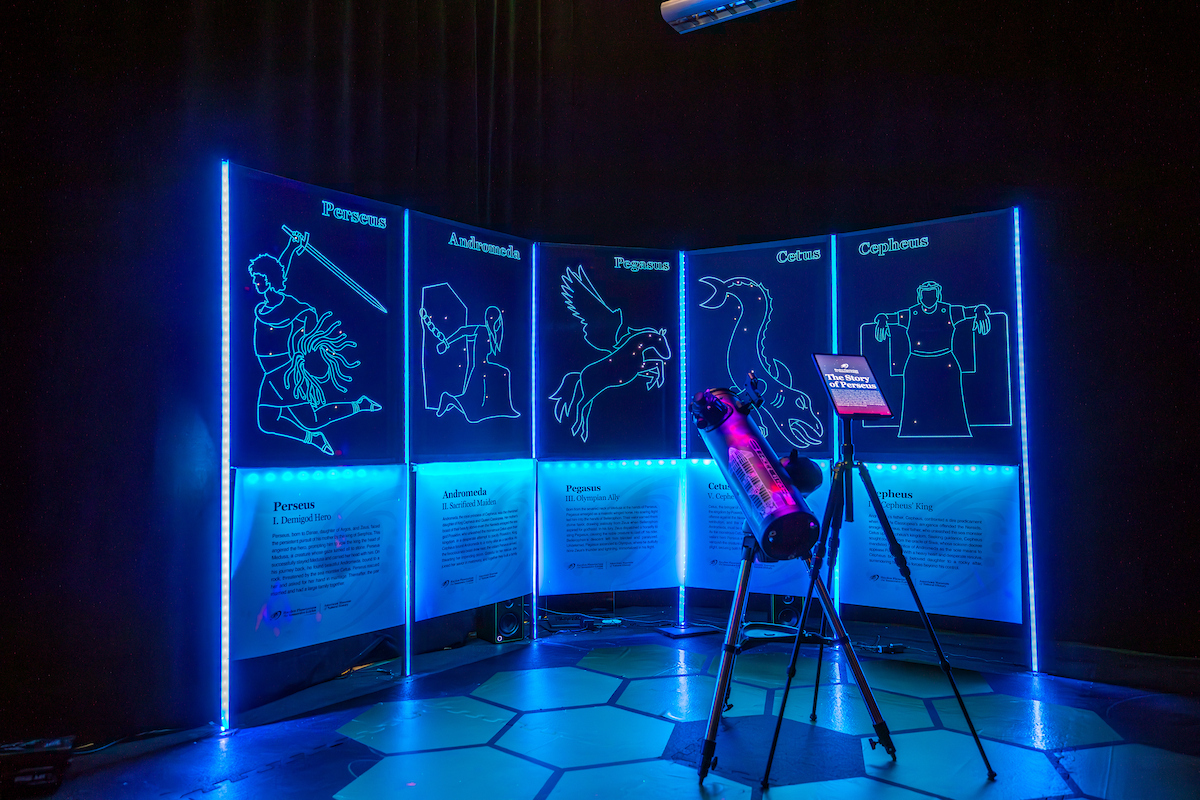
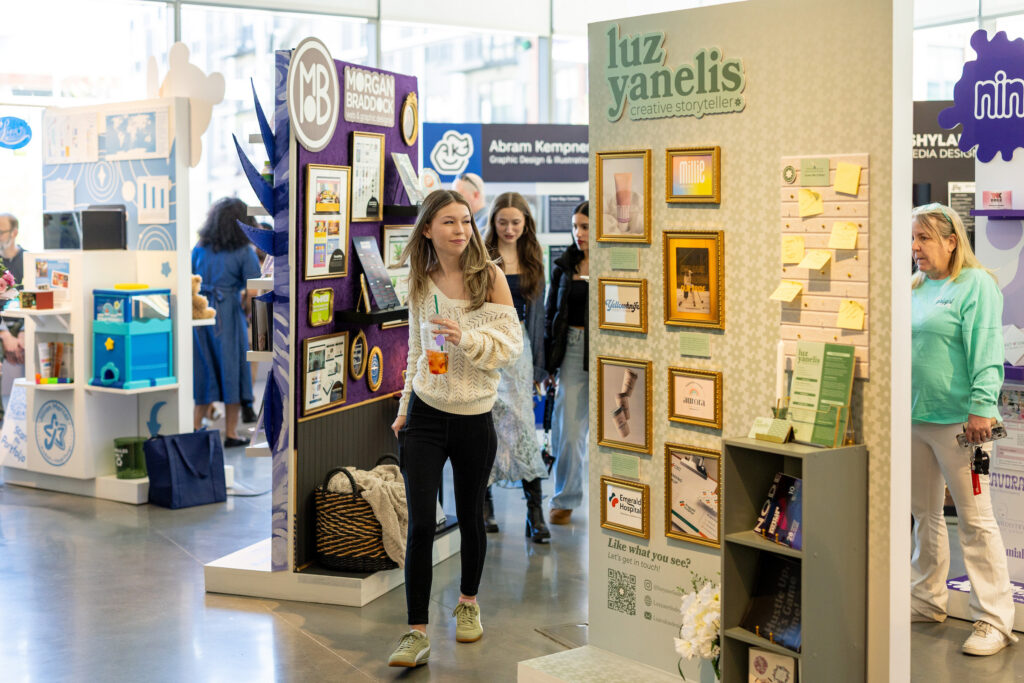
In the final year, students bring research, concept development, production and presentation skills together in a Design Capstone. The annual Reveal Showcase allows students to present work to faculty, peers and industry professionals while refining how they communicate their design decisions.
REVEAL Senior Showcase

Choose a Three- or Four-Year Design Degree
You have the option to earn your design bachelor’s degree in either three or four years. Our Career-Focused Degree Program lets you complete your bachelor’s degree in just three years with streamlined coursework and only 94 credits. This option allows you to enter the workforce sooner and save on tuition. If you prefer a more traditional pace, the four-year degree path is also available. Both options provide the same high-quality education, hands-on learning and industry preparation JWU is known for, with unique benefits tailored to your goals.
Careers in Graphic, UI/UX & Product Design
Possible careers:
- Creative director
- Creative design specialist
- Editorial designer
- Package designer
- Visual designer
- User interface/experience (UI/UX) designer
- Web designer
- Product designer
Some professions may require additional study, background checks, certifications, licenses, exams and/or experience as required qualifications for employment. Students are responsible for verifying that they can meet the employment requirements of potential employers.
Powered by Purpose: Ally Buckley ’24
“When I leave JWU, I will be prepared for whatever comes next — I will leave with a portfolio and a personal brand,” says Design student Ally Buckley. The recent graduate shares what she loves about the program and her excitement to continue exploring visual communication.
Study Design in Rhode Island
Students build a foundation in design thinking, typography, image-making, user experience, digital tools and human factors, then pursue graphic design, Web/UI/UX design or product design coursework.
The Providence Design B.S. is designed as a four-year, 120-credit program. JWU also offers a separate three-year Career-Focused Design degree. Completion time may vary based on transfer credits and academic planning.
Students choose courses in Graphic Design, Web/UI/UX Design or Product Design. Each path builds on a common design foundation and includes pathway-specific projects and methods.
The curriculum includes portfolio development, project-based studio work, client-facing experiences and a capstone. The exact portfolio depends on a student’s selected courses, projects and creative path.
Yes. Students collaborate through Design Team and Design Studio experiences and may complete an internship, technical project or eligible study abroad. Client and project availability varies.
Students use industry-relevant digital tools appropriate to their courses and design path. These can include Adobe Creative Suite products, Figma, Rhino and more.
Graduates may pursue roles in graphic, UI/UX, web, product, motion, brand, packaging, or environmental graphic design. Job requirements vary by discipline, employer, portfolio and experience.
Faculty Contact
Deana Marzocchi
Associate Professor and Department Chair
401-598-2514
deana.marzocchi@jwu.edu