Are you looking for a teaching program with built-in flexibility? Recognized by the Rhode Island Department of Education as an approved Educator Preparation Program, JWU’s Master of Arts in Teaching (MAT) is a perfect fit for career changers who want to become certified teachers in Rhode Island.
You and your classmates will matriculate as a cohort, follow a set sequence of courses and explore best practices in a real-world setting.
Student Teaching Residency
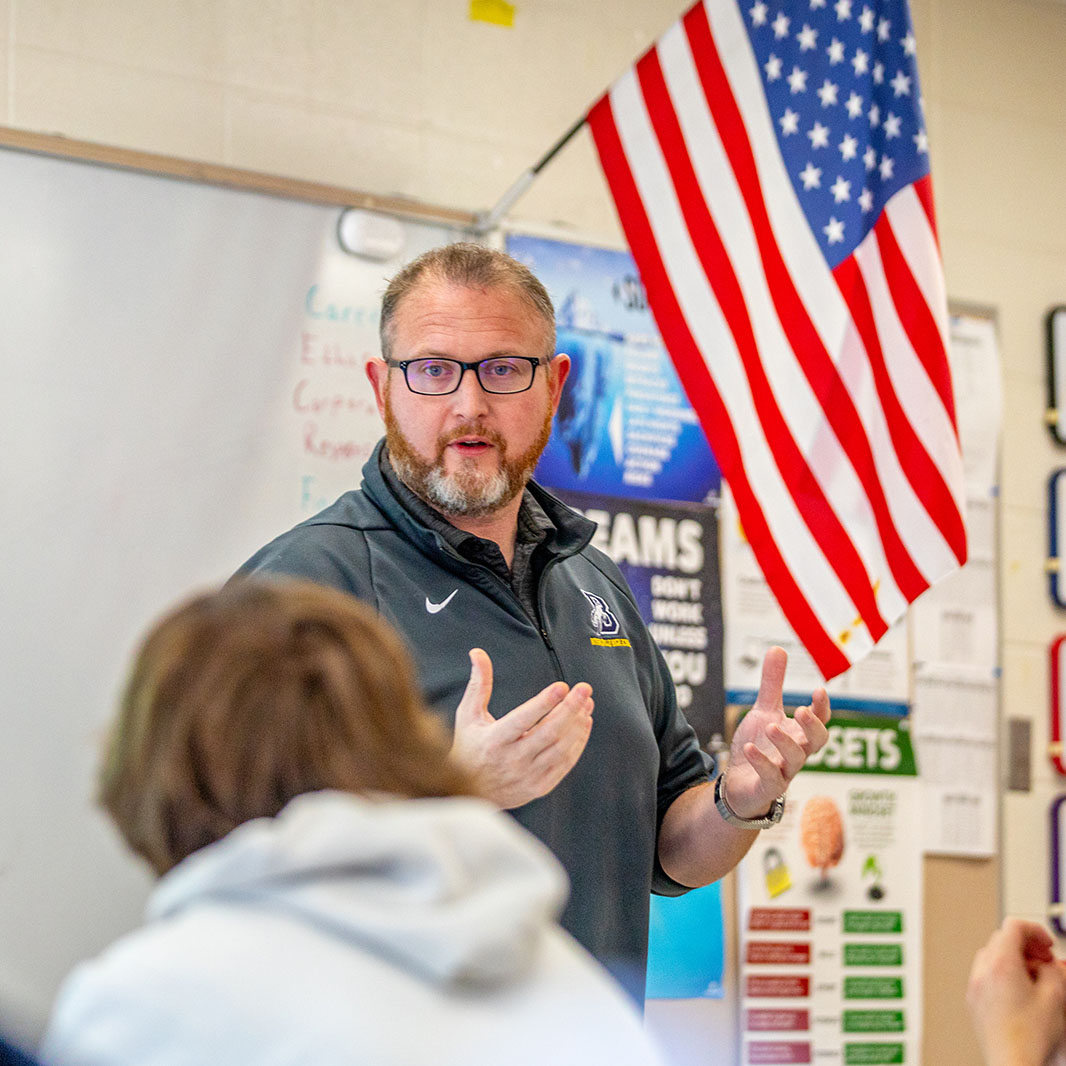
During your student teaching residency, you will learn to manage your own classroom, responding daily to students’ developmental and social needs. Under the guidance of experienced teachers, you will create and deliver lessons utilizing high quality curriculum materials, learning on the job what it takes to earn the title of teacher.
Upon graduation, you will be well-prepared to apply for state licensure to teach in your dual content areas, giving you an advantage over other teaching candidates holding state licensure in only one area.
Individual states may require specific licensing or professional certification in addition to earning a degree in order to practice in the field. Review Licensure & Professional Certification Disclosures for more information.
Capstone Part 1: Culinary/Baking and Capstone Part 2: Culinary/Baking
Total Credits
36.0-48.0
All concentrations require:
Transcript analysis to determine if any additional coursework is needed prior to program start.
Clear criminal background check to participate in required fieldwork.
In addition, individual concentrations have the following bachelor’s degree requirements:
Business/Secondary Special Education requires a bachelor’s degree in business from an accredited undergraduate college or university.
Elementary/Elementary Special Education requires a bachelor’s degree (any major) from an accredited undergraduate college or university.
Culinary Arts Education requires a bachelor’s degree in/or related to culinary arts or baking & pastry arts from an accredited undergraduate college or university.
Are you already a licensed teacher in Rhode Island?
We can tailor a course plan for you. We will review your credentials and determine which courses you need to obtain a second license in the following areas: Special Education, Elementary Education or Business Education.
Contact us for more information.
To learn more about the completion and employment rates for JWU’s Master of Arts in Teaching program, see the Rhode Island Department of Education’s EdPrep Index and the federal Title II Reporting for Rhode Island data.
Teaching & Transformation: Nimra Farooqui’s MAT Journey
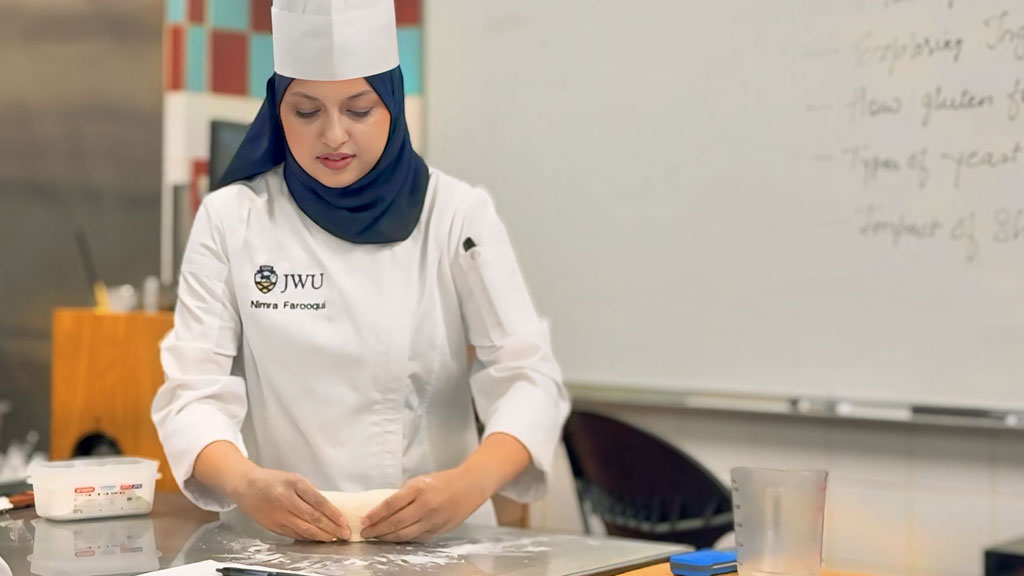
Nimra Farooqui’s journey to attend JWU may have been sparked by her passion for cooking and baking, but her experience deepened when she discovered JWU’s MAT in culinary arts education. “I saw it as a way to grow — not just as a chef, but as a person,” she explained. “Through this journey, I found my voice.”
Full time for 5 consecutive semesters (Fall I, Spring I, Summer, Fall II & Spring II)
In-person, evening classes held 2-3 times per week on JWU’s Harborside Campus
Fieldwork in a K-12 setting or at JWU depending upon concentration area
Program Sequence
Core shared coursework includes Foundations in Teaching & Learning, Inclusive Teaching of Exceptional Learners and a literacy course
3 semesters of concentration area(s) coursework
Student teaching residency
MAT Concentrations*
A dual concentration in business and special education situates you to support the learning of all middle and high school students, ensuring financial and technological literacy while supporting students’ social and developmental needs. Coursework includes field-based experiences in public schools, applying what you’ve learned by working each week with public school students in a variety of school settings. After completing your coursework and fieldwork, you will be ready for your student teaching experience.
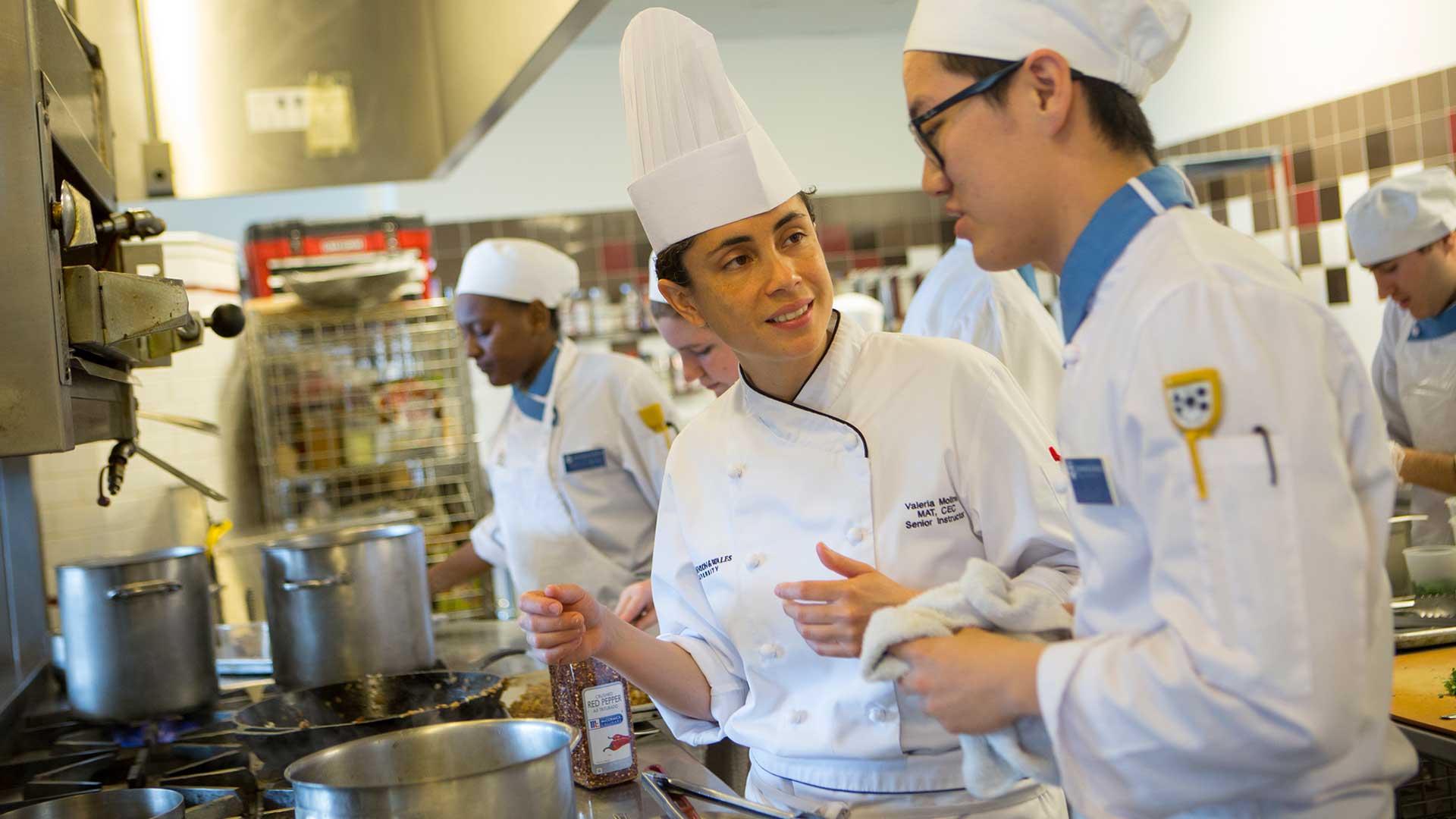
Take classes in person at our Providence Campus and have field-based experiences in public school and JWU culinary classrooms, creating nurturing environments while learning effective management skills that can translate to supervising culinary programs in any industry. This fieldwork allows you to apply what you’ve learned by working each week with students in culinary classrooms. After completing your coursework and fieldwork, you will be ready for student teaching in either a high school or university culinary setting or completing a Culinary Capstone project focused on education.
A dual concentration in elementary education and special education situates you to support the learning of all K-6/K-8 students through a full slate of methods classes (science, social studies, mathematics and literacy). Your coursework includes field-based experiences in public schools, applying what you’ve learned by working each week with public school students in a variety of school settings. After completing your coursework and fieldwork, you will be ready for your student teaching experience.
*Each of our concentrations is approved to prepare candidates to meet the requirements of the Rhode Island Right to Read Act. For Elementary/Elementary Special Education and Business/Secondary Special Education, you will graduate with a proficiency level for the Science of Reading; Culinary Arts Education will graduate with an awareness level.
To learn more about the completion and employment rates for JWU’s Master of Arts in Teaching program, see the Rhode Island Department of Education’s EdPrep Index and the federal Title II Reporting for Rhode Island data.
JWU-RI Partnership Helps Tackle Teacher Shortages
JWU and Central Falls have formalized a partnership for MAT students to jump in as substitutes and earn valuable hands-on experience. For them, time in the classroom is key — and this partnership provides the real-time experience that leads to initial teaching certification.
JWU’s MAT program is designed for someone who wants to teach but didn’t major in education as an undergraduate student. Sometimes that means students start straight out of undergrad, and sometimes it’s a career change. No matter your background, our MAT program makes sure you build the experience you need to launch your teaching career.
Admissions & Tuition
The average cost per credit is $572*
*The estimated cost per credit rate is effective for the 2026–27 academic year and is subject to change annually. The Cost of Attendance (COA) is the estimated total amount it will cost a student to attend JWU each year. For more information, contact Student Financial Services.
Learn about the admissions process and tuition for JWU’s graduate programs.
My coursework helped me apply my industry experience by breaking it down to its simplest form, then building it back into objectives and guiding questions with applied reasoning. By utilizing various methods of teaching and lesson planning, I brought these plans to life in a real-life setting.”
Amelia Warfel ’25 MAT
JWU Advantages
Cohort model: progress with your group as you work through coursework together
Small class sizes for individualized attention
Convenient evening classes with limited daytime field hours until full-time student teaching begins in the second year
Our practitioner faculty includes superintendents, district administrators, special education directors, educational coaches and teachers who use their public school experience to bring learning to life in our university-based classrooms
Our sequenced coursework is designed to help you develop realistic expectations around day-to-day teaching, from implementing lesson plans to utilizing project-based learning and specialized instruction in the classroom
District Partnership Discount for eligible employees of one of our K-12 partner school districts or schools (contact a JWU financial planner to see if you qualify)
Some professions may require additional study, background checks, certifications, licenses, exams and/or experience as required qualifications for employment. Students are responsible for verifying that they can meet the employment requirements of potential employers.
The curriculum matched what I was looking for. I also liked the cohort model — going through the entire program with the same students. We developed into a tight group.”