
Psychology B.S.
Degree: B.S.
Location(s): Rhode Island, North Carolina
Internship: Required, 6 credits
Credits: 120


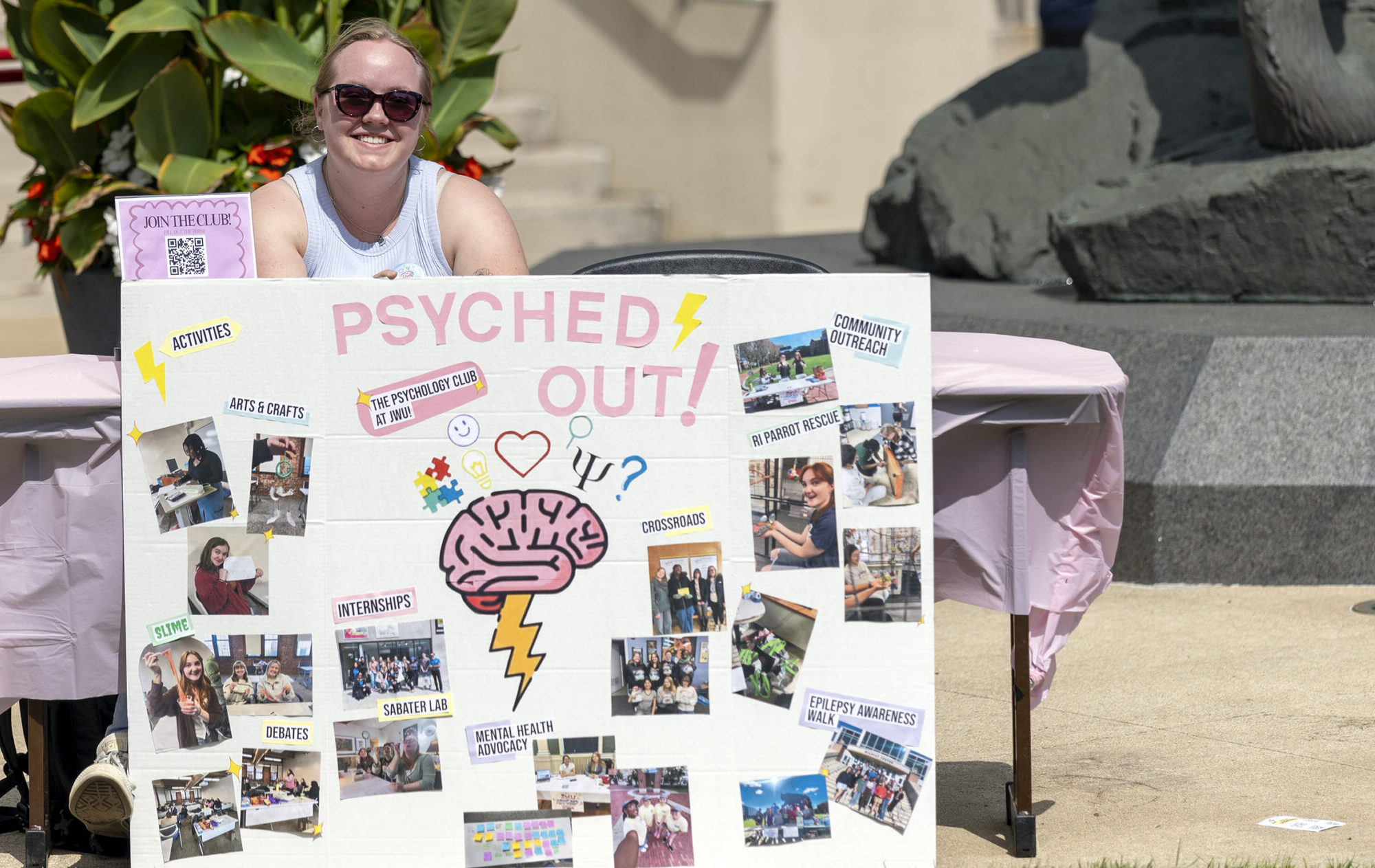
Explore the Human Mind
If you’re fascinated by human behavior, you might find yourself in demand in a range of industries. The study of psychology can offer unique career pathways in the social sciences and services, education, healthcare, business, finance, sales, industrial organizations, human resources and criminalistics.
Through project-based learning and immersive internships, you’ll gain critical thinking and research skills, scientific literacy and experience behaving ethically and professionally in the field. You’ll learn from faculty with industry experience — many of them are licensed practitioners.
You can also explore additional interests through a variety of free electives, minors and specializations. And, you can pursue a 24-credit Counseling Psychology specialization to learn more about counseling techniques, crisis intervention, addiction management and more.
Curriculum and Degree Requirements
Students in the College of Arts & Sciences will apply and adapt their knowledge in innovative ways through the Arts & Sciences Core Experience.
In addition to classes, free elective credit can be applied to a number of options, such as internships, minors or study abroad. You’re encouraged to contact an advisor before scheduling free elective credits.
Credits Major Courses | ||
| PSYC1001 | Introductory Psychology | 3 |
| PSYC1020 | Introduction to Professional Issues and Ethics in Psychology | 3 |
| PSYC2002 | Abnormal Psychology | 3 |
| PSYC2030 | Developmental Psychology | 3 |
| PSYC3001 | Social Psychology | 3 |
| PSYC3010 | Personality | 3 |
| PSYC3040 | Introduction to Neuropsychology and Psychopharmacology | 3 |
| PSYC4200 | Cultural Psychology | 3 |
| RSCH2050 | Workshop in Acquiring Social Research Skills | 3 |
| or RSCH3020 | Honors Research Methods | |
| RSCH4050 | Research Seminar in Psychology | 3 |
| Applied/Experiential Learning & Major Electives or Specialization in Counseling Psychology | ||
| Choose 6 credits from the following: | 6 | |
| College of Arts & Sciences Internship | ||
| Internship in Counseling Psychology | ||
| Undergraduate Research Experience | ||
| Honors Directed Academic Experience | ||
Study Abroad | ||
| Choose six of the following: | 18 | |
| Criminology | ||
| Counseling Theories and Techniques | ||
| Introduction to Career and School Counseling | ||
| Introduction to Case Management | ||
| Introduction to Crisis Intervention | ||
| Principles of Group Counseling | ||
| Counseling Techniques for Addictions and Other Behavioral Disorders | ||
| Introduction to Marriage and Family Therapy | ||
| Human Sexuality | ||
| Industrial/Organizational Psychology | ||
| Psychological Issues of Substance Use Disorders and Compulsive Behaviors | ||
| Health Psychology | ||
| Cognitive Psychology | ||
| Psychology of Motivation and Leadership in the Workplace | ||
| Criminalization of Mental Illness | ||
| Psychology of Conflict Resolution | ||
| Deviant Behavior | ||
| Or | ||
| Specialization in Counseling Psychology (24 credits) | ||
| Counseling Theories and Techniques | ||
| Introduction to Case Management | ||
| Introduction to Crisis Intervention | ||
| Principles of Group Counseling | ||
| Internship in Counseling Psychology (6 credits) | ||
Choose two of the following: | ||
| Introduction to Career and School Counseling | ||
| Counseling Techniques for Addictions and Other Behavioral Disorders | ||
| Introduction to Marriage and Family Therapy | ||
| University Core Curriculum | ||
| Communicating | 9 | |
| Rhetoric & Composition I | ||
| Rhetoric & Composition II | ||
| Communication Skills | ||
| Connecting | 6 | |
Two courses with the Connecting attribute (ECNG), one at the 2000 level, one at the 4000 level | ||
| Experiencing | 6 | |
Two courses with the Experiencing attribute (EEXP), different disciplines | ||
| Measuring | 6 | |
| A Survey of College Mathematics (or higher, based on student’s placement) | ||
| Statistics I | ||
or MATH2010 | Introduction to Biostatistics | |
| Exploring | 3 | |
| Choose one of the following: | ||
| Introduction to Life Science | ||
| Nutrition | ||
| Anatomy and Physiology | ||
| Interacting | 6 | |
| Sociology I | ||
or SOC2005 | Honors Seminar: Social Inequalities | |
Additional course with the Interacting attribute (EINT) in a different discipline | ||
| A&S Electives | 6 | |
Two courses with the Arts & Sciences elective attribute (EASC) | ||
| Free Electives | ||
| 24 credits selected from 1000-4999 numbered offerings within the university | 24 | |
| Total Credits | 120.0 | |
|
Credits
Major Courses |
||
| PSYC1001 | Introductory Psychology | 3 |
| PSYC1020 | Introduction to Professional Issues and Ethics in Psychology | 3 |
| PSYC2002 | Abnormal Psychology | 3 |
| PSYC2030 | Developmental Psychology | 3 |
| PSYC3001 | Social Psychology | 3 |
| PSYC3010 | Personality | 3 |
| PSYC3040 | Introduction to Neuropsychology and Psychopharmacology | 3 |
| PSYC4200 | Cultural Psychology | 3 |
| RSCH2050 | Workshop in Acquiring Social Research Skills | 3 |
| or RSCH3020 | Honors Research Methods | |
| RSCH4050 | Research Seminar in Psychology | 3 |
| Applied/Experiential Learning & Major Electives or Specialization in Counseling Psychology | ||
| Choose 6 credits from the following: | 6 | |
| College of Arts & Sciences Internship | ||
| Internship in Counseling Psychology | ||
| Undergraduate Research Experience | ||
| Honors Directed Academic Experience | ||
|
Study Abroad
|
||
| Choose six of the following: | 18 | |
| Counseling Theories and Techniques | ||
| Introduction to Career and School Counseling | ||
| Introduction to Case Management | ||
| Introduction to Crisis Intervention | ||
| Principles of Group Counseling | ||
| Counseling Techniques for Addictions and Other Behavioral Disorders | ||
| Introduction to Marriage and Family Therapy | ||
| Human Sexuality | ||
| Psychological Issues of Substance Use Disorders and Compulsive Behaviors | ||
| Health Psychology | ||
| Psychology of Motivation and Leadership in the Workplace | ||
| Psychology of Conflict Resolution | ||
| Deviant Behavior | ||
| Or | ||
| Specialization in Counseling Psychology (24 credits) | ||
| Counseling Theories and Techniques | ||
| Introduction to Case Management | ||
| Introduction to Crisis Intervention | ||
| Principles of Group Counseling | ||
| Internship in Counseling Psychology (6 credits) | ||
|
Choose two of the following:
|
||
| Introduction to Career and School Counseling | ||
| Counseling Techniques for Addictions and Other Behavioral Disorders | ||
| Introduction to Marriage and Family Therapy | ||
| University Core Curriculum | ||
| Communicating | 9 | |
| Rhetoric & Composition I | ||
| Rhetoric & Composition II | ||
| Communication Skills | ||
| Connecting | 6 | |
|
Two courses with the Connecting attribute (ECNG), one at the 2000 level, one at the 4000 level
|
||
| Experiencing | 6 | |
|
Two courses with the Experiencing attribute (EEXP), different disciplines
|
||
| Measuring | 6 | |
| A Survey of College Mathematics (or higher, based on student’s placement) | ||
| Statistics I | ||
|
or MATH2010
|
Introduction to Biostatistics | |
| Exploring | 3 | |
| Choose one of the following: | ||
| Introduction to Life Science | ||
| Nutrition | ||
| Anatomy and Physiology | ||
| Interacting | 6 | |
| Sociology I | ||
|
or SOC2005
|
Honors Seminar: Social Inequalities | |
|
Additional course with the Interacting attribute (EINT) in a different discipline
|
||
| A&S Electives | 6 | |
|
Two courses with the Arts & Sciences elective attribute (EASC)
|
||
| Free Electives | ||
| 24 credits selected from 1000-4999 numbered offerings within the university | 24 | |
| Total Credits | 120.0 | |
Make a Difference in the Lives of Others
Learning how to help others takes practice, which is why students in this program take their lessons beyond the classroom by working with real clients in real clinical settings. Experiential education is especially important in this program because it allows students to understand the impact they can have on the lives of others.
Why Study Psychology at JWU?
- You’ll learn from faculty who are licensed psychologists, mental health clinicians and therapists.
- Project-based learning and internships are a key part of the curriculum
- Explore additional interests with a wide selection of free electives as well as minors such as Community Justice, Gender Studies and Public Health.
- You can also earn a Master of Science in Addiction Counseling or Clinical Mental Health Counseling at JWU, and combine it with this bachelor’s degree to save time and money.
How I Got Here: Danielle Cutlip ’16
Psychology alum Danielle Cutlip shares how her time at JWU led to a career as an integrative behavioral health clinician and what advice she would offer students aspiring to enter the psychology field.
What can you do with a Psychology degree?
After graduation, you’ll be prepared for careers such as:
- Clinical psychologist
- Mental health counselor
- Social worker
- Human resource specialist
- Occupational therapist
Some professions may require additional study, background checks, certifications, licenses, exams and/or experience as required qualifications for employment. Students are responsible for verifying that they can meet the employment requirements of potential employers.
Considering an advanced degree?
Many Psychology students opt to continue their education by earning an advanced degree — JWU offers accelerated and combined programs to save you time and money.

Study Psychology at JWU
Faculty Contacts
Rhode Island
Paul Sylvestre, Ph.D.
Professor and Department Chair
College of Arts & Sciences
401-598-2214
paul.sylvestre@jwu.edu
North Carolina
Howard Slutzky, Psy.D.
Professor
College of Arts & Sciences
980-598-3224
howard.slutzky@jwu.edu