Why Study Environmental Science at JWU?
JWU’s new Environmental Science program prepares students to address today’s most pressing environmental challenges. Environmental science is a rapidly growing field, making it an in-demand career path with a wide variety of opportunities. Students with this degree can pursue careers in science, education, policy and law, geology, biology, conservation and management, renewable energy, consulting, and more.
“Today’s students are inheriting a world of complex challenges which will require innovative thinkers who can balance environmental, economic and social needs,” says Associate Professor Kristyn DeMarco, Ph.D., who will lead the program when it launches in Fall 2027. “The Environmental Science program at JWU empowers students to become the next generation of leaders, equipped with the knowledge and experience to create a more sustainable future for our communities and our planet.”
But what makes JWU’s Environmental Science program unique?
You can customize your degree with electives from other major programs.
Our program lets you tailor your studies to your interests through your electives. You can choose from electives across our departments and programs, such as sustainable food systems, tourism, entrepreneurship or plant cultivation to customize your degree and prepare for one of the many different career paths in the environmental science field.
“This program is more than a scientific exploration; it crosses into topics like politics, culture and economics so we can look at environmental problems through a holistic lens,” DeMarco explains. “This provides the opportunity for students to develop the multifaceted perspective needed to address today’s complicated environmental issues.”
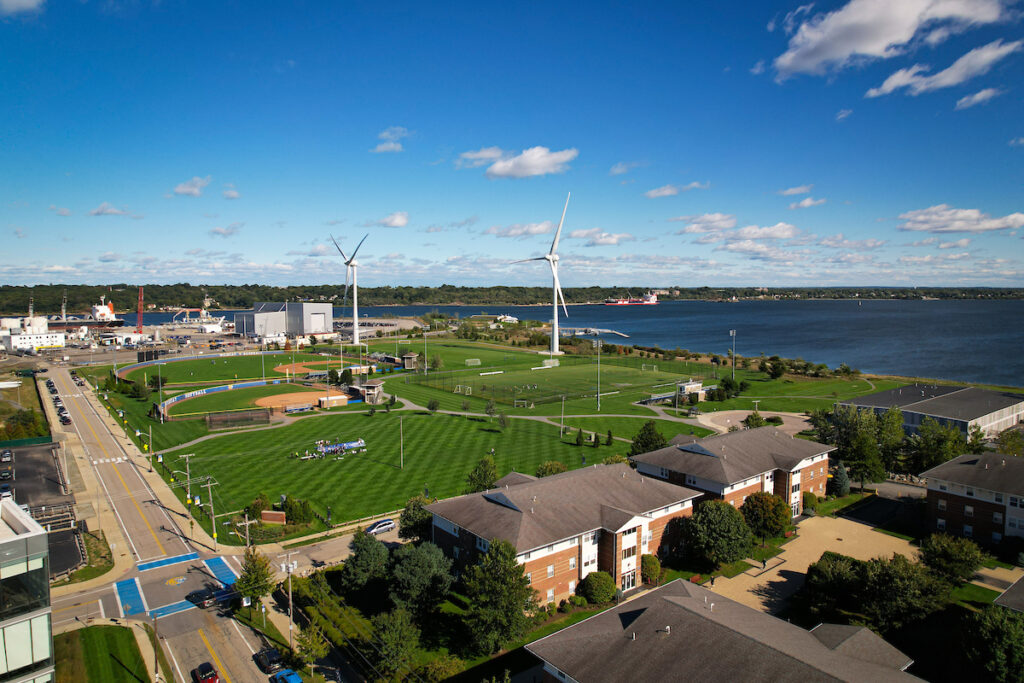
Narragansett Bay is right in our backyard.
The entire state of Rhode Island offers a variety of nearby ecosystems for you to study, but Narragansett Bay is literally just steps from our Harborside Campus. “Students taking the SCI1010 Environmental Science course have already made several trips to the bay to examine how the urban setting of Providence impacts this ecosystem,” says DeMarco.
The students looked at trash pollution, algae overgrowth, species diversity, and water quality to complete a health assessment of the bay as an ecosystem.
“Since I am from Rhode Island, I’ve heard about Narragansett Bay, but to go and see it was informative,” says Molly Vanderlaan ’29, one of the students who attended a trip to the bay. “It opened my eyes to the pollution and what we are trying to do about it. After the field trip, I realized that a lot of our waste ends up on the shores of Narragansett Bay and contributes to the pollution.”
Other potential trips may include visits to East Matunuck Beach to analyze the geologic composition of the coastline and the Scituate Reservoir to learn about the ecological management practices that keep the state’s largest supply of drinking water clean.
“Future Environmental Science students will continue to have the opportunity to explore natural environments around Rhode Island,” DeMarco says. “Field trips are a great way to bridge the gap between gaining new knowledge and applying this knowledge to the real-world challenges present in our communities today.”
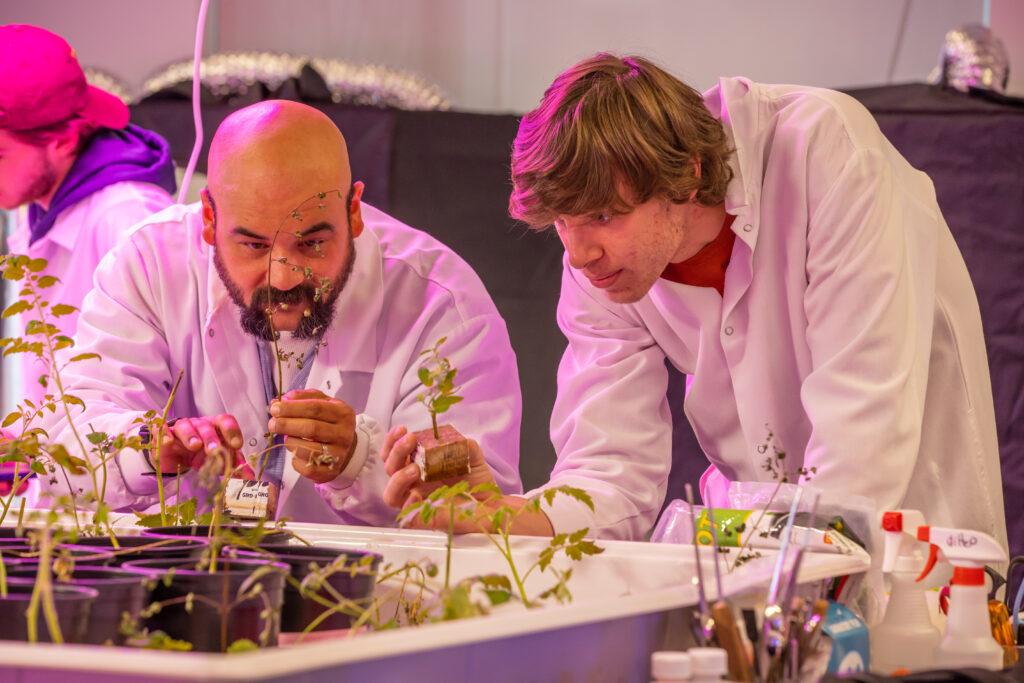
Immersive, practical experiences are the focus of your degree.
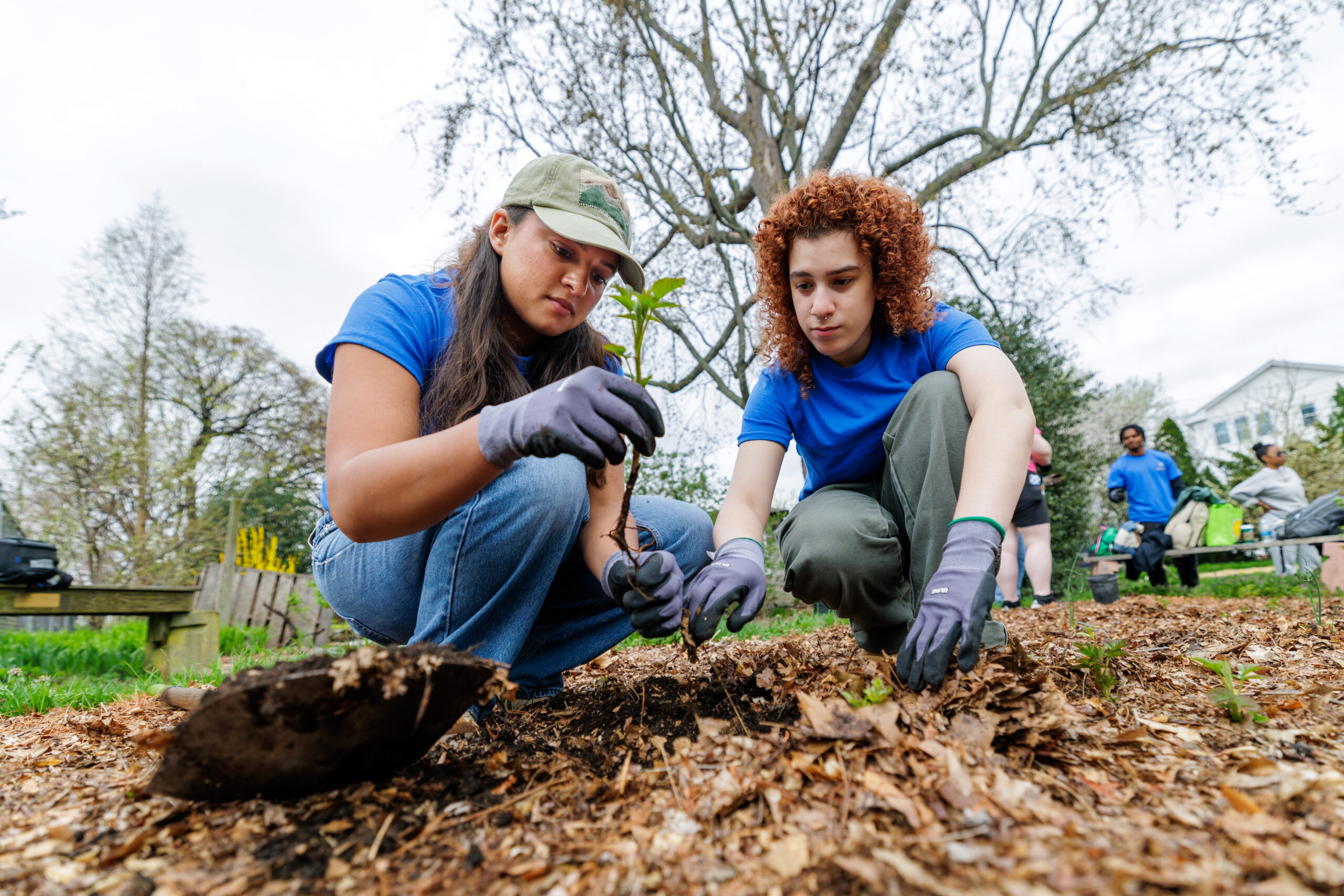
In addition to the required research or internship experience, every course in the program has experiential education components. For Environmental Science students, these can include things like conducting environmental impact assessments, collecting and analyzing water samples, or learning how to grow and propagate plants.
“JWU faculty provide a unique student experience where students play an active role in their educational journey,” says DeMarco. “Faculty create opportunities for students to examine real issues in real settings and develop solutions that are backed by evidence.”
The field trips are a prime example of this, but it’s also happening in the classroom, too. In the science lab, students spend time conducting experiments and tests, such as exploring how toxicants affect aquatic organisms. In elective courses like Adventure, Sport and Nature-Based Tourism, students can evaluate the environmental impact of certain tourist activities in specific locations. Through foundational courses and in the wide variety of electives they can select, students in this major will always be encouraged to draw connections between what they learn and how they can apply it in real life.
Overall, you can expect to spend a lot of time conducting fieldwork, research, inquiry-based lab assignments and more in this program. But most importantly, you’ll learn how to use this work to create your own solutions to environmental issues and make a real difference.