
Culinary Arts A.S.
Degree: A.S.
Location(s): Rhode Island
Length: 2 years
Internship: Required, 12 credits
Credits: 61
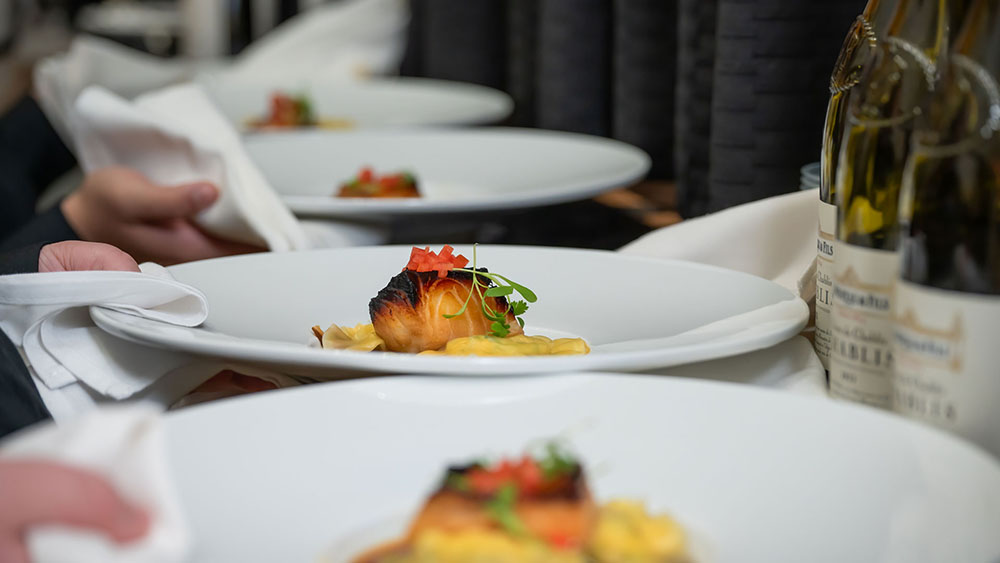
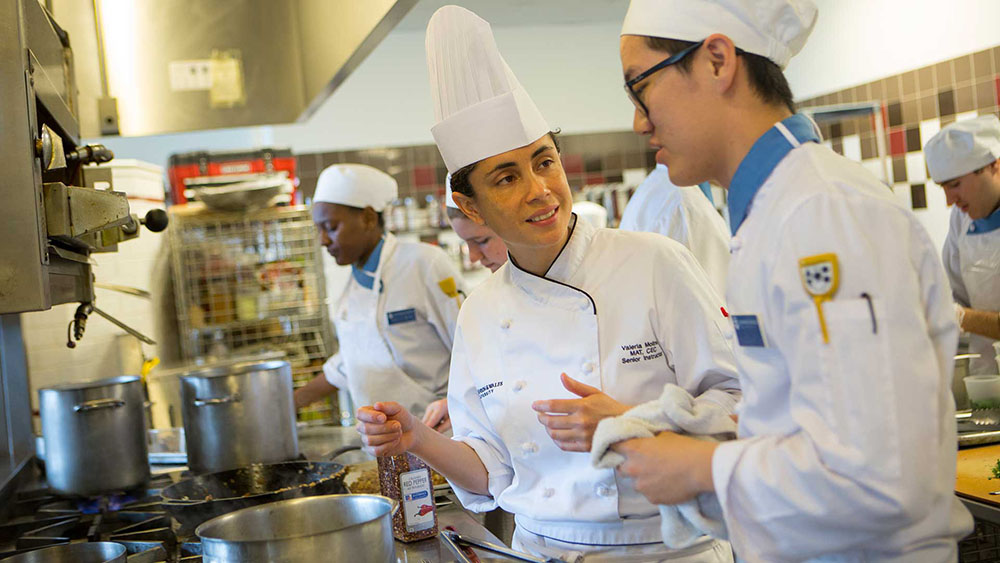
Make culinary arts your career
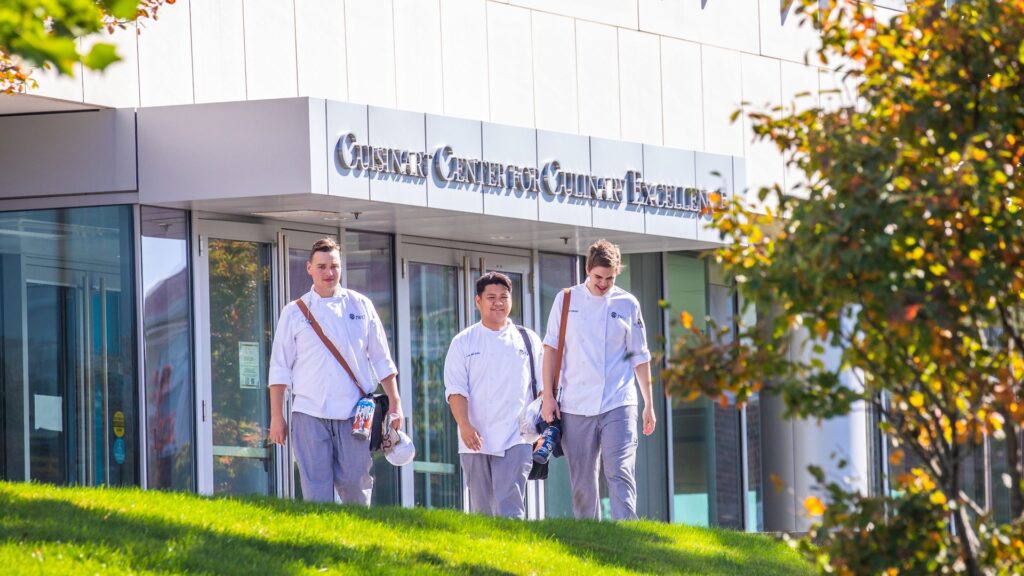
When culinary classes are in session at JWU’s Providence Campus, the glass-fronted Cuisinart Center for Culinary Excellence (CCCE) hums with adrenaline, creativity, and the intense energy of culinary students focused on becoming the best they can be. Are you ready to join them?
JWU’s Culinary Arts Associate in Science (A.S.) degree program builds a professional foundation of culinary craft skills, comprehensive food production and service experience, and leadership and teamwork skills.
Our hands-on curriculum will expand your understanding of classical and contemporary cuisines and techniques. Learn to develop recipes, implement cost controls, and earn a Conference for Food Protection-approved Food Safety Manager Certification. Refine your skills through competitions and skills classes.
The program culminates in an internship or study abroad option, allowing you to apply your skills professionally, build your network, and gain career-ready confidence.
Curriculum
Credits Major Courses | ||
| CUL1100 | Introduction to Culinary Skills and Techniques | 3 |
| CUL1210 | Breakfast & Lunch Cafe | 3 |
| CUL1320 | Elements of a la Minute Cooking | 3 |
| CUL1410 | Contemporary Cooking & Leadership Functions | 3 |
| CUL2510 | Contemporary Restaurant Operations and Management | 3 |
| CUL2610 | Baking and Pastry Concepts for Culinary Operations | 3 |
| CUL2710 | Banquets and Catering | 3 |
| CUL2810 | Global à la Carte | 3 |
| Applied/Experiential Learning | ||
| Choose 12 credits from the following: | 12 | |
| College of Food Innovation & Technology Intermediate Internship | ||
Study Abroad | ||
| Related Professional Studies | ||
| FSM1165 | The Food Safety Manager | 1 |
| FSM2045 | Introduction to Menu Planning and Cost Controls | 3 |
| University Core Curriculum | ||
| Communicating | 9 | |
| Rhetoric & Composition I | ||
| Rhetoric & Composition II | ||
| Communication Skills | ||
| Connecting | 3 | |
One course with the Connecting attribute (ECNG), at the 2000 level | ||
| Measuring | 3 | |
| A Survey of College Mathematics (or higher, based on student’s placement) | ||
| Exploring | 3 | |
SCI1050 Nutrition | ||
| A&S Elective | 3 | |
One course with the Arts & Sciences elective attribute (EASC) | ||
| Total Credits | 61.0 | |
Admission is contingent upon meeting the technical standards for this program.
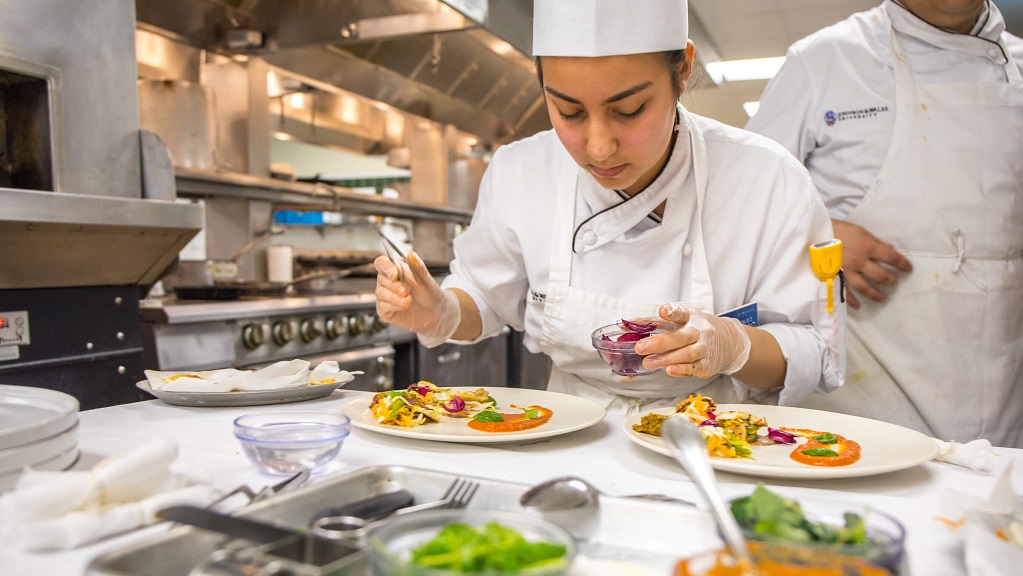
Get Career-Ready
A degree in culinary arts can lead to amazing opportunities, from running a restaurant to cooking nutritious meals for athletes. Where will it take you?
Build Kitchen-Tested Skills
JWU’s program is designed to progressively develop a range of complementary skills, from culinary craft to teamwork, critical thinking and leadership.
Culinary skills are sharpened through a sequence of kitchen labs, while a dining and beverage service laboratory provides a comprehensive food production and service experience. As you advance, ways to put your learning into action include:
- Honing your professional skills in a fast-paced hotel, restaurant, country club, resort, casino or retail internship.
- Gaining industry experience through study abroad options.
- Pitching your food entrepreneurship ideas at SharkFest.
Labs & Spaces
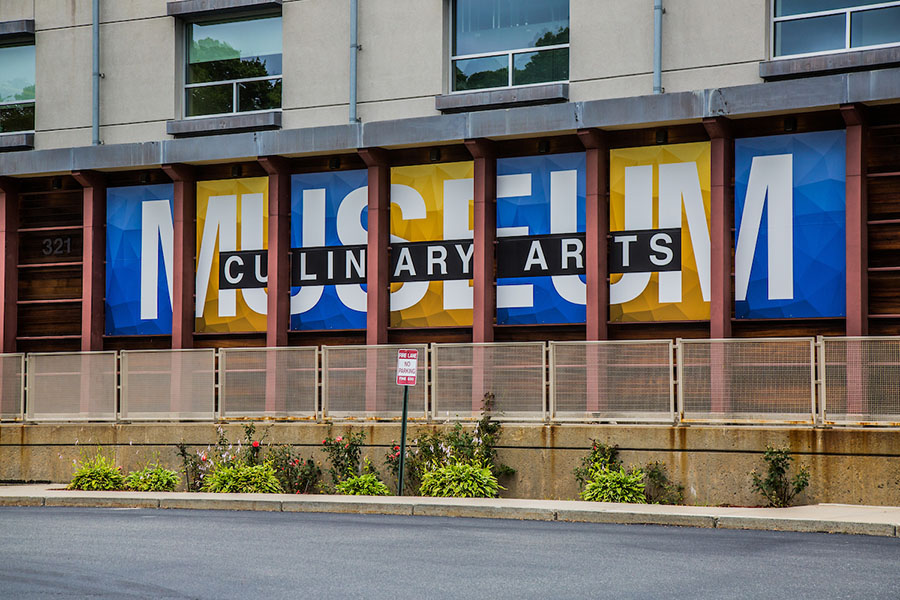
Harborside Campus puts three floors of kitchens, bakeshops, meat-cutting labs and student-run dining rooms in the LEED-certified Cuisinart Center for Culinary Excellence, with the chocolate and sugar lab, baking technology lab, Food Innovation Design Lab and Culinary Arts Museum in nearby buildings.
Culinary Labs in the CCEE Building (Top)
Harborside Academic Center Culinary Labs (Middle)
Food Innovation Design Lab (Bottom)
Career Possibilities
- Brewmaster
- Food Service Manager
- Resort/Club Management
- Product Development
- Chef Executive
- Chef Sommelier
Some professions may require additional study, background checks, certifications, licenses, exams and/or experience as required qualifications for employment. Students are responsible for verifying that they can meet the employment requirements of potential employers.
What You Can Do After Your Degree
After completing your Culinary Arts associate degree, continue your education by enrolling in one of the following JWU bachelor’s degree programs:
Study Culinary Arts at JWU
Faculty Contact
Michael D. Makuch, M.A.T., CEC
Department Chair, Interdisciplinary Food Studies
401-598-2846
michael.makuch@jwu.edu