Created to help address the nationwide nursing shortage, JWU’s Accelerated Second Degree Bachelor of Science in Nursing (ABSN) is designed for individuals who already earned a bachelor’s degree or higher and wish to pursue nursing as a career. Our ABSN program’s “cohort model” means that the small group you start with stays together throughout the program, forming a close bond and growing together as practitioners.
Complete your courses over four sequential, full-time semesters during this 16-month program, which is offered at your choice of JWU’s campuses in Providence, Rhode Island and Charlotte, North Carolina.
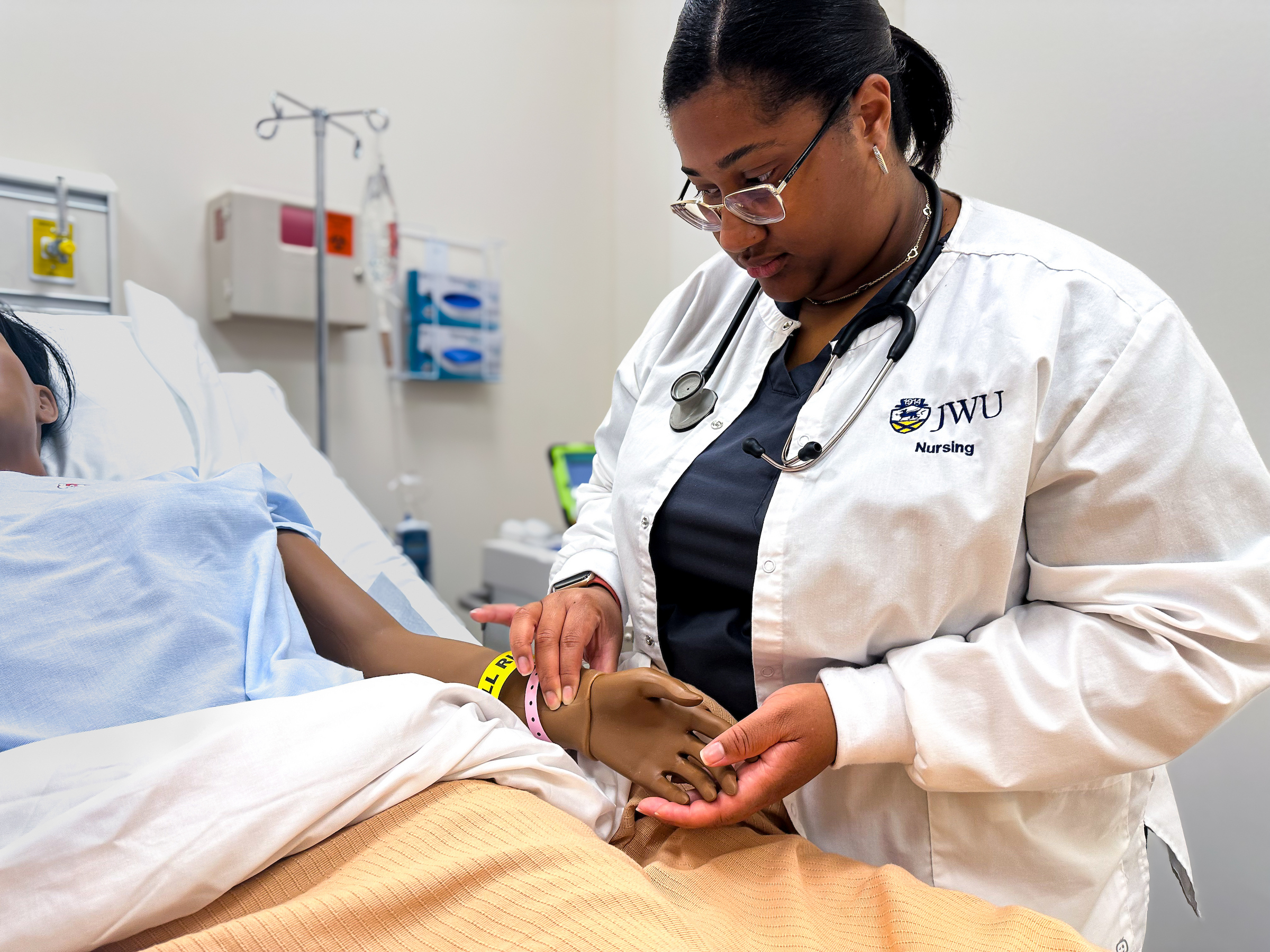
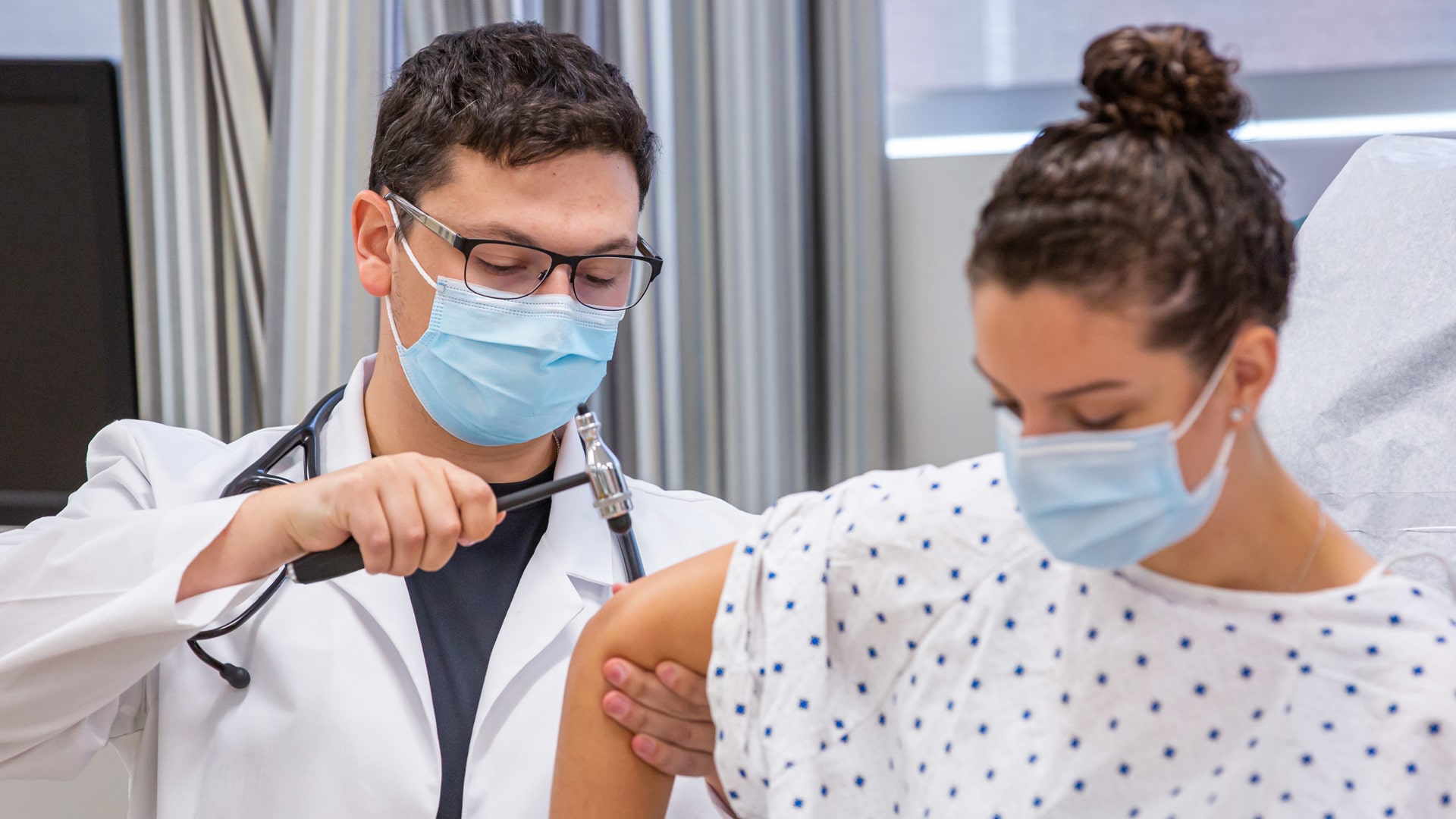
Through simulated labs and clinical placements, you’ll learn and practice the methods to deliver safe and efficient patient care firsthand. Working directly under the supervision of seasoned clinical preceptors, you’ll gain hands-on experiences across all healthcare settings, including areas of practice relating to medical/surgical nursing, pediatrics, obstetrics, psychiatric mental health nursing and community/public health nursing. The curriculum will prepare you to sit for the National Council Licensure Examination (NCLEX-RN).
What are the admission requirements and prerequisite courses needed to apply to the Nursing Program?
The following are criteria for admission into the Nursing Program:
Admission to the university
Receipt of all official college/university transcripts to JWU Admissions
Earned bachelor’s degree or higher at the time of application
Cumulative GPA of 3.0 or higher
Must have a B (80) or higher for the following prerequisite courses (or approved substitution/s*):
Human Anatomy & Physiology I with Lab Human Anatomy & Physiology II with Lab Organic/Inorganic Chemistry Microbiology with Lab Developmental Psychology Human Nutrition Statistics
*Approved substitutions as determined by the nursing program director.
All prerequisite courses must be completed in the last 10 years.
Prerequisite courses can be in progress at the time of application but must be successfully completed before entry into the program.
Prerequisite courses taken at institutions other than JWU will be evaluated by the Nursing program to determine transfer criteria.
Individual states may require specific licensing or professional certification in addition to earning a degree in order to practice in the field. Review Licensure & Professional Certification Disclosures for more information.
Program Mission & Philosophy
The mission of JWU’s Nursing program is to prepare graduates for professional nursing roles in an ever-changing healthcare environment and global community while practicing intellectual curiosity that promotes lifelong learning.
Nursing care and nursing education require competence to meet the needs of a diverse and ever-fluid healthcare and academic environment. These competencies require nurses and educators to continuously expand their underlying knowledge and skill base to allow for the acceptance and awareness of new evidence-based practices and approaches to client care that are diverse and inclusive to all.
We reach these competencies through opportunities for our students, graduates and faculty to engage in real-world learning opportunities focused on interprofessional relationships, assisting clients of all health populations, socio-economic/educational levels and age groups to manage their health status with respect, dignity and purpose.
Unlock Your Passion for Healthcare in a Team-Based Environment
Interprofessional education (IPE) is a cornerstone of JWU’s College of Health & Wellness, and it has proven effective for setting students up for success in a team-based, cooperative workplace.
What does this mean for you?
As healthcare becomes more reliant on technology and big data to inform treatment and management modalities, team-based competencies have become crucial for delivering effective, patient-centered care.
JWU’s program emphasizes the interdisciplinary and interprofessional connections between our health-focused majors so that students can see how the same concept is applied in different areas. Our students are educated alongside the colleagues they will ultimately work with once they graduate — an approach designed to stretch their ability to see things from different perspectives and enable them to be better clinicians and practitioners.
“The program aims fill the theory-practice gap, enabling our students to be ready to meet the challenges of today’s ever-changing healthcare industry,” notes Kiley Medeiros, program director for the Providence ABSN. “We are able to offer multi-disciplinary, interprofessional, simulation, and various hands-on clinical experiences to prepare our students to enter the healthcare workforce as a new registered nurse, and ultimately improve health outcomes.”
The program culminates in clinical rotations that provide hands-on experience and exposure to different specialties in healthcare, including pediatrics, obstetrics, acute care, mental health and community health. From working with healthcare professionals to understanding the complexities of delivering care as a team, it is a great way to apply and sharpen the skills learned as part of the Nursing foundation at JWU.
The program aims to fill the theory-practice gap, enabling our students to be ready to meet the challenges of today’s ever-changing healthcare industry.”
Kiley Medieros,Ph.D., RN, chief nursing officer
Celebrating ABSN’s Class of 2026
After 16 intense months of hard work and determination, JWU Providence and Charlotte’s next cohort of nursing graduates are ready to begin their careers in the field.
Charlotte Class of 2026 speaker Jesselyn Posada told her assembled peers, faculty mentors and family members, “Walk into every space knowing you have earned your place. If this is what we can accomplish in 16 months, just imagine what we can do in a lifetime.”
JWU’s program design is based on the American Association of Colleges of Nursing (AACN)’s 2021 Essentials, which broadly defines 10 domains of competence.
Once completed, graduates of JWU’s program will be prepared to take the NCLEX-RN(r), the national licensing exam for registered nurses.
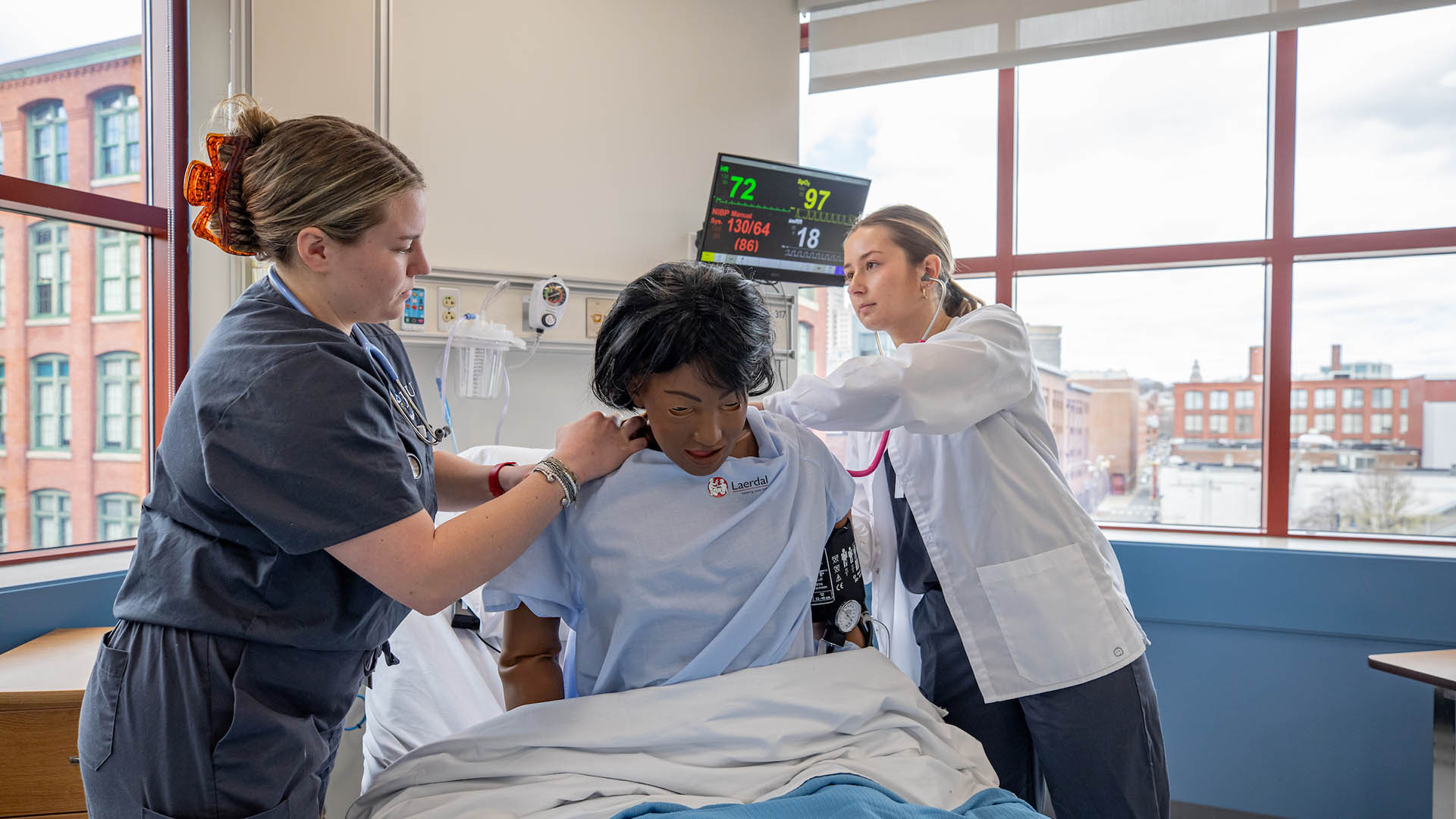
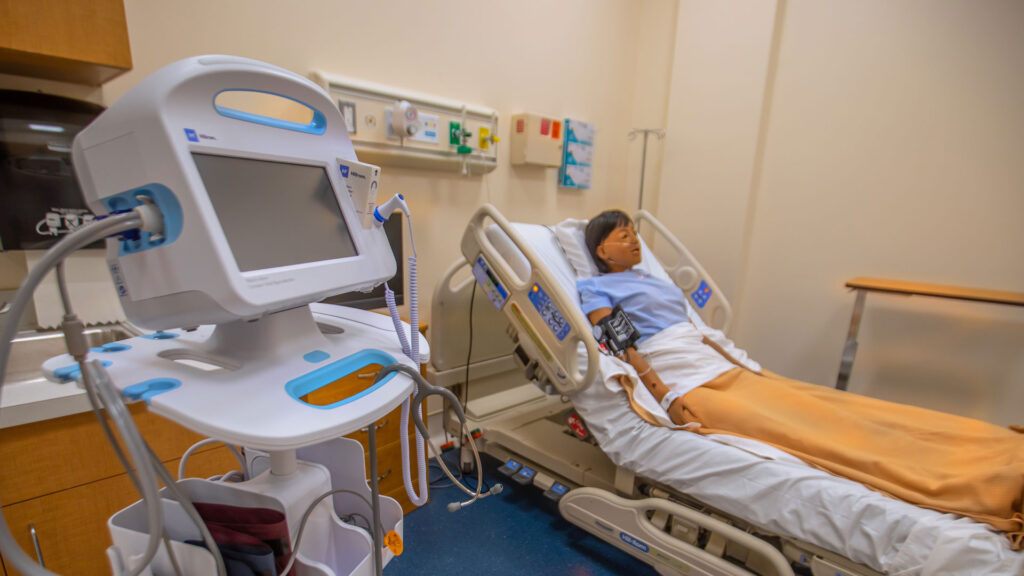
Both campuses have fully functional simulation centers designed to mimic a wide range of medical scenarios across the patient lifespan. They can accommodate up to 40 students and faculty.
“Our students are going to be practice-ready on day one, and that is one of the big focuses and goals of our program,” explained Program Director Kiley Medeiros.
Functional specs for the Centers include:
7 adult beds, 1 obstetrics bed, 1 pediatric bed and 2 bassinets
A high-fidelity suite that includes two high-fidelity simulation rooms with a shared control room
A large simulation space for the practice of essential competencies
Debriefing room(s) that can double as classrooms
Projection screens to allow students to observe, document and refine one-on-one interactions
Our Accelerated Bachelor of Science in Nursing (ABSN) program is structured with a student-first approach. Our total program cost includes the following benefits and services for our students at no additional cost:
Uniforms: Students will receive two pairs of JWU-embroidered scrub tops and pants and one lab jacket
Stethoscope Bundle: Students will receive a stethoscope, pen light, goggles, and an ID badge clip
Textbooks: Students will receive all textbooks across the program for their coursework
Clinical Site Costs: JWU provides students with malpractice insurance
Simulation Center: Students access to Laerdal Simulation Lab and all associated supplies
Additional Estimated Expenses:
Additional expenses outside of the total program cost may include:
Note that the ABSN program is a second bachelor’s degree program, and the availability of Federal Financial Aid may be limited based on any aid you have already accepted. Scholarships are available.
If you have questions about your aid eligibility, potential scholarships, or other available education loan options please contact your JWU Financial Planner to discuss your options.
Johnson & Wales University is dedicated to recruiting students from local colleges and universities through articulation agreements. JWU maintains articulation agreements with the following institutions to provide a pathway for undergraduate students to matriculate into this program:
Bridgewater State University
Dean College
Providence College
Roger Williams University
Springfield College
When are application deadlines?
Applications will be reviewed on a rolling basis. We encourage interested applicants to complete the application process early, as our class number is limited.
Can I apply if I still have a prerequisite course in progress?
Yes. Applicants may apply if they still have a prerequisite course in progress. However, if the applicant is admitted into the Nursing program, that admission will be contingent on successful completion of the prerequisite course with the required grade and GPA. The applicant must submit and updated official transcript indicating the completion of the course.
Can I apply if I have not yet earned my degree?
Yes. Accepted applicants must complete their bachelor’s degree and all prerequisite course work prior to program enrollment.
Where may I take the prerequisite courses?
Prerequisite courses may be taken at any regionally accredited institution. In order to ensure that the coursework you are considering taking meets the Nursing program’s admission requirements, we recommend that you contact JWU Admissions’ Transfer & Testing Office to evaluate the course. All prerequisite courses are offered at JWU.
May I transfer credits/classes from another nursing program if I am accepted?
JWU’s Nursing program is designed to be completed in a cohort format. All 60 credits of nursing courses must be taken, in sequence, at Johnson & Wales University. Unfortunately, JWU does not accept transfer credits from other nursing programs.
Will I be waitlisted if I am not accepted into the program?
JWU’s Nursing program has limited capacity to admit students. It is not uncommon for applicants to receive a waitlist notification. You will be notified as soon as possible if your status changes from “waitlisted” to “accepted.” (Keep in mind that JWU does not reveal your rank on the list of waitlisted applicants.)
Who determines the admission decision of an applicant?
Admission decisions are made by an admissions committee within the Nursing Program, but the admission process is centralized through JWU’s office of Admissions.
What is the cost of the program?
JWU’s ABSN program cost is structured with a student-first approach. Our inclusive program cost accounts for many benefits and services at no additional cost, including uniforms, textbooks, access to the Laerdal Simulation Lab, and more. Additional estimated expenses outside of the total program cost may include criminal background checks, health insurance, and others. For more information, visit Tuition & Fees.
How long does the Nursing program run, and when do students start?
This is a cohorted, second-degree, accelerated program that is roughly 16 months, or 4 sequential semesters from start to finish. The first cohort started at JWU’s Providence Campus in Fall 2023; the JWU Charlotte program began on May 6, 2024.
Is the Nursing program delivered online?
Most classes are offered in a traditional, in-person capacity. However, several of the courses are delivered in an asynchronous online model.
Can I work while completing the Nursing program?
Nursing programs are very rigorous, intense, and time-consuming. The Nursing Program at JWU must be completed at a full-time status. Some students are able to manage to work part time or less during the program. It is strongly recommended that nursing students do not work full time while enrolled.
I have additional questions. Who can I reach out to?
Refer to the listing below to contact Lucy Wilson (Providence) or Jessica Manglicmot (Charlotte).
ABSN Program Outcomes
Use knowledge and skills required in the field of nursing practice to administer client care.
Design and deliver person-centered client care across diverse health populations and settings.
Provide evidence-based client care informed by the use of scholarship and appropriate information and healthcare technologies.
Use a systems-based approach to deliver client care aligned with essential principles of quality and safety within the field of nursing practice.
Integrate interprofessional partnerships into the planning and delivery of client care.
Demonstrate professionalism required in the field of nursing practice through personal, professional, and leadership development.
Gertrude E. Skelly Charitable Foundation Grant
Funding from the Gertrude E. Skelly Foundation supports ABSN students by providing emergency, non-tuition assistance. Learn more and apply via the link below.
The baccalaureate degree program in nursing at Johnson & Wales University is accredited by the Commission on Collegiate Nursing Education, 655 K Street NW, Suite 750, Washington, DC 20001, 202-887-6791.