
Occupational Therapy OTD
Degree: OTD
Location(s): Rhode Island
Start Date: June
Length: 36 months
Credits: 120-122
Empower Others to Do What They Love Again
Occupational therapists (OTs) are in high demand.
The reason: OTs work in a broad range of environments, from hospitals and rehabilitation centers to schools and medical offices — even clients’ homes. Research, academia and policy/regulatory work are also possible career paths.
JWU’s entry-level Occupational Therapy Doctorate (OTD) degree serves as a pathway for bachelor’s degree recipients who may or may not have an OT background. Our program’s holistic approach addresses the vital importance of acknowledging people’s physical, psychological and emotional needs.
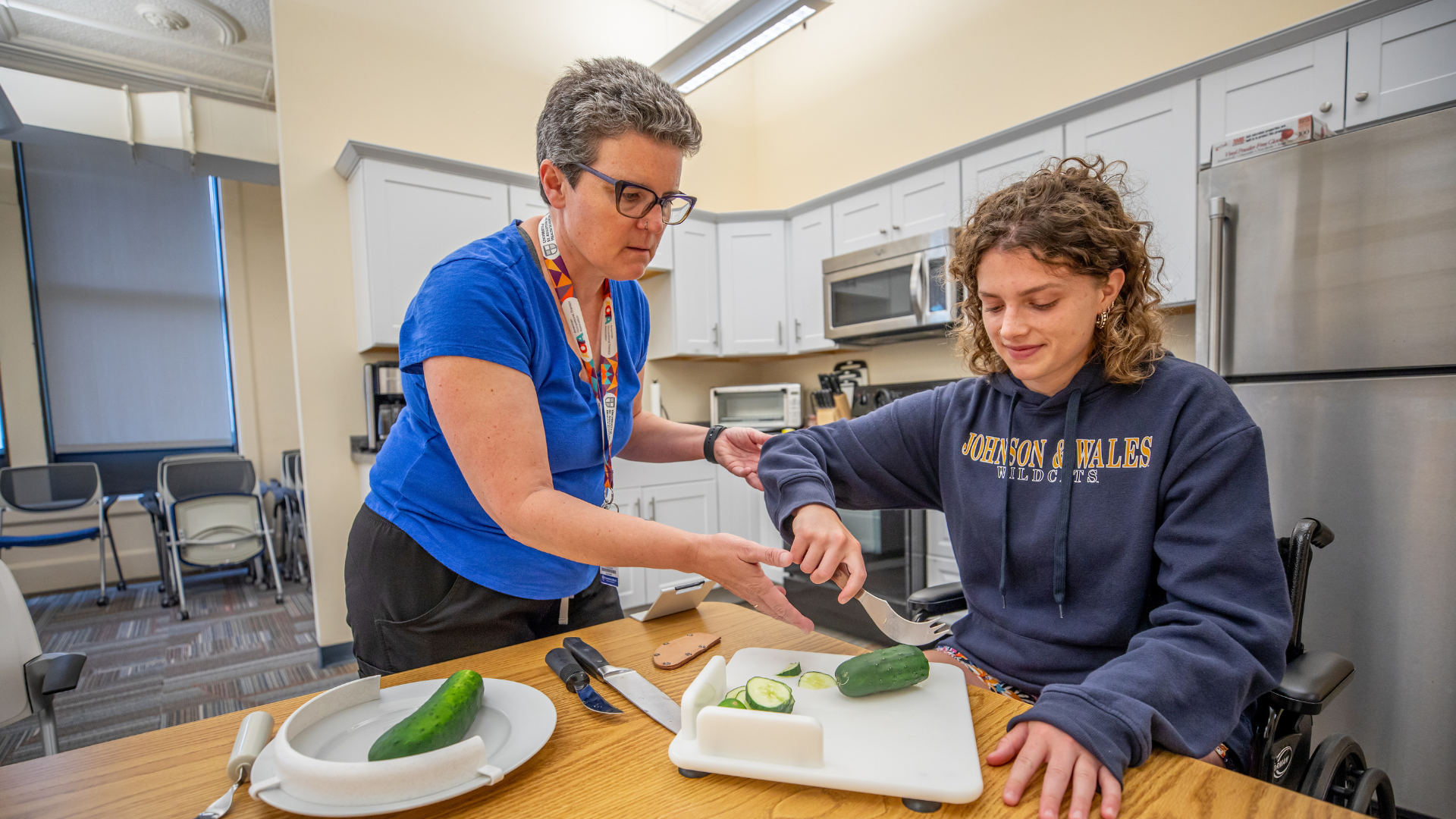
Learn how to assist and inspire people to maximize their health, well-being and quality of life while increasing their independence, self-confidence and self-worth. Devise adaptive ways for clients to complete the work, recreational and self-care tasks they need to succeed. Our facilities mimic home-like environments, allowing clients to practice in a familiar setting.
Curriculum
JWU’s program runs full-time for 36 months, with a June start. The “cohort model” means that the small group you start with stays together through the duration of the program, forming a familial bond and growing as practitioners together.
Credits Core Courses | ||
| OTD7015 | Foundations of Occupational Therapy | 3 |
| OTD7030 | Human Occupations and Participation Across the Lifespan | 2 |
| OTD7060 | Occupational Perspective on Health | 3 |
| OTD7070 | Introduction to Fieldwork | 1 |
| OTD7110 | Kinesiology | 4 |
| OTD7130 | Occupational Therapy Assessment and Theory Across the Life Span | 3 |
| OTD7160 | Human Conditions I | 3 |
| OTD7170 | Occupational Performance and Participation in Groups | 3 |
| OTD7190 | Research I | 3 |
| OTD7210 | Neuroscience | 4 |
| OTD7260 | Human Conditions II | 3 |
| OTD8140 | Healthcare Systems and Policy | 3 |
| OTD8215 | Introduction to Capstone I | 2 |
| OTD8220 | Research II | 3 |
| OTD8235 | Occupational Therapy Practice I | 5 |
| OTD8280 | Level IA Fieldwork | 1 |
| OTD8310 | Leadership and Advocacy | 3 |
| OTD8320 | Research III | 3 |
| OTD8330 | Theoretical and Clinical Reasoning in Context | 3 |
| OTD8345 | Occupational Therapy Practice II | 5 |
| OTD8380 | Level IB Fieldwork | 1 |
| OTD8395 | Program Development and Grant Writing | 2 |
| OTD8420 | Technology and Innovation in Occupational Therapy | 2 |
| OTD8455 | Occupational Therapy Practice III | 5 |
| OTD8480 | Level IC Fieldwork | 1 |
| OTD8520 | Introduction to Capstone II | 3 |
| OTD8540 | Contemporary Concepts in Occupational Therapy | 2 |
| OTD8560 | Teaching and Learning in Occupational Therapy | 2 |
| OTD8660 | Occupational Therapy Practice IV | 5 |
| OTD8720 | Level ID Fieldwork | 1 |
| OTD9810 | Level IIA Fieldwork | 9 |
| OTD9860 | Level IIB Fieldwork | 9 |
| OTD9910 | Doctoral Capstone Project | 3 |
| OTD9920 | Doctoral Capstone Experience | 10 |
| Total Credits | 115.0 | |
Together these resources are designed to provide you with information that will assist you in your academic endeavors at the university, including available resources, relevant policies, lists of needed equipment, an outline of the curriculum, and guidelines to help you prepare for this challenging academic experience.
Be aware that OTD-specific policies are in addition to university policies listed in the JWU Student Handbook.
Please note, however, that the OTD Handbook is not designed to be all-inclusive; there are some policies that may pertain to students that may not be covered in these sources.
If you have any questions that cannot be answered from these sources, feel free to discuss these with the program director or with individual faculty members.
Accelerated Bachelor’s/OTD Pathways
Three accelerated degree tracks allow qualified JWU students to earn a bachelor’s degree and an OTD in as little as six years.
|
Credits
Major Courses |
||
| BIO1022 | General Biology – Organismal | 3 |
| BIO1026 | General Biology Laboratory – Organismal | 1 |
| BIO2001 | Genetics | 3 |
| BIO2003 | Human Anatomy and Physiology I | 3 |
| BIO2006 | Human Anatomy and Physiology I Laboratory | 1 |
| BIO2013 | Human Anatomy and Physiology II | 3 |
| BIO2016 | Human Anatomy and Physiology II Laboratory | 1 |
| BIO3040 | Molecular Biology | 3 |
| BIO3046 | Molecular Biology Laboratory | 1 |
| BIO3100 | Coastal Ecology | 3 |
| BIO3106 | Coastal Ecology Laboratory | 1 |
| BIO4020 | Integrative Biology | 3 |
| BIO4026 | Integrative Biology Laboratory | 1 |
| BIO4100 | Senior Seminar in Biology | 3 |
| Applied/Experiential Learning | ||
| Choose 6 credits from the following: | 6 | |
| College of Arts & Sciences Internship | ||
| Undergraduate Laboratory and Field Research | ||
| Undergraduate Research Experience | ||
| Honors Directed Academic Experience | ||
|
Study Abroad
|
||
| Related Professional Studies | ||
| CHM1011 | General Chemistry I | 3 |
| CHM1016 | General Chemistry I Laboratory | 1 |
| CHM1022 | General Chemistry II | 3 |
| CHM1026 | General Chemistry II Laboratory | 1 |
| CHM2011 | Organic Chemistry I | 3 |
| CHM2016 | Organic Chemistry I Laboratory | 1 |
| CHM2022 | Organic Chemistry II | 3 |
| CHM2026 | Organic Chemistry II Laboratory | 1 |
| University Core Curriculum | ||
| Communicating | 9 | |
| Rhetoric & Composition I | ||
| Rhetoric & Composition II | ||
| Communication Skills | ||
| Connecting | 6 | |
|
Two courses with the Connecting attribute (ECNG), one at the 2000 level, one at the 4000 level
|
||
| Experiencing | 6 | |
| Ethics: A Global Perspective | ||
|
Additional course with the Experiencing attribute (EEXP) in a different discipline
|
||
| Measuring | 6 | |
| Calculus I | ||
| Introduction to Biostatistics | ||
| Exploring | 4 | |
| General Biology – Cellular and General Biology Laboratory – Cellular |
||
| Interacting | 6 | |
| Introductory Psychology | ||
|
Additional course with the Interacting attribute (EINT) in a different discipline
|
||
| A&S Electives | 8 | |
| General Physics I | ||
|
or PHY2011
|
Physics I | |
| General Physics I Laboratory | ||
|
or PHY2016
|
Physics I Laboratory | |
| General Physics II | ||
|
or PHY2022
|
Physics II | |
| General Physics II Laboratory | ||
|
or PHY2026
|
Physics II Laboratory | |
| Doctoral Courses ** | ||
| OTD7015 | Foundations of Occupational Therapy | 3 |
| OTD7030 | Human Occupations and Participation Across the Lifespan | 2 |
| OTD7070 | Introduction to Fieldwork | 1 |
| OTD7110 | Kinesiology | 4 |
| OTD7130 | Occupational Therapy Assessment and Theory Across the Life Span | 3 |
| OTD7160 | Human Conditions I | 3 |
| OTD7170 | Occupational Performance and Participation in Groups | 3 |
| OTD7190 | Research I | 3 |
| OTD8220 | Research II | 3 |
| Total Credits | 122.0 | |
|
Credits
Major Courses |
||
| BIO1011 | General Biology – Cellular | 3 |
| BIO1016 | General Biology Laboratory – Cellular | 1 |
| BIO1022 | General Biology – Organismal | 3 |
| BIO1026 | General Biology Laboratory – Organismal | 1 |
| BIO2003 | Human Anatomy and Physiology I | 3 |
| BIO2006 | Human Anatomy and Physiology I Laboratory | 1 |
| BIO2013 | Human Anatomy and Physiology II | 3 |
| BIO2016 | Human Anatomy and Physiology II Laboratory | 1 |
| HSC1010 | Introduction to Health Professions | 1 |
| HSC1100 | Determinants of Health | 3 |
| HSC1230 | Introduction to Public Health | 3 |
| HSC2100 | Epidemiology | 3 |
| HSC2400 | Research Methods for Health Science | 3 |
| HSC4900 | Data and Evidence in Health: Research Capstone | 3 |
| Applied/Experiential Learning | ||
| Choose 6 credits from the following | 6 | |
| College of Health & Wellness Internship | ||
|
Study Abroad
|
||
| Related Professional Studies | ||
| CHM1000 | Foundations in Chemistry | 3 |
| CHM1006 | Foundations in Chemistry Laboratory | 1 |
| CULN2414 | Cooking for Health and Wellness | 3 |
| University Core Curriculum | ||
| Communicating | 9 | |
| Rhetoric & Composition I | ||
| Rhetoric & Composition II | ||
| Communication Skills | ||
| Connecting | 6 | |
|
Two courses with the Connecting attribute (ECNG), one at the 2000 level, one at the 4000 level
|
||
| Experiencing | 6 | |
| Ethics: A Global Perspective | ||
|
Additional course with the Experiencing attribute (EEXP) in a different discipline
|
||
| Measuring | 6 | |
| Fundamentals of Algebra (or higher, based on student’s placement) | ||
| Introduction to Biostatistics | ||
| Exploring | 3 | |
| Nutrition | ||
| Interacting | 6 | |
| Introductory Psychology | ||
|
Additional course with the Interacting attribute (EINT) in a different discipline
|
||
| A&S Electives | 6 | |
|
Two courses with the Arts & Sciences elective attribute (EASC)
|
||
| Free Electives | ||
| 8-9 credits selected from 1000-4999 numbered offerings within the university. | 8-9 | |
| Doctoral Courses | ||
| OTD7015 | Foundations of Occupational Therapy | 3 |
| OTD7030 | Human Occupations and Participation Across the Lifespan | 2 |
| OTD7070 | Introduction to Fieldwork | 1 |
| OTD7110 | Kinesiology | 4 |
| OTD7130 | Occupational Therapy Assessment and Theory Across the Life Span | 3 |
| OTD7160 | Human Conditions I | 3 |
| OTD7170 | Occupational Performance and Participation in Groups | 3 |
| OTD7190 | Research I | 3 |
| OTD8220 | Research II | 3 |
| Total Credits | 120.0-121.0 | |
|
Credits
Major Courses |
||
| PSYC1001 | Introductory Psychology | 3 |
| PSYC1020 | Introduction to Professional Issues and Ethics in Psychology | 3 |
| PSYC2002 | Abnormal Psychology | 3 |
| PSYC2030 | Developmental Psychology | 3 |
| PSYC3001 | Social Psychology | 3 |
| PSYC3010 | Personality | 3 |
| PSYC3040 | Introduction to Neuropsychology and Psychopharmacology | 3 |
| PSYC4200 | Cultural Psychology | 3 |
| RSCH2050 | Workshop in Acquiring Social Research Skills | 3 |
| or RSCH3020 | Honors Research Methods | |
| RSCH4050 | Research Seminar in Psychology | 3 |
| Major Electives | ||
| Choose six of the following: | 18 | |
| Human Sexuality | ||
| Industrial/Organizational Psychology | ||
| Psychological Issues of Substance Use Disorders and Compulsive Behaviors | ||
| Health Psychology | ||
| Community Psychology | ||
| Cognitive Psychology | ||
| Psychology of Motivation and Leadership in the Workplace | ||
| Criminalization of Mental Illness | ||
| Psychology of Conflict Resolution | ||
| University Core Curriculum | ||
| Communicating | 9 | |
| Rhetoric & Composition I | ||
| Rhetoric & Composition II | ||
| Communication Skills | ||
| Connecting | 6 | |
|
Two courses with the connecting attribute (ECNG), one at 2000 level, one at the 4000 level
|
||
| Experiencing | 6 | |
|
Two courses with the Experiencing attribute (EEXP), different disciplines
|
||
| Measuring | 6 | |
| Fundamentals of Algebra (or higher, based on student’s placement) | ||
| Introduction to Biostatistics | ||
| Exploring | 4 | |
| General Biology – Cellular | ||
| General Biology Laboratory – Cellular | ||
| Interacting | 6 | |
| Sociology I | ||
|
Additional course with the Interacting attribute (EINT) in a different discipline
|
||
| A&S Electives | 8 | |
| Human Anatomy and Physiology I | ||
| Human Anatomy and Physiology I Laboratory | ||
| Human Anatomy and Physiology II | ||
| Human Anatomy and Physiology II Laboratory | ||
| Free Elective | ||
| 3 credits selected from 1000-4999 numbered offerings within the university | 3 | |
| Doctoral Courses | ||
| OTD7015 | Foundations of Occupational Therapy | 3 |
| OTD7030 | Human Occupations and Participation Across the Lifespan | 2 |
| OTD7070 | Introduction to Fieldwork | 1 |
| OTD7110 | Kinesiology | 4 |
| OTD7130 | Occupational Therapy Assessment and Theory Across the Life Span | 3 |
| OTD7160 | Human Conditions I | 3 |
| OTD7170 | Occupational Performance and Participation in Groups | 3 |
| OTD7190 | Research I | 3 |
| OTD8220 | Research II | 3 |
| Total Credits | 121.0 | |
Why Choose JWU for Your OTD?
- JWU’s OTD program is housed in the Academic Center, located at 138 Mathewson Street in Providence’s historic Downcity area. The modernized facility includes an occupations lab, a simulated hospital setting and a pediatrics sensory lab.
- The interdisciplinary nature of the program means that students connect directly with other JWU college and programs, particularly the Physician Assistant, Culinary Nutrition, Dietetics & Applied Nutrition and Physical Therapy programs.
- Direct collaboration with JWU’s renowned College of Food Innovation & Technology allows students to focus on the impact of culture, food and cooking on the health and wellness of individuals and the populations you will serve.
- Our faculty and clinical education partners offer mentorship to support your personal goals and professional development throughout your educational experience.
- Fieldwork and capstone work, combined with lab experiences, mean that you have direct impact in the community and within emerging practice areas.
Possible OTD Career Paths
Administration
Advocacy
Clinical work
Consulting
Daycare/Preschool day programs
Driving + community mobility
Environmental modifications
Ergonomics
Geriatrics
Higher education
Home health
Mental health
Outpatient rehabilitation
Pediatrics
Physical rehabilitation
Research
Regulatory work
Senior community centers
Systems case management
Work capacity evaluation
Worker’s compensation
Some professions may require additional study, background checks, certifications, licenses, exams and/or experience as required qualifications for employment. Students are responsible for verifying that they can meet the employment requirements of potential employers.
Review Licensure & Professional Certification Disclosures for more information.
Gain Real-World Occupational Therapy Experience
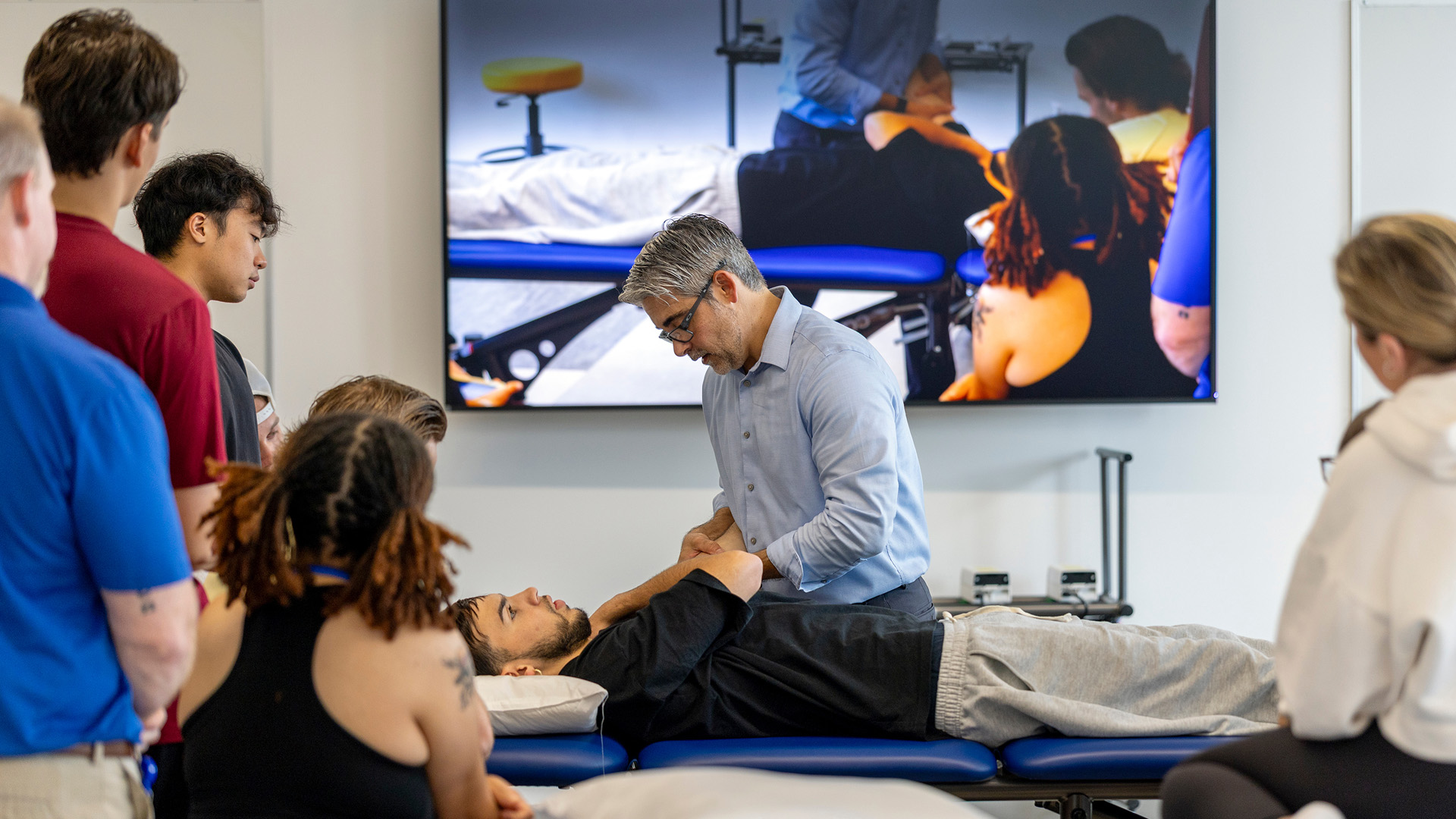
Occupational therapists help people overcome their challenges so they can fully engage in their occupations. You will learn to serve individuals, groups, communities and populations while also developing programs that offer a preventive focus and influence a broader scope of the population. Then, you’ll apply and practice what you learned in class through fieldwork focused on mental health, pediatric, adult and older adult populations.
Through mentorship with our experienced faculty, you’ll set personal goals that will influence your professional growth. In addition, you’ll complete a capstone project that will help you gain the practical and research skills needed to become a highly competent occupational therapy practitioner.
Amplifying Voices in OTD
Monique Dawes, OTD, OTR/L, CPAM, has practiced occupational therapy across the country, but her roots remain here in New England. Now, she is leading the charge in training and diversifying the field of occupational therapists at Johnson & Wales, representing JWU as a local leader in the newest cohort of the Equity Leadership Initiative within the Rhode Island Foundation.
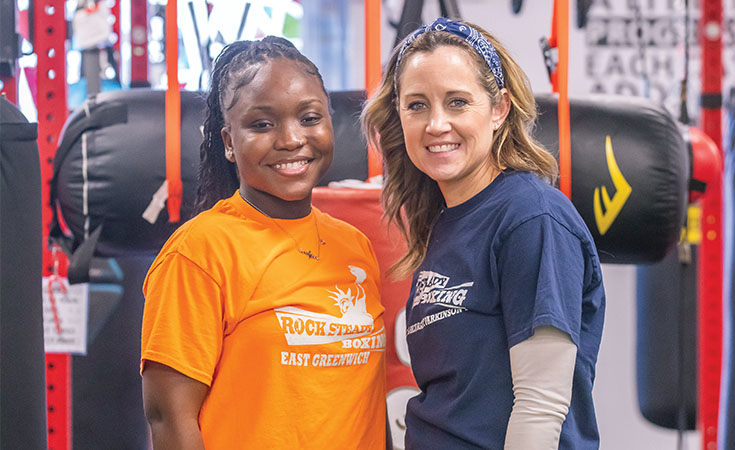
Rock Steady
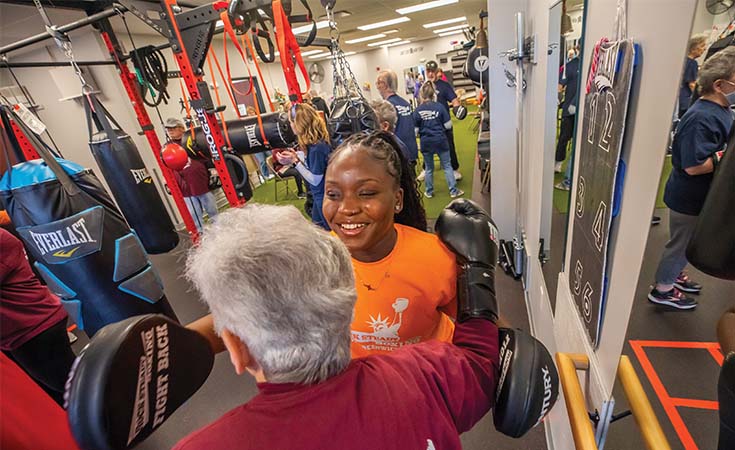
It’s just after noontime at Rock Steady Boxing in Rhode Island and two dozen participants are stretching, doing leg lifts, balancing and sparring with punching bags.
As part of her Level I fieldwork placement, Geraldine Gibson ’25 OTD, has spent more than 30 hours with this group. She darts around the room, encouraging the 20-some Parkinson’s clients (called athletes here) and their caregivers as she shows them the best ways to use the mini weights.
For Gibson, helping these athletes has been inspirational. “I learned you can do anything,” she says. “Not to be a cliché, but don’t be held back, push through.”
Meet Our OTD Faculty
Our faculty and clinical education partners offer mentorship to support your personal goals and professional development throughout your educational experience.
Throughout the curriculum at JWU, OTD students and faculty are engaged in group projects, individual capstone projects and research, leadership and service opportunities. Interprofessional activities around the university and throughout the RI community are integrated into coursework.
Browse our OTD faculty bios to find out about their expertise, research interests and latest publications.
Faculty Contact
Nancy Dooley, Ph.D., OTR/L, CDP, FAOTA
Program Director
College of Health & Wellness
401-598-4798
nancy.dooley@jwu.edu