
Biology B.A. or B.S.
Degree: B.A., B.S.
Location(s): Rhode Island
Length: 4 years
Internship: 6 Credits
Credits: 120-123
A Flexible Program to Match Your Goals
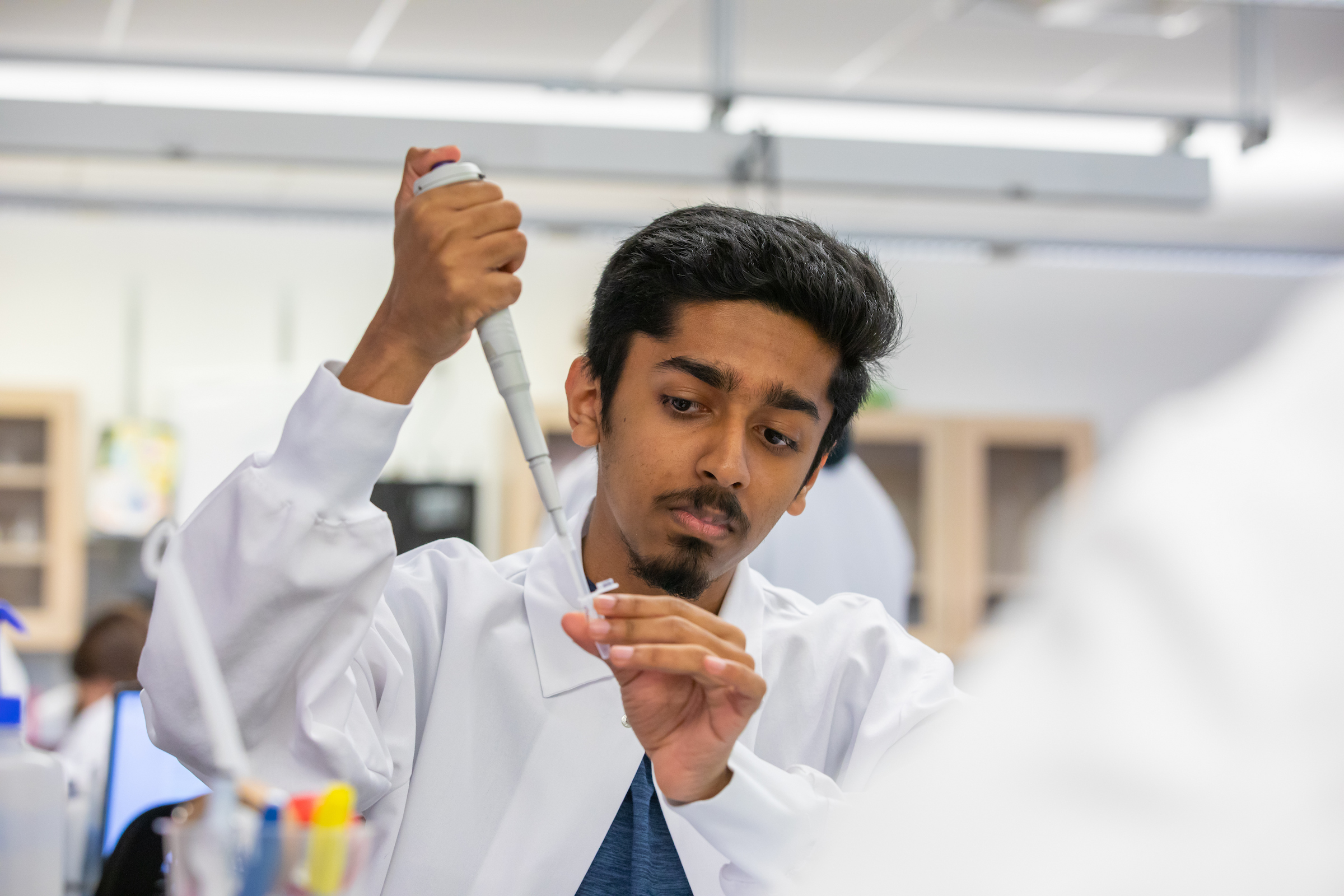
Explore life from cells and genes to organisms, ecosystems and the biological challenges that affect people and the environment. Johnson & Wales University offers Bachelor of Arts and Bachelor of Science degrees in Biology at its Providence Campus, combining foundational science with laboratory, field and undergraduate research opportunities.
Choose the degree structure that best supports your goals. The B.A. offers greater flexibility for interdisciplinary study, while the B.S. provides additional science depth and the option to focus in Biomedical Science, Environmental Studies or Plant Science. Faculty-guided research, internships and approved study abroad experiences can help you apply what you learn beyond the classroom.
Many of our Biology majors go on to apply to JWU’s Master of Public Health (MPH), Physician Assistant Studies (MSPAS) or Occupational Therapy Doctorate (OTD) degree programs; continue schooling to become medical doctors, dentists and veterinarians; or secure positions in academic, biopharmaceutical and clinical settings. Our alumni have secured careers at institutions such as Amgen and Moderna, and they have attended graduate programs at Tufts University, University of Alberta at Calgary and Worcester Polytechnic Institute among many more.
Biology at a Glance
- B.S. specializations: Biomedical Science, Environmental Studies and Plant Science
- Sample subjects: Cellular and organismal biology, genetics, molecular biology, coastal ecology, chemistry and research methods
- Applied learning: Laboratory and field research, internships, undergraduate research and eligible study abroad
Choose a B.A. or B.S.
The Biology B.A. provides a broad foundation in the biological sciences with flexibility to connect biology to interdisciplinary interests such as science communication, healthcare administration, bioinformatics or business. The Biology B.S. includes additional physical science depth and offers focused study through three specializations.
Students considering medical, dental or other professional programs should choose courses in consultation with an advisor and the admission requirements of the schools they may apply to.
Choose a Biology B.S. Specialization
- Biomedical Science: Study human anatomy and physiology, microbiology, histology, immunology and biochemistry.
- Environmental Studies: Connect biology with environmental policy, sustainability, sociology and ecological questions.
- Plant Science: Explore plant cultivation, soil and disease management, hydroponics, aquaponics, tissue culture and plant applications.
Curriculum & Degree Requirements
Credits Major Courses | ||
| BIO1022 | General Biology – Organismal | 3 |
| BIO1026 | General Biology Laboratory – Organismal | 1 |
| BIO3040 | Molecular Biology | 3 |
| BIO3046 | Molecular Biology Laboratory | 1 |
| BIO3100 | Coastal Ecology | 3 |
| BIO3106 | Coastal Ecology Laboratory | 1 |
| BIO4020 | Integrative Biology | 3 |
| BIO4026 | Integrative Biology Laboratory | 1 |
| BIO4100 | Senior Seminar in Biology | 3 |
| Major Electives | ||
| Choose 18-20 credits of the following (at least two courses must be at 3000 level or higher): | 18-20 | |
| Plant Cultivation I: Soil, Soil Substitutes and Disease Management and Plant Cultivation I: Soil, Soil Substitutes and Disease Management Laboratory | ||
| Human Anatomy and Physiology I and Human Anatomy and Physiology I Laboratory | ||
| Human Anatomy and Physiology II and Human Anatomy and Physiology II Laboratory | ||
| General Microbiology and General Microbiology Laboratory | ||
| Evolution | ||
| Epigenetics | ||
| Fundamentals of Pharmacology | ||
| Plant Cultivation II: Hydroponics, Aquaponics, Tissue Culture, Genetics and Extraction and Plant Cultivation II: Hydroponics, Aquaponics, Tissue Culture, Genetics and Extraction Laboratory | ||
| Comparative Vertebrate Anatomy and Comparative Vertebrate Anatomy Laboratory | ||
| Advanced Anatomy | ||
| Functional Histology and Functional Histology Laboratory | ||
| Fundamentals of Immunology | ||
| Applications of Plants & Fungi and Applications of Plants & Fungi Laboratory | ||
| Analytical Chemistry | ||
| Sustainability Policy and Planning | ||
| Food Sustainability | ||
| The Business of Sustainability | ||
| Research Seminar in Sustainability | ||
| Applied/Experiential Learning | ||
| Choose 6 credits from the following: | 6 | |
| College of Arts & Sciences Internship | ||
| Undergraduate Laboratory and Field Research | ||
| Undergraduate Research Experience | ||
| Honors Directed Academic Experience | ||
Study Abroad | ||
| Related Professional Studies | ||
| CHM1011 | General Chemistry I | 3 |
| CHM1016 | General Chemistry I Laboratory | 1 |
| CHM1022 | General Chemistry II | 3 |
| CHM1026 | General Chemistry II Laboratory | 1 |
| Interdisciplinary Studies: Choose 12 credits from the following: | 12 | |
Bioinformatics/Computational Biology | ||
| Computer Science I | ||
| Computer Science II | ||
| Advanced Data Structures | ||
| Survey of Programming Languages | ||
Science Communication | ||
| Introduction to Media & Communication | ||
| Media Industries | ||
| Introduction to Multimedia Storytelling | ||
| Critical Perspectives on New Media | ||
Biotechnology/Pharmaceutical Management | ||
| Introduction to Business and Management | ||
| Operations and Supply Chain Management I | ||
| Marketing Foundations | ||
| Sales Management | ||
Healthcare Administration | ||
| Introduction to Public Health | ||
| Introduction to Healthcare in the United States | ||
| Healthcare Organizational Theory and Management | ||
| Quality Improvement in Healthcare Organizations | ||
| A&S Core Experience | ||
| Communicating | 9 | |
| Rhetoric & Composition I | ||
| Rhetoric & Composition II | ||
| Communication Skills | ||
| Connecting | 6 | |
Two courses with the Connecting attribute (ECNG), one at the 2000 level, one at the 4000 level | ||
| Experiencing | 6 | |
| Ethics: A Global Perspective | ||
Additional course with the Experiencing attribute (EEXP) in a different discipline | ||
| Measuring | 6 | |
| Precalculus (or higher, based on student’s placement) | ||
| Introduction to Biostatistics | ||
| Exploring | 4 | |
| General Biology – Cellular and General Biology Laboratory – Cellular | ||
| Interacting | 6 | |
| Introductory Psychology | ||
Additional course with the Interacting attribute (EINT) in a different discipline | ||
| A&S Electives | 6 | |
| Genetics | ||
Additional course with the Arts & Sciences elective attribute (EASC) | ||
| Free Electives | ||
| 15-16 credits selected from 1000-4999 numbered offerings within the university | 15-16 | |
| Total Credits | 121.0-124.0 | |
|
Credits
Major Courses |
||
| BIO1022 | General Biology – Organismal | 3 |
| BIO1026 | General Biology Laboratory – Organismal | 1 |
| BIO2001 | Genetics | 3 |
| BIO3040 | Molecular Biology | 3 |
| BIO3046 | Molecular Biology Laboratory | 1 |
| BIO3100 | Coastal Ecology | 3 |
| BIO3106 | Coastal Ecology Laboratory | 1 |
| BIO4020 | Integrative Biology | 3 |
| BIO4026 | Integrative Biology Laboratory | 1 |
| BIO4100 | Senior Seminar in Biology | 3 |
| Major Electives or Specialization | ||
| Choose 16-18 credits of the following (at least two courses must be at 3000 level or higher)* or Specialization listed below: | 16-18 | |
| Plant Cultivation I: Soil, Soil Substitutes and Disease Management and Plant Cultivation I: Soil, Soil Substitutes and Disease Management Laboratory |
||
| Human Anatomy and Physiology I and Human Anatomy and Physiology I Laboratory |
||
| Human Anatomy and Physiology II and Human Anatomy and Physiology II Laboratory |
||
| Human Physiology and Human Physiology Laboratory |
||
| General Microbiology and General Microbiology Laboratory |
||
| Evolution | ||
| Epigenetics | ||
| Fundamentals of Pharmacology | ||
| Plant Cultivation II: Hydroponics, Aquaponics, Tissue Culture, Genetics and Extraction and Plant Cultivation II: Hydroponics, Aquaponics, Tissue Culture, Genetics and Extraction Laboratory |
||
| Comparative Vertebrate Anatomy and Comparative Vertebrate Anatomy Laboratory |
||
| Advanced Anatomy | ||
| Functional Histology and Functional Histology Laboratory |
||
| Fundamentals of Immunology | ||
| Applications of Plants & Fungi and Applications of Plants & Fungi Laboratory |
||
| Biochemistry and Biochemistry Laboratory |
||
| Analytical Chemistry | ||
| Sustainability Policy and Planning | ||
| Food Sustainability | ||
| The Business of Sustainability | ||
| Research Seminar in Sustainability | ||
| Applied/Experiential Learning | ||
| Choose 6 credits from the following: | 6 | |
| College of Arts & Sciences Internship | ||
| Undergraduate Laboratory and Field Research | ||
| Undergraduate Research Experience | ||
| Honors Directed Academic Experience | ||
|
Study Abroad
|
||
| Related Professional Studies | ||
| CHM1011 | General Chemistry I | 3 |
| CHM1016 | General Chemistry I Laboratory | 1 |
| CHM1022 | General Chemistry II | 3 |
| CHM1026 | General Chemistry II Laboratory | 1 |
| CHM2011 | Organic Chemistry I | 3 |
| CHM2016 | Organic Chemistry I Laboratory | 1 |
| CHM2022 | Organic Chemistry II | 3 |
| CHM2026 | Organic Chemistry II Laboratory | 1 |
| University Core Curriculum | ||
| Communicating | 9 | |
| Rhetoric & Composition I | ||
| Rhetoric & Composition II | ||
| Communication Skills | ||
| Connecting | 6 | |
|
Two courses with the Connecting attribute (ECNG), one at the 2000 level, one at the 4000 level
|
||
| Experiencing | 6 | |
| Ethics: A Global Perspective | ||
|
Additional course with the Experiencing attribute (EEXP) in a different discipline
|
||
| Measuring | 6 | |
| Calculus I | ||
| Introduction to Biostatistics | ||
| Exploring | 4 | |
| General Biology – Cellular and General Biology Laboratory – Cellular |
||
| Interacting | 6 | |
| Introductory Psychology | ||
|
Additional course with the Interacting attribute (EINT) in a different discipline
|
||
| A&S Electives | 8 | |
| General Physics I | ||
|
or PHY2011
|
Physics I | |
| General Physics I Laboratory | ||
|
or PHY2016
|
Physics I Laboratory | |
| General Physics II | ||
|
or PHY2022
|
Physics II | |
| General Physics II Laboratory | ||
|
or PHY2026
|
Physics II Laboratory | |
| Free Electives | ||
| 15-16 credits selected from 1000-4999 numbered offerings within the university | 15-16 | |
| Total Credits | 120.0-123.0 | |
Gain Laboratory, Field and Research Experience
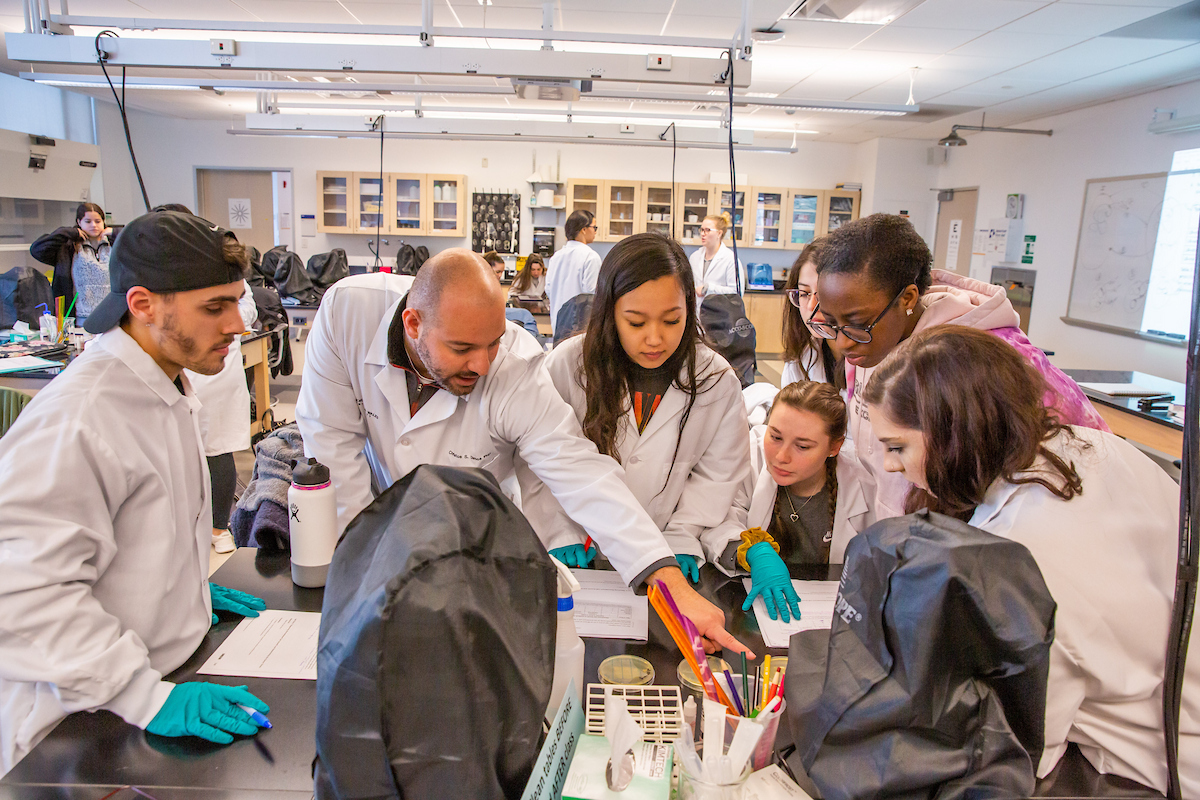
Apply scientific methods through laboratory courses, field research, internships and faculty-guided projects. Depending on the selected opportunity, students may build skills in experimental design, data analysis, scientific communication, microscopy, tissue culture, ecological sampling and other biological methods.
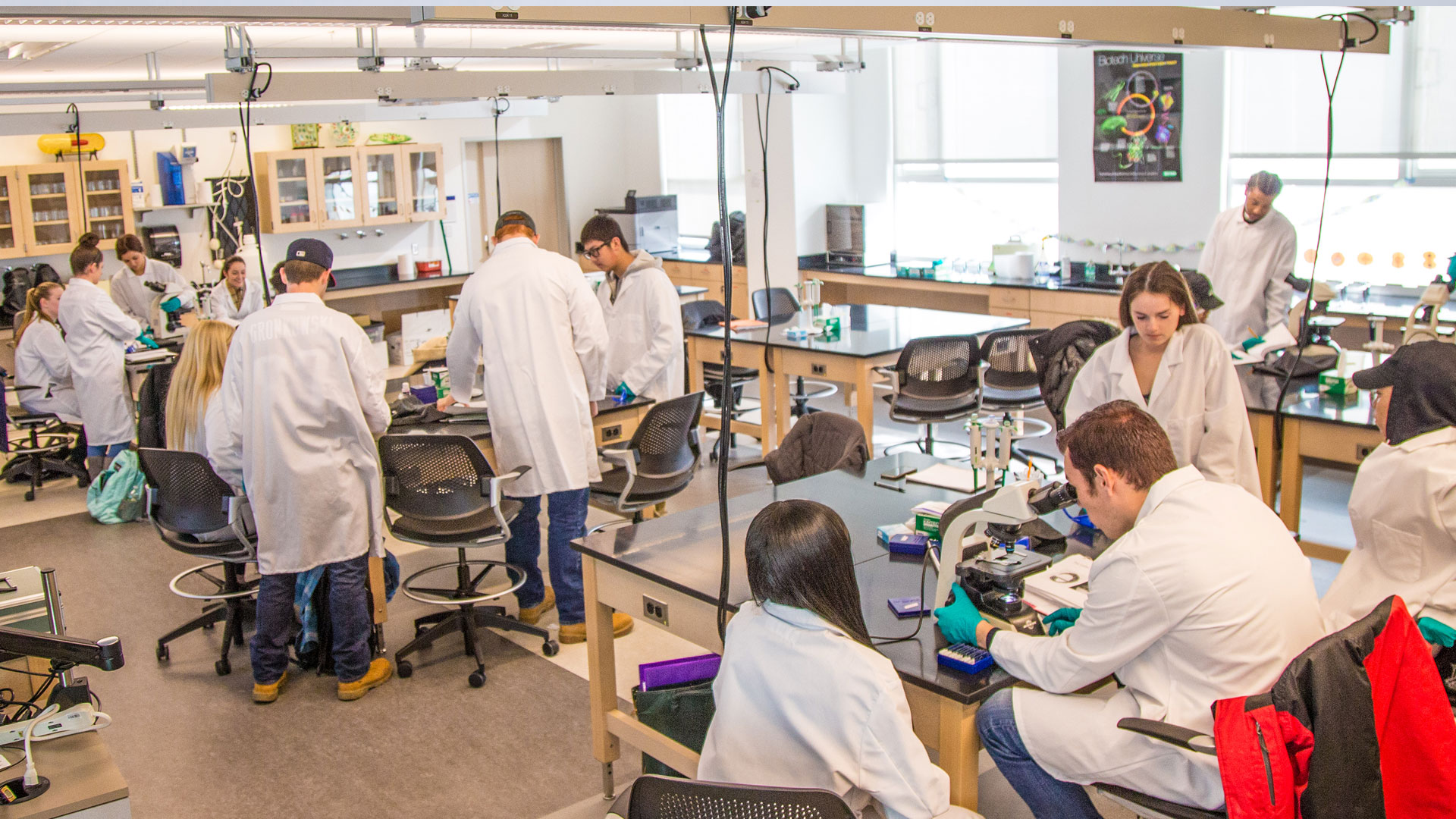
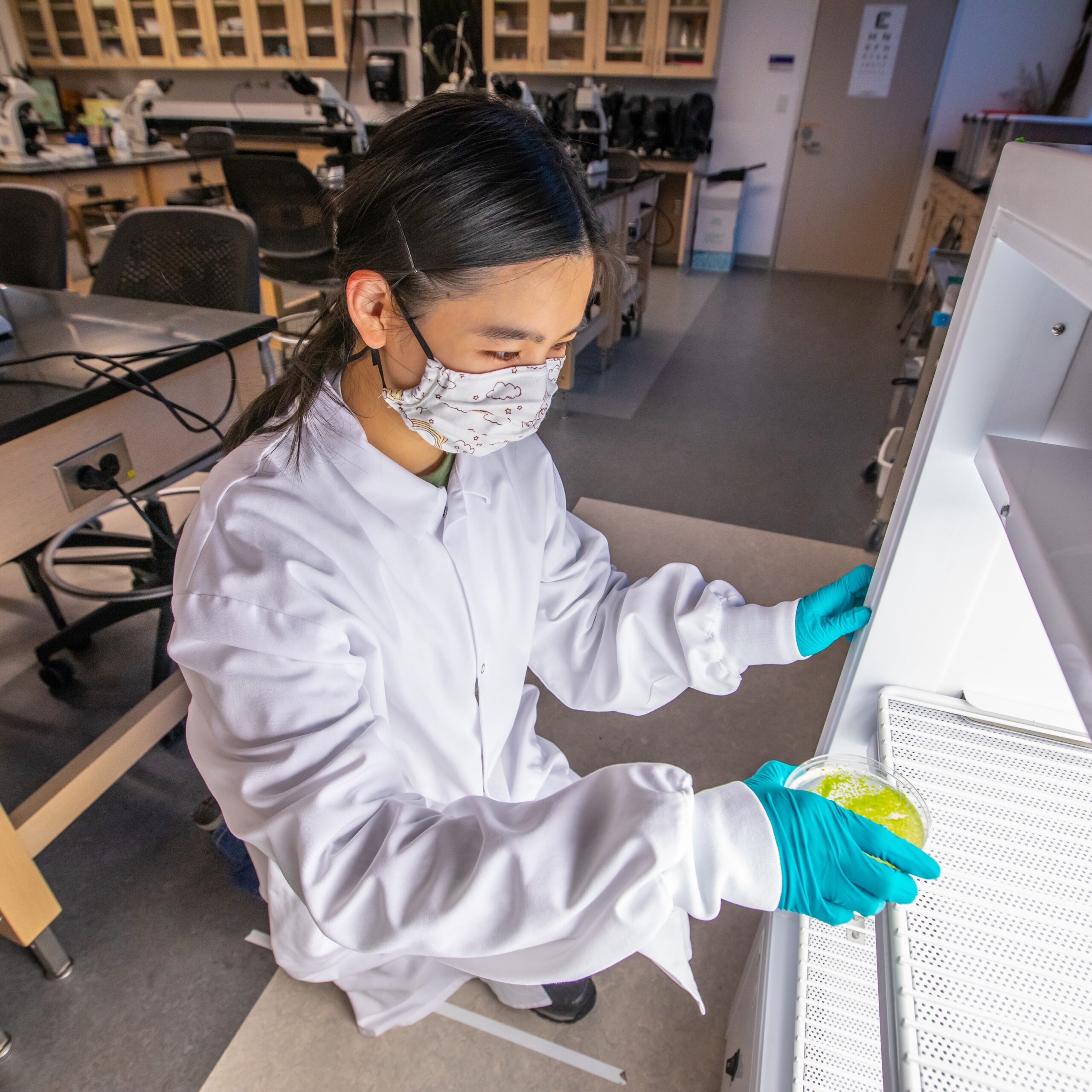
Biology Lab
In JWU’s state-of-the-art Biology Lab, our students learn the fundamentals of biology through data collection and analysis, dissection and microscopic study.
Biology & Chemistry Labs (above)
Careers and Graduate Study With a Biology Degree
Biology graduates can pursue entry-level opportunities in laboratories, environmental organizations, research support, education, business and related settings, or continue into graduate and professional study.
- Biological or laboratory technician
- Environmental science or field research support
- Quality assurance or research assistant
- Science communication, education or outreach roles
- Graduate study in biology, public health or related sciences
- Professional study in healthcare or other fields when prerequisites are met
Some professions may require additional study, background checks, certifications, licenses, exams and/or experience as required qualifications for employment. Students are responsible for verifying that they can meet the employment requirements of potential employers.
Get Your Master’s Faster
Students can earn a combined B.S. in Biology and Master of Public Health (MPH) in as little as five years through JWU’s combined degree program. Undergraduate students must fulfill all admissions requirements and complete a graduate program application for this option. If pharmacy is your calling, JWU has also partnered with the University of Saint Joseph on an accelerated graduate program, where qualified students can earn both a bachelor’s degree in Biology and a Doctor of Pharmacy (Pharm.D.) degree in six years.
IMPACT-STEM Scholarship
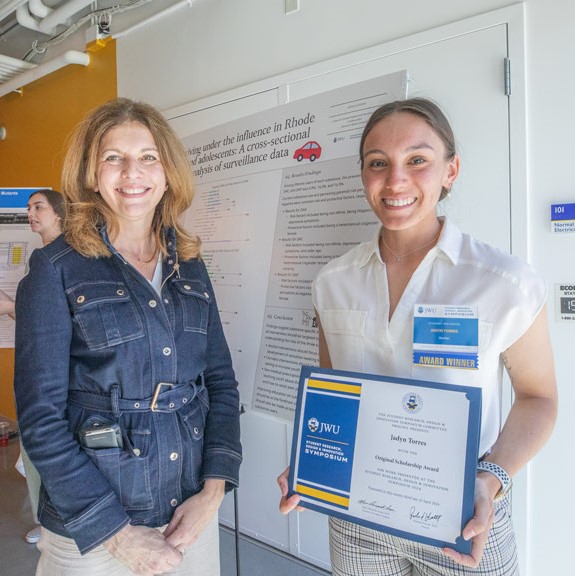
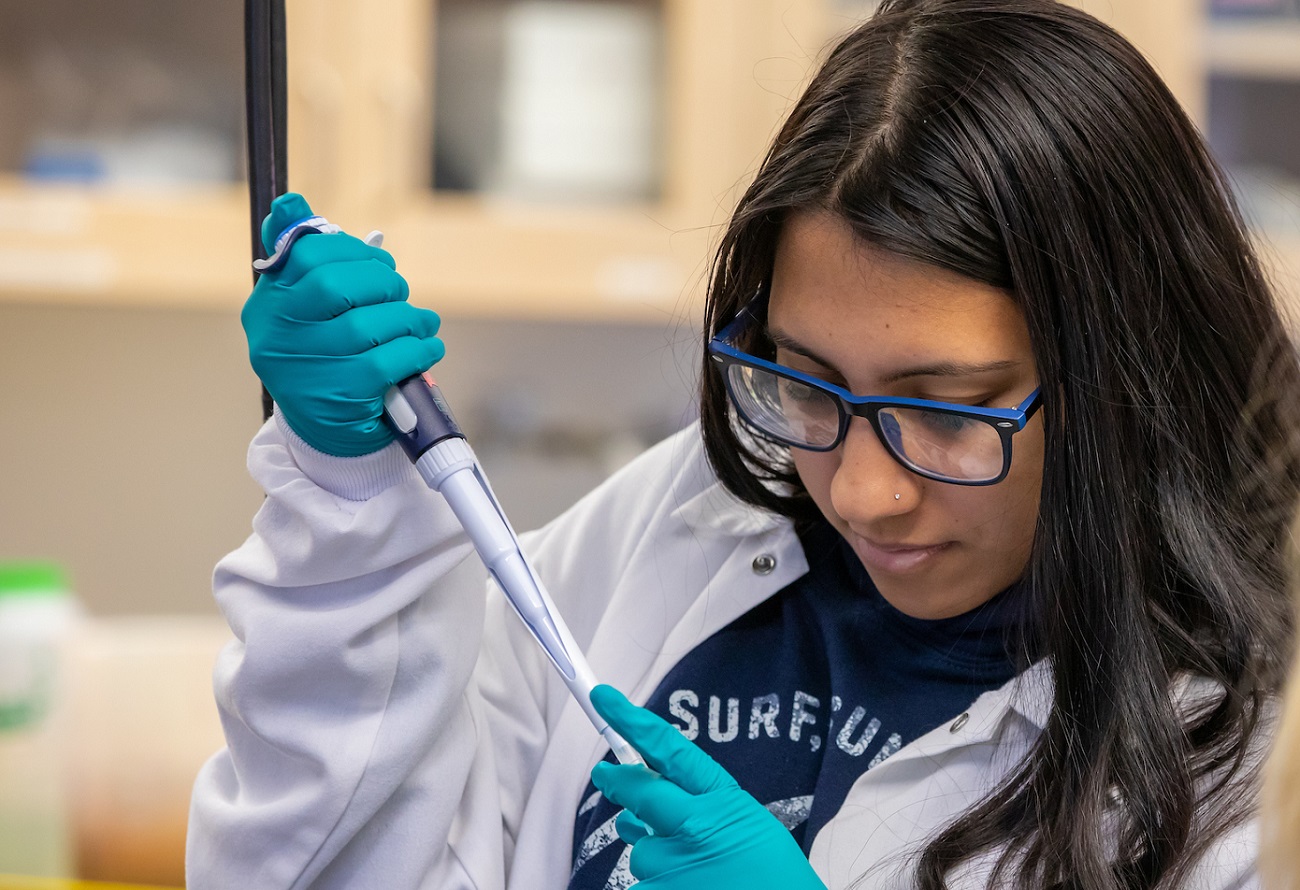
Established through a grant from the U.S. National Science Foundation’s Scholarships in Science, Technology, Engineering & Mathematics (S-STEM) program, JWU’s new IMPACT-STEM Scholars program is designed to support talented Biology B.S. majors who have financial need by helping them stay on track to graduate and prepare for a career in the life sciences.
“There’s a low ratio of women of color within medicine and STEM careers, and I want to be a part of that group and change that.”
Kimberly Sacaza ’23
Study Biology in Providence, Rhode Island
Both degrees develop a foundation in biological science and scientific inquiry. The B.A. offers more flexibility for interdisciplinary study, while the B.S. includes additional science depth and offers Biomedical Science, Environmental Studies and Plant Science specializations. Students should compare the current catalogs and speak with an advisor.
JWU’s Providence Biology B.A. and B.S. are designed as four-year programs. Actual completion time may vary based on degree choice, transfer credit, course load and individual academic planning.
The Biology B.S. offers Biomedical Science, Environmental Studies and Plant Science specializations. The Biology B.A. is designed for broader interdisciplinary flexibility rather than those B.S. specialization requirements.
Yes. Students may complete laboratory or field research, an undergraduate research experience, an internship, eligible study abroad or another approved applied-learning option. Opportunities and selection requirements vary.
Biology can provide relevant science preparation for medical and other professional programs. Prerequisites vary by institution and profession, so students should plan early with an advisor and review each program’s current requirements. Completing a Biology degree does not guarantee admission.
Graduates may pursue laboratory, environmental, research-support, education, science communication and related roles, or continue to graduate or professional school. Some positions require specific coursework, certification, licensure, graduate education or additional experience.
Qualified students may be able to take eligible graduate courses through JWU’s J2 program or pursue an approved combined-degree pathway. Eligibility, course availability and graduate admission requirements apply.
Faculty Contact
Andrew Karatjas, Ph.D.
Professor and Department Chair
andrew.karatjas@jwu.edu