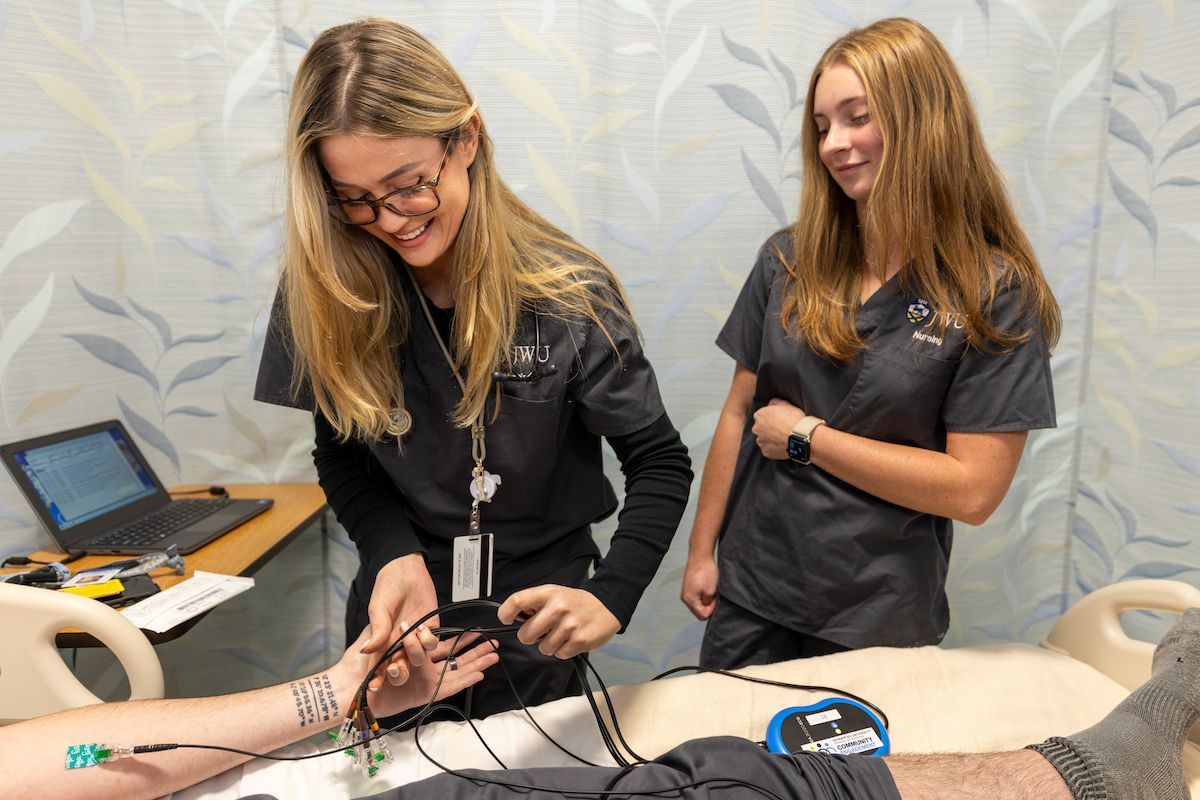
Undergraduate Students Present at Statewide Research Symposium
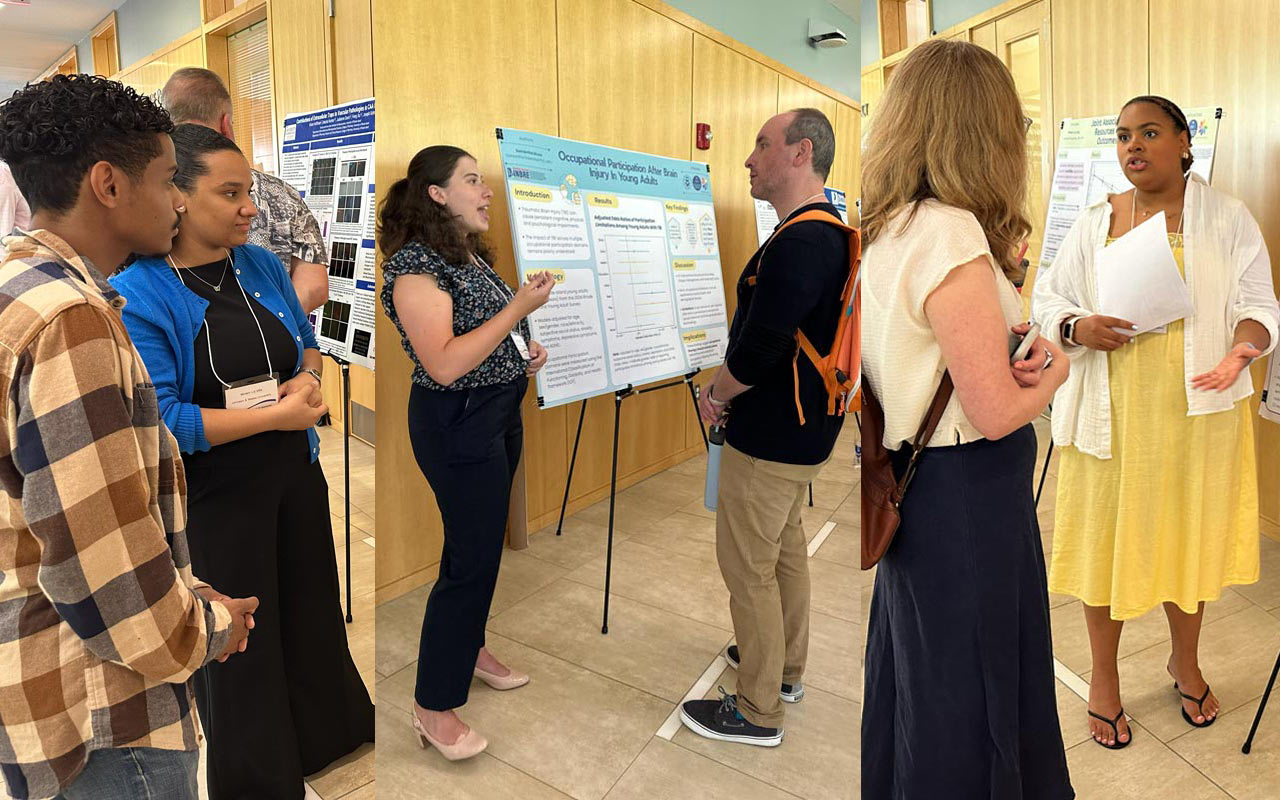
Researching a topic you’re passionate about builds critical thinking skills and familiarizes you with data analysis methods and tools. But spending 10 weeks using data to formulate questions, narrow your focus and conduct research before presenting it at the Rhode Island IDeA Network of Biomedical Research Excellence (RI-INBRE) Summer Undergraduate Research Symposium? That’s a whole new level.
On July 31, through the Student Training and Research (STAR) program, Johnson & Wales University students Samantha Bruno ’26, Lisbeth Aquino ’27 and Miriam Liz Villa ’27 presented to hundreds of faculty, students and administrators from across Rhode Island. Here’s what their experience was like.
Examining Traumatic Brain Injury (TBI) Effects on Young Adults
Samantha Bruno ’26, a Health Science major, plans on attending a DPT program at Duke University, hoping someday to work with neuro or spinal cord injury patients.
Through her clinical shadowing she has seen the toll that TBIs take in regaining everyday function, but her research was also personal.
“My sister had a TBI from a car accident and suffered long-term effects,” Bruno reveals. “I wanted to learn more about it and help other people recover from it.”
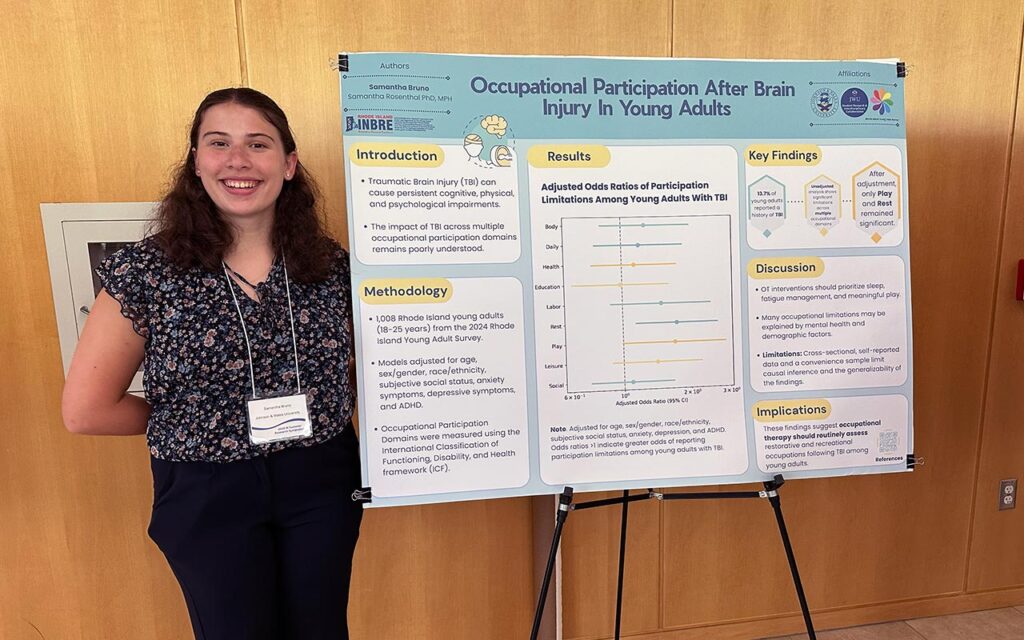
Bruno explains of her research, “We found that rest, play and leisure were heavily impacted by TBI. We focused on meaningful occupations — things people WANT to do, not just maintenance for everyday life — to bring back joy.”
Her biggest takeaway: “Overall, rest is important for recovery and function.”
Studying What Influences Young Adult Healthcare
Biology major and chemistry minor Lisbeth Aquino ’27 plans to become a dentist and is currently studying for her DAT exams while applying to grad schools.
While looking at how annual healthcare checkups among young adults are influenced by the intersection of student status and employment rather than either factor alone, she and her team sent out multi cross-sectional surveys and received 1,008 responses showing that competing academic and work demands can create unique barriers to healthcare.
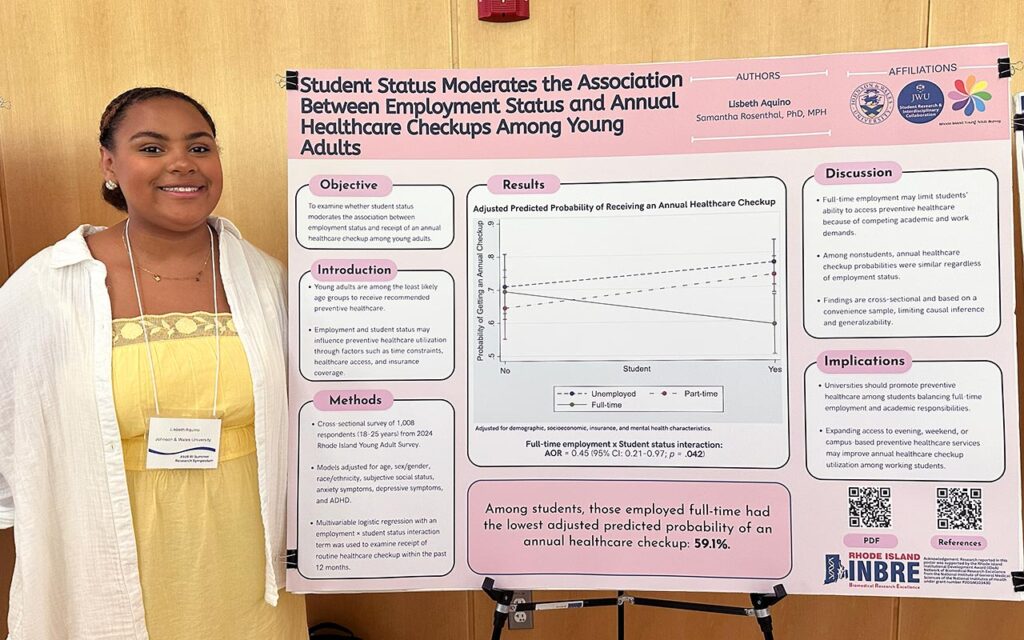
Aquino felt a connection with the study’s participants, as she didn’t take her health as seriously she could have after starting college. Her study revealed advice she could take herself: “You should prioritize your health rather than trying to get school or work done at its expense.”
Her biggest takeaway: “Get annual checkups to know things are good. And if things aren’t good, take steps to be successful and prevent future damages.”
Examining the Effect of Emotional Support on Young Adults
Miriam Liz Villa ’27, a Biology major with a double minor in Chemistry and Public Health, has her sights set on two more degrees in the future: a Master of Public Health (MPH) and a medical degree. In the meantime, she plans on gaining additional experience through work, volunteering and shadowing medical professionals to strengthen her medical school application.
Her research on how strong emotional support and how young adults perceive their place in society work together to influence depression, suicidal thoughts and insomnia resonated with Villa because she’s part of that demographic. Her team’s data showed that a high perceived social standing was only beneficial in terms of mental health outcomes when emotional support was also high — showing that emotional support appears to be a significant determinant of mental health outcomes.
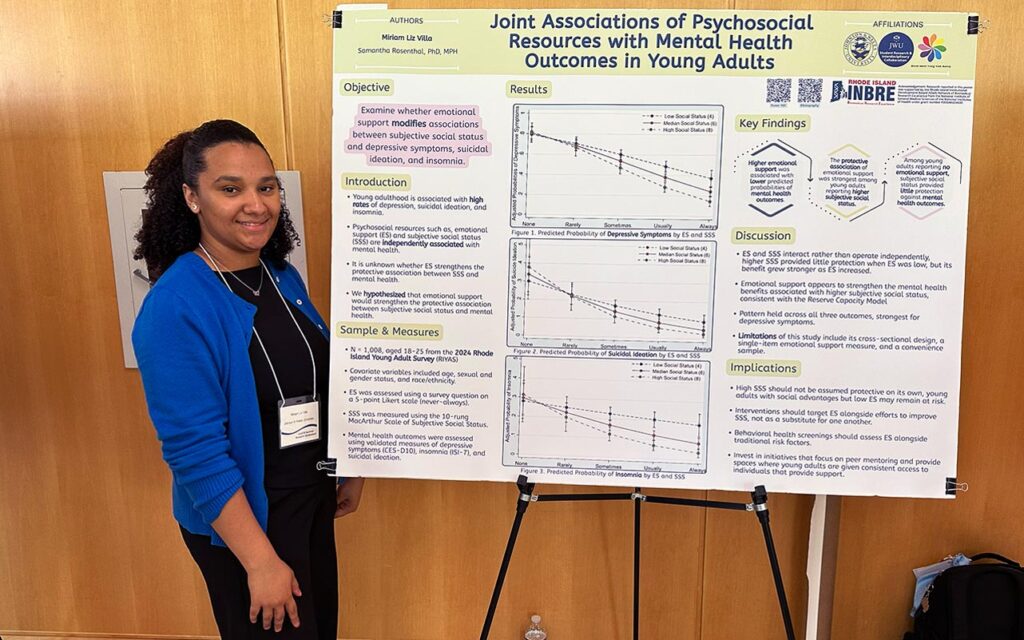
“I believe that interventions addressing this issue could be substantially beneficial,” she states, hoping they could help improve mental health outcomes among young adults.
Her takeaway: “The medical professionals, educators, policymakers and others who shape young adults’ experiences should not assume that young adults with a high perceived social standing are necessarily better off or have greater emotional support. Considering all psychosocial resources together would be the most beneficial approach.”
Why Presenting Research Matters
Professor and Health Science Department Chair Samantha Rosenthal, MPH, Ph.D., who mentors STAR undergraduate researchers, finds it meaningful each year for JWU students to present alongside researchers across Rhode Island.
“It’s an opportunity for JWU students to see themselves as part of the broader scientific community and recognize that their work belongs in those spaces,” she explains of how Wildcats aren’t just assisting with faculty research; they’re engaged in the scientific process.
“They’re developing research questions, reviewing the literature, analyzing data, interpreting findings and communicating their results,” Rosenthal explains. “By the time they present at the symposium, they have developed a level of expertise in their specific research questions that is remarkable for undergraduate students.”
At this year’s symposium, for example, Bruno, Aquino and Villa were able to discuss their findings, explain complex research methods, respond to challenging questions and discuss the broader implications of their work with a varied audience — explaining not only what they found, but why it matters.
“I was extremely proud of how professionally they represented themselves and JWU,” notes Rosenthal. “Samantha, Miriam, and Lisbeth did an outstanding job.”
Reflections on Presenting at a Research Symposium
All three students reported having a great experience sharing their research with a wide audience.
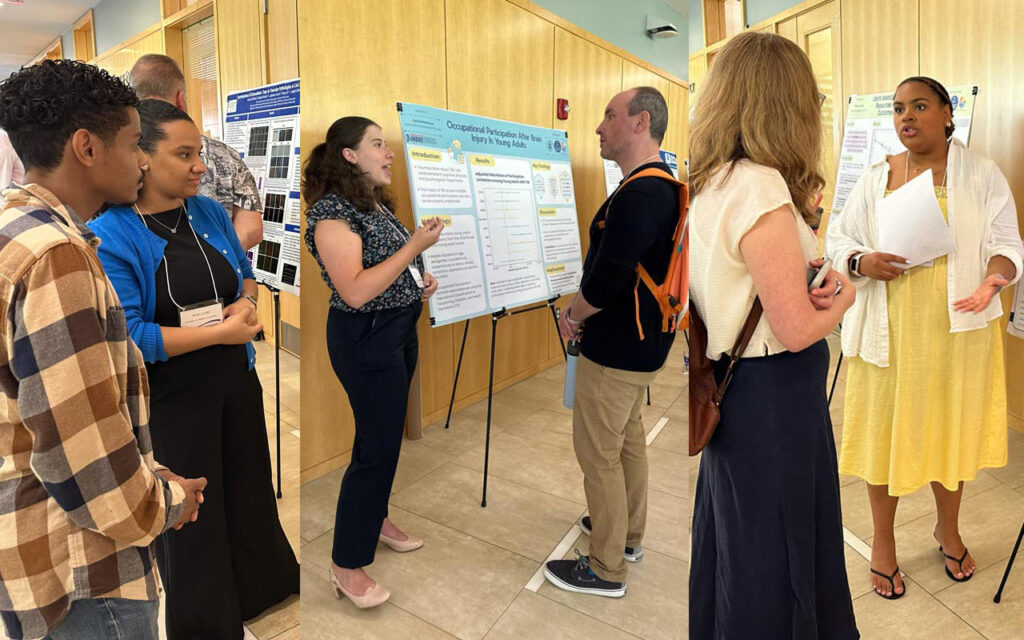
“There were a lot of amazing projects, and we got to see everyone else’s,” says Bruno, who says she enjoyed having engaging conversations about occupational therapy, speech pathology and athletes with TBI. “It was great to interact with people from universities such as Salve Regina, URI and Bryant and hearing about the research they did.”
It also marked Bruno’s first time exploring a research query from the ground up.
“This allowed me to go through different stages, narrow things down and figure out how to phrase things or shift if something’s not working,” she notes. “Dr. Rosenthal puts a lot of time into coming up with research questions and assigning people she thinks will be interested in them, and I appreciate that she gets our feedback.”
Villa loved discussing her findings with other academic professionals and peers.
“The research sparked additional conversations about how social media may impact emotional support and perceived social standing, which can influence mental health outcomes,” she explains.
Her highlight: “Being able to reflect on the experience and consider what I could do differently in the future. This opportunity was one of my first official experiences working on a project that lasted approximately 10 weeks.”
Aquino prefers talking to writing, so for her, presenting was fun — especially when her study, which indicated that people with full-time jobs and sponsored healthcare were the least likely group to get annual checkups, surprised symposium attendees.
“People kept coming up to talk about something they didn’t expect,” she recalls. “Making an impact on others is great.”
One highlight: An attendee who was a psychiatrist applauded Aquino for focusing on a group of people instead of a set of problems.
“She felt the research was very novel and had good potential to help others, not only from a health standpoint but also from a mental health standpoint,” she says.
How to Hear About Research Opportunities
Alumni connections are valuable for graduates seeking jobs, but they can also benefit current students. Villa learned about RI-INBRE’s symposium through recent alum Steve Jacob ’26, a research fellow at JWU’s Center for Student Research and Interdisciplinary Collaboration (CSRIC).
“Steve shared his experiences participating in the symposium two summers prior, and I became extremely interested,” she says.
Faculty connections are also helpful. “When my mentor, Dr. Rosenthal expressed that she was looking for students to participate, I immediately let her know I would like to be considered,” Villa recalls. “Since Dr. Rosenthal and I had already worked together last academic year, she was familiar with my capabilities and was ready to have me participate.”
Bruno also experienced Rosenthal being familiar with her research and finding her a good fit to participate. Meanwhile, Aquino found out about the Summer Undergraduate Research Symposium (SURS) through her interviewer while applying to CSRIC. Students with CSRIC membership participate in collaborative research, gain access to shared datasets, enjoy faculty mentorships and strengthen their writing for publication.
Other Research Opportunities at JWU
JWU undergraduates have presented their research both locally and nationally at scientific gatherings, engaging with public health practitioners, epidemiologists, healthcare professionals, policymakers and researchers who actually work on the issues they’re studying.
JWU STAR students’ research has resulted in multiple publications in the Rhode Island Medical Journal and in international journal publications, with students serving as first authors. Three more manuscripts are currently under review, and another two are in preparation.
“These are substantial scholarly accomplishments for undergraduate researchers,” states Rosenthal. “They demonstrate that our students are capable of producing research that contributes meaningfully to the scientific literature.”
Through CSRIC, Villa has participated in various research projects and presented at conferences including Society for Advancement of Violence and Injury Research (SAVIR), the Rhode Island Public Health Association (RIPHA) and the 2026 Northeast & Caribbean Injury Prevention Network (NCIPN), where she served as a guest speaker.
Her work with the Rhode Island Department of Health allowed her to contribute to a state-led data brief examining Adverse Childhood Experiences and Intimate Partner Violence. She also worked with Sojourner House on a project involving Spanish-speaking participants in the MOSAIC program.
“These experiences have allowed me to explore different areas of research while strengthening my skills in scientific communication and collaboration,” she says. “I was also honored to receive the 2026 Johnson & Wales President’s Award.” Today, she continues working toward publishing the manuscript from her summer research.
In addition to presenting at JWU’s Student Research, Design & Innovation Symposium (SRDIS) for the past three years, Bruno presented at the Rhode Island-based Safe States Alliance conference, the RIPHA conference and the SAVIR conference. She was also commissioned to do research by the Rhode Island Department of Health, which sent her to present her findings at the National Injury and Violence Prevention conference.
Right now, Aquino is focused on publishing her research, reporting, “I am preparing to send out my final draft. It’s in the pipeline to hopefully get published!”
How Undergraduate Research Can Impact Future Careers
Rosenthal finds it valuable that undergraduate research students are addressing real public health challenges in Rhode Island.
“They’re examining issues that matter to the health and wellbeing of people in our communities, often using data collected through partnerships with state agencies,” she explains. “Presenting their findings gives them an opportunity to contribute to conversations that extend well beyond the classroom.”
Rather than be limited to one major, undergraduate STAR researchers have come from Healthcare Administration, Biology, Health Science and Public Health backgrounds, demonstrating skills that are relevant in a number of professional fields. One STAR alum credited her research experience as instrumental in securing a position as an intensive care coordinator at the Justice Resource Institute, while another is working at Blue Cross Blue Shield of Rhode Island. Others are completing graduate work at institutions such as Yale University or are pursuing opportunities in veterinary medicine and dentistry.
Building Confidence and Connections Through Presenting Research
Rosenthal wants all undergraduates to recognize that they’re capable of doing rigorous, meaningful work that contributes to scientific knowledge.
“The research accomplishments are important, but the confidence, independence and sense of professional identity students develop may be even more valuable,” she says. “Watching students’ transformation into scientists is incredibly rewarding.”
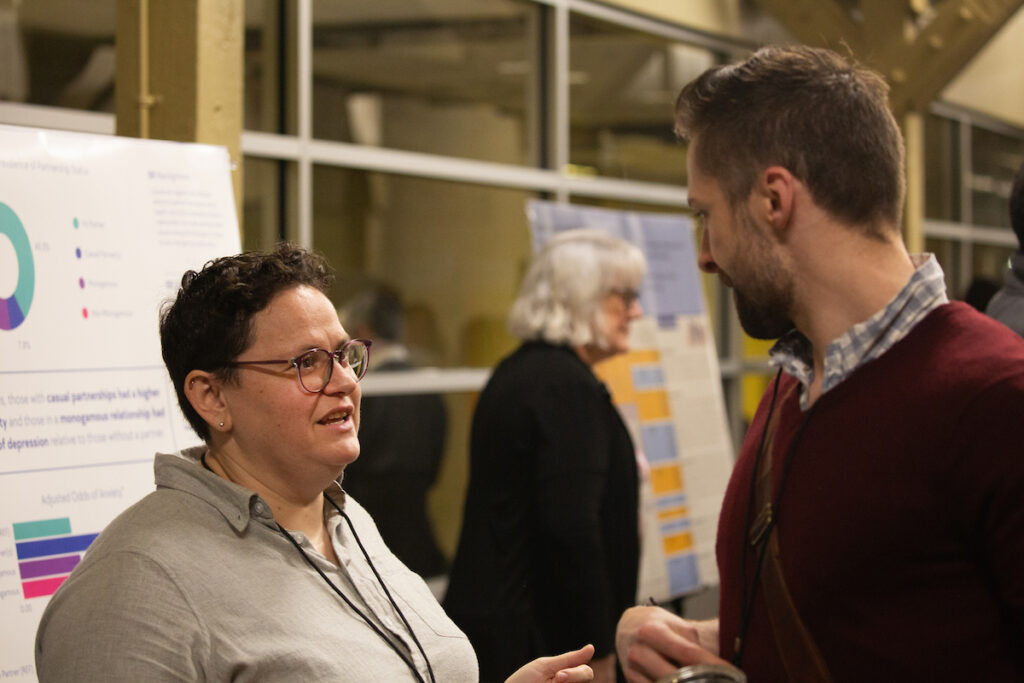
In addition to growing her confidence, Villa learned that meeting people you otherwise wouldn’t have crossed paths with is a huge benefit at a professional conference — especially if they could help advise you on graduate programs, career possibilities or new areas of research.
“During the summer, I was able to connect with Dr. Brendan DeBoef, interim vice president of research and economic development at the University of Rhode Island,” she shares. “I emailed Dr. DeBoef about my plans to apply to medical school and pursue a master’s degree in public health. He provided valuable advice and feedback on what I could do to strengthen my application. I plan to reach out to him again in the future.”