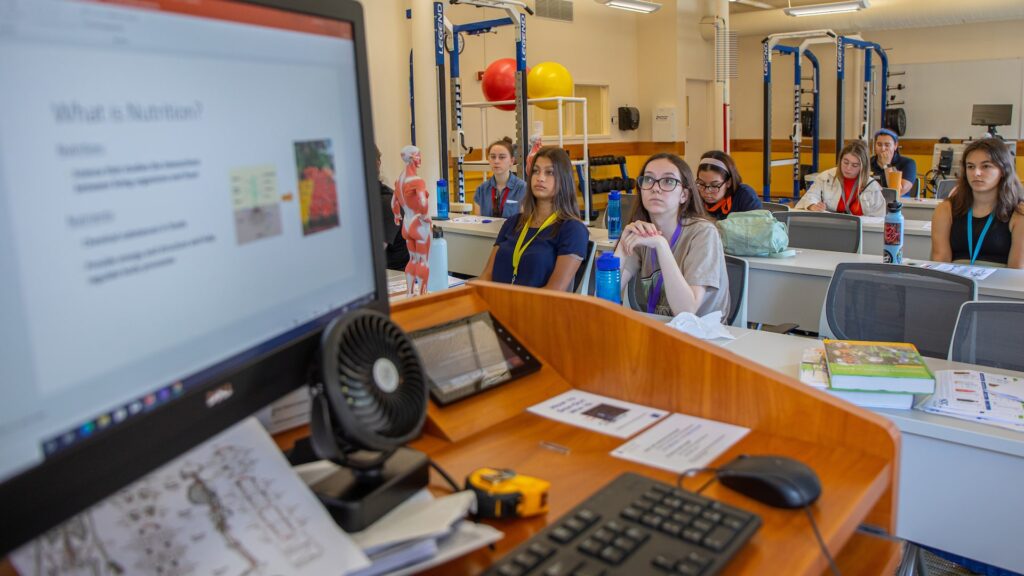
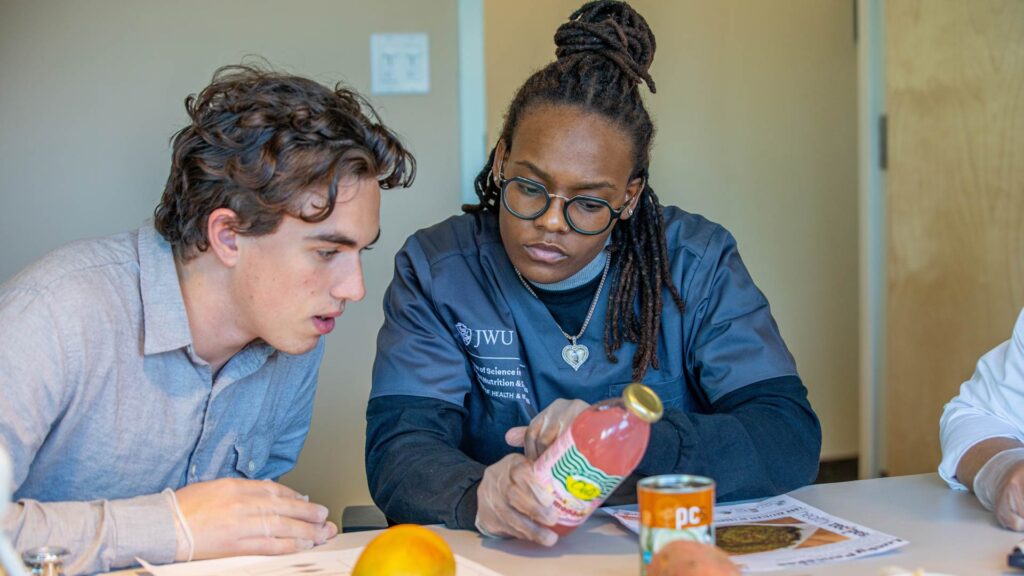
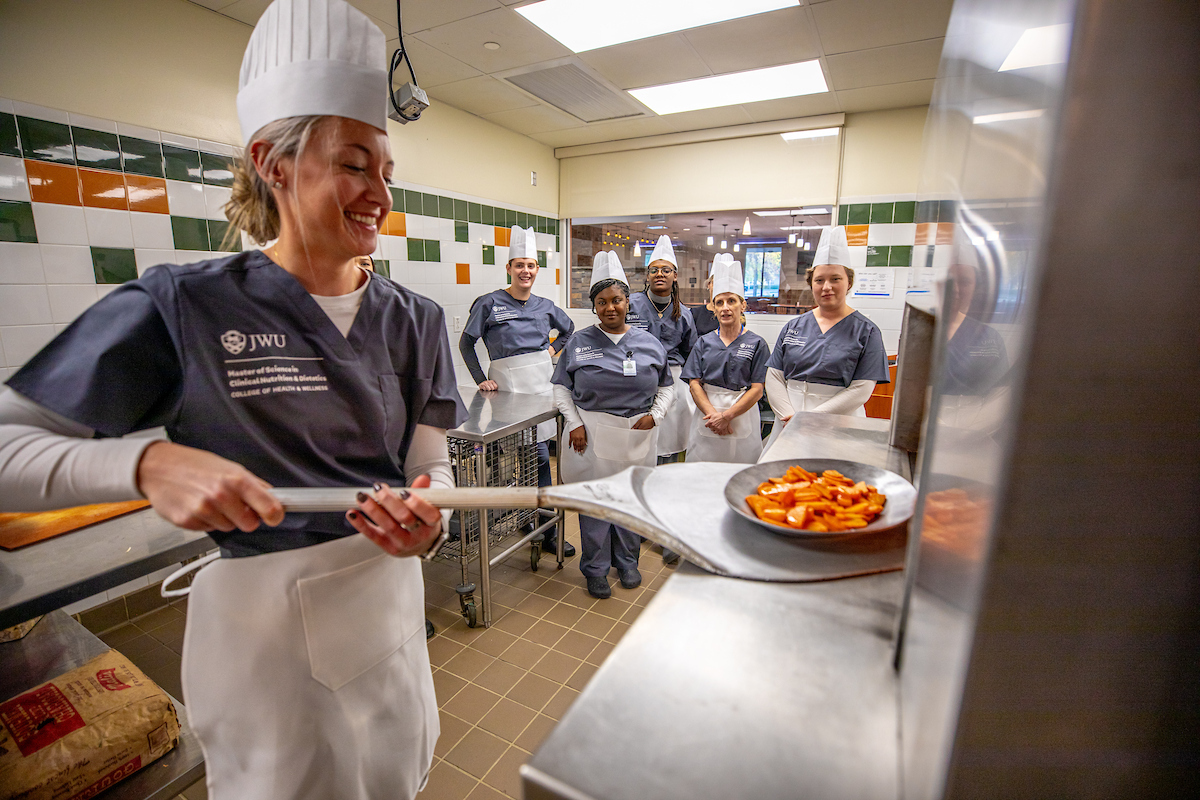
Registered Dietitian Nutritionists (RD/RDNs) have the skills to improve patient health outcomes through the strategic application of Medical Nutrition Therapy (MNT). Johnson & Wales University’s Master of Science in Clinical Nutrition & Dietetics (MSCND) trains the next generation of dietetics leaders through applied learning experiences emphasizing interdisciplinary collaboration and a holistic approach to wellness.
Building upon JWU’s recognized history in culinary nutrition and dietetics, this 16-month program prepares graduates to apply for the Commission on Dietetic Registration credentialing exam to become an RDN.*
Expand your culinary and nutrition knowledge through the program’s close collaboration with our world-renowned College of Food Innovation & Technology (CFIT), and learn to efficiently apply your expertise to patient and client care through experiences within the College of Health & Wellness.
As you develop your clinical nutrition expertise, you will be guided in class by experienced faculty — and in the field by professional preceptors, many of whom are JWU alums.
The MSCND Program Handbook contains information designed to help prepare you for the program, including available resources, relevant policies, an outline of the curriculum and course sequence, and other helpful guidelines.
*Students without a DPD verification statement will be required to take two foundation courses prior to the start of the MSCND program.
Individual states may require specific licensing or professional certification in addition to earning a degree in order to practice in the field. Review Licensure & Professional Certification Disclosures for more information.
Admission is contingent upon meeting the technical standards for this program.
Program Structure
Full time for 16 months (4 consecutive semesters).
48 credit hours (54 credit hours for students without a DPD Verification Statement).
Cohort model: Stay with your group and progress through coursework together.
Hybrid format: Online course delivery mixed with supervised experiential learning on campus and in the community.
Course Sequence
Cycle through courses in dietetics, macro- and micronutrients, nutrition for health and wellness, nutrition counseling and education, and current topics in nutrition.
Academic classes in health and wellness, counseling and education, and advanced clinical nutrition are paired with supervised experiential learning.
The program concludes with a Nutrition Capstone and extensive experiential learning opportunities, including a specialized rotation that takes students’ interests into consideration.
What Makes JWU’s MSCND Unique?
JWU’s Master of Science in Clinical Nutrition & Dietetics helps you develop the analytic, diagnostic and clinical skills to work in a range of settings. Learn to assess and modify patients’ diets to help treat or manage existing conditions — or prevent future health issues. As part of this program, you will:
Learn from nationally recognized faculty in a fully modernized facility.
Participate in at least 1,000 hours of supervised experiential learning (SEL) focusing on various healthcare areas such as inpatient and hospital care, ambulatory and outpatient care, community outreach and education, private practice, senior living and longterm care facilities.
Career Options
Some professions may require additional study, background checks, certifications, licenses, exams and/or experience as required qualifications for employment. Students are responsible for verifying that they can meet the employment requirements of potential employers.
Clinical nutrition and/or sports nutrition
Community or public health
Food service management
Private practice
Corporate wellness
Food communication
Our Expert Faculty
At JWU, you’ll be guided by professors with years of industry experience and multiple professional certifications. As practitioners, they will help you gain hands-on experience that you will apply through fieldwork.
JWU’s MSCND program prepares future registered dietitian nutritionists by focusing on applied learning experiences that emphasize the importance of interprofessional collaboration.”
Luciana Soares, DCN, M.S., RDN, LDN, CDP, FAND, program director
The Value of the RDN Credential
The RDN credential sets the quality standards for the dietetics practitioner, demonstrating a level of professional competence to offer an evidence-based approach to sustaining a healthy life. RDNs have access to diverse opportunities and a wide range of practice areas.
Is There a Difference Between RD and RDN?
No. The RD and RDN credentials are used interchangeably, and it is really a matter of preference. Historically, Registered Dietitian (RD) denoted those with Commission on Dietetic Registration credentials. In 2013, “Nutritionist” was added to set the credential apart from individuals calling themselves nutritionists, despite a lack of formal training.
Just one example of the Interprofessional Education (IPE) opportunities Johnson & Wales students experience: in April, Occupational Therapist Doctorate (OTD) and M.S. in Clinical Nutrition & Dietetics (MSCND) students teamed up to asses Jessica, a real patient Dr. Burke had worked with years ago, on helping her navigate challenges with MS.
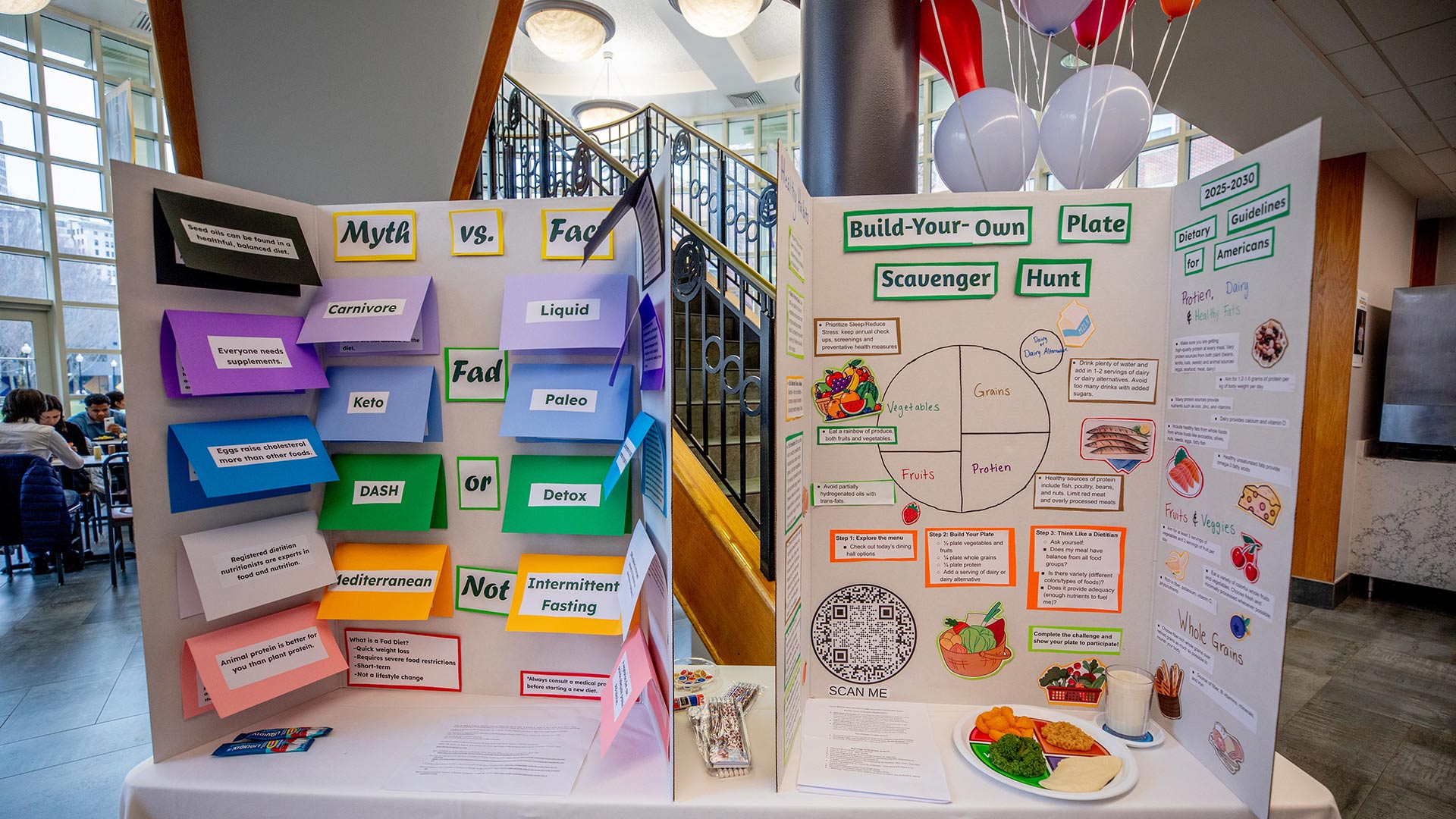
March is National Nutrition Month across the U.S., and Johnson & Wales students have been part of that movement! Here’s how our M.S. in Clinical Nutrition & Dietetics (MSCND) students, Dietetics & Applied Nutrition (DiAN) students, Doctor of Physical Therapy (DPT) students and JWU Nutrition Society members have been helping others make healthy choices.