At JWU, our focus on public health involves delivering patient-centered and humanistic healthcare to diverse populations. In our Bachelor of Science in Public Health degree program, you’ll learn to assess and plan for community needs, taking a holistic approach that includes courses in nutrition, exercise science, public health, psychology, sociology and economics. You’ll also gain insight into global health issues and develop solutions for challenges faced by different populations around the world.
Graduates of JWU’s Public Health program can choose to apply for our Master of Public Health degree, which provides more in-depth training for future leaders in public health. In addition, many of our B.S. in Public Health graduates have continued their education by pursuing MPH degrees at prestigious institutions such as Johns Hopkins University, New York University and George Washington University.
Curriculum & Degree Requirements
Free elective credit can be applied to a number of options, such as internships, minors or study abroad. You’re encouraged to contact an advisor before scheduling free elective credits.
Additional course with the Interacting attribute (EINT) in a different discipline
A&S Electives
6
Two courses with the Arts & Sciences elective attribute (EASC)
Free Electives
15 credits selected from 1000-4999 numbered offerings within the university
15
Total Credits
121.0
Building Public Health Skills
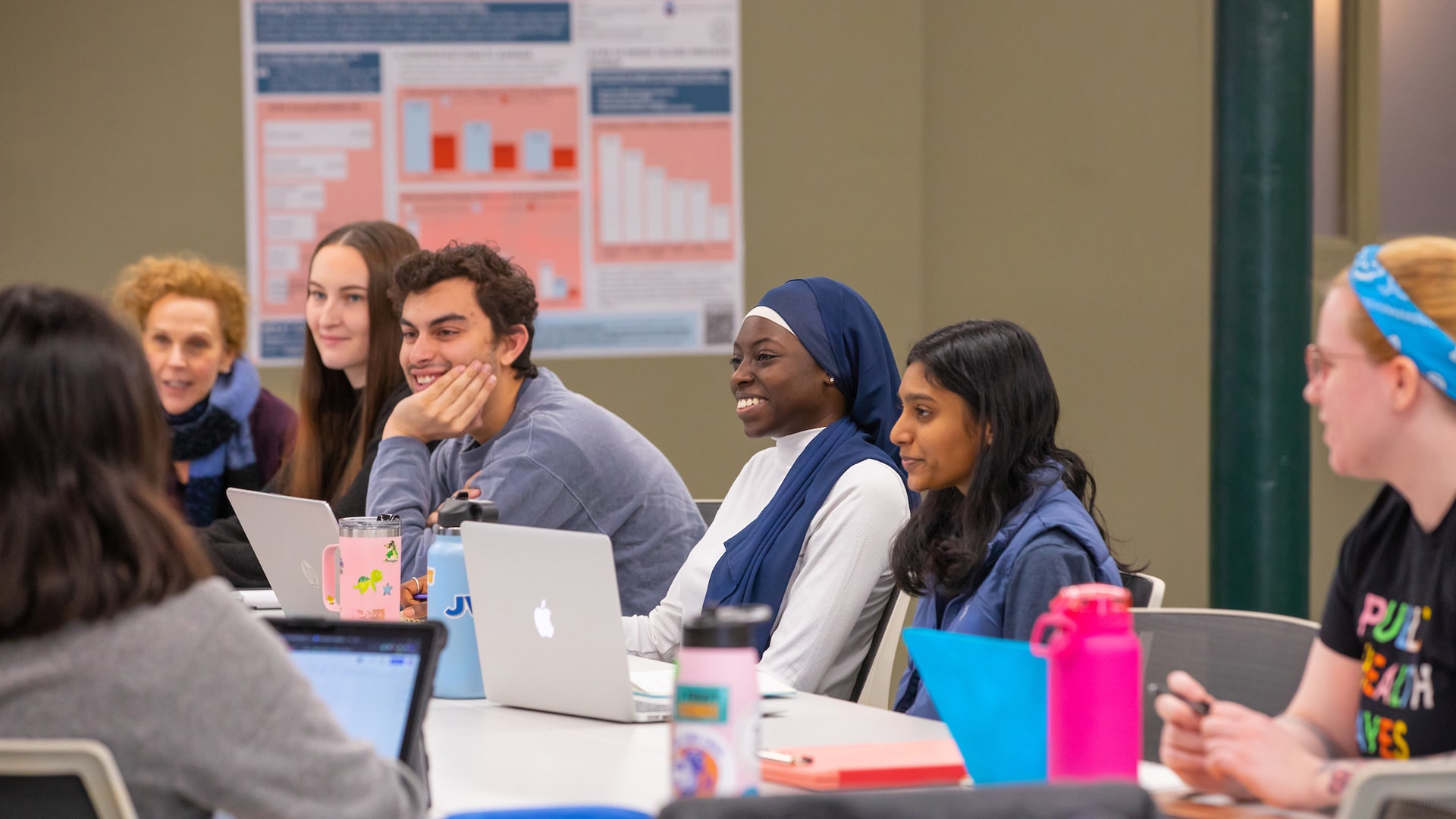
At JWU, we support our students in becoming public health advocates, with mentorship from faculty who are well-versed in research and have real-world industry experience. Students can make a difference in health, whether through research and education, providing data analysis for local health initiatives or conducting surveys to investigate the links between smartphone addiction and mental health, or the relationship between social media use and depression in college students.
In this program, you’ll:
Become prepared for a career in healthcare or for graduate studies in public health
Learn how to evaluate, present and analyze data and develop policies and interventions
Obtain the intervention skills set to evaluate global health systems, identifying problems and developing solutions
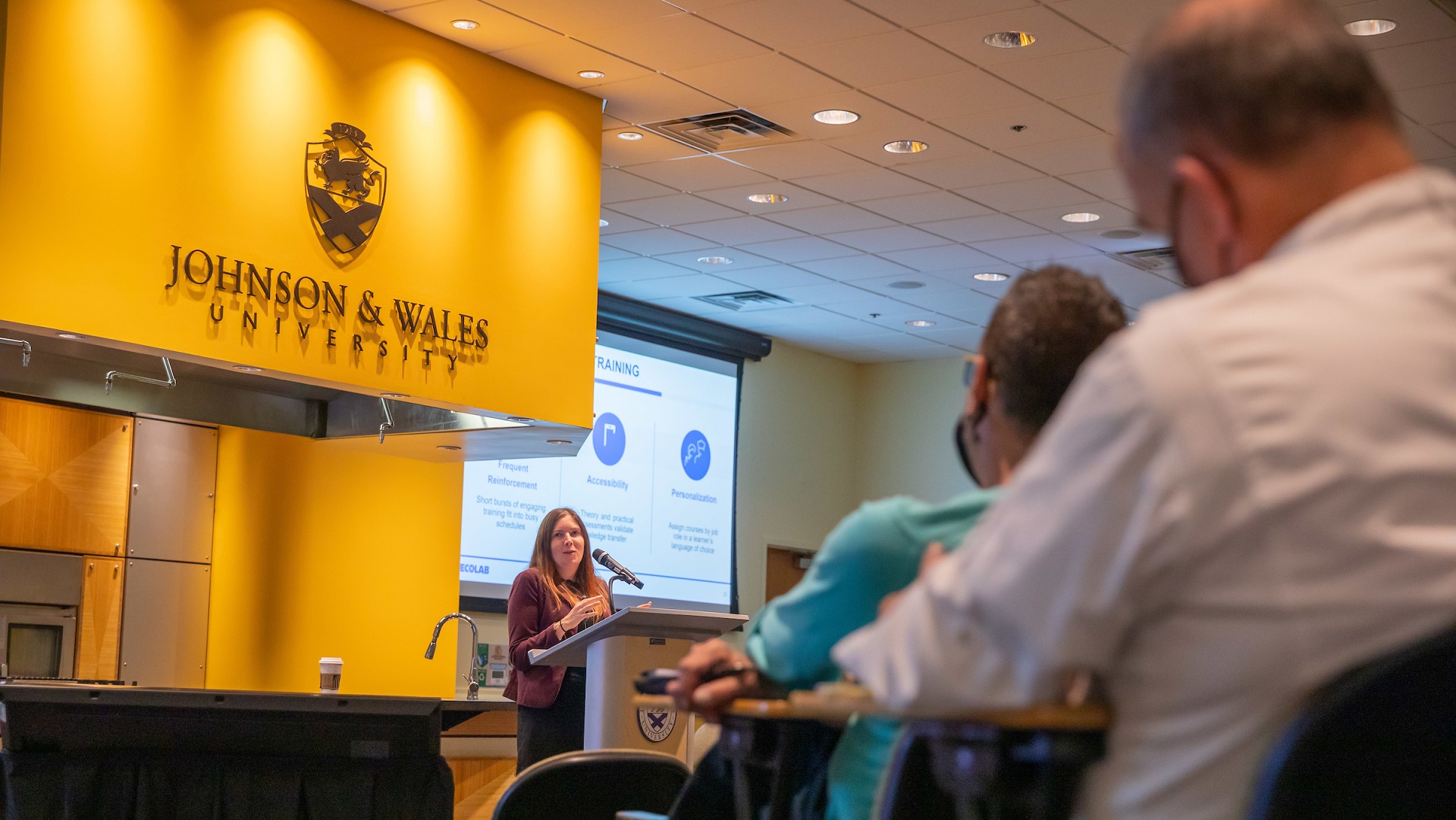
Identify and complete a full-year research project, presenting your findings to fellow researchers and to the public
Apply free elective credit to options ranging from internships to study abroad
Fast-Track Your Nursing Degree
JWU’s Public Health students may pursue the Accelerated Second Degree Bachelor of Science in Nursing (ABSN) program immediately after completing their Public Health B.S. degree through our 4+ track. Faculty will provide specialized advising for students who indicate interest in this pathway. Once you complete your bachelor’s degree, you may be eligible for a 25% discount on your ABSN degree through JWU’s Wildcat Alumni Scholarship.
As a research fellow at JWU’s Center for Student Research and Interdisciplinary Collaboration, I work with real-life data and collaborate with faculty mentors to produce research, as well as present at statewide conferences.”
Lilly Oliveira’25, Public Health major
What can you do with a Public Health degree?
After graduation, you’ll be prepared for careers such as:
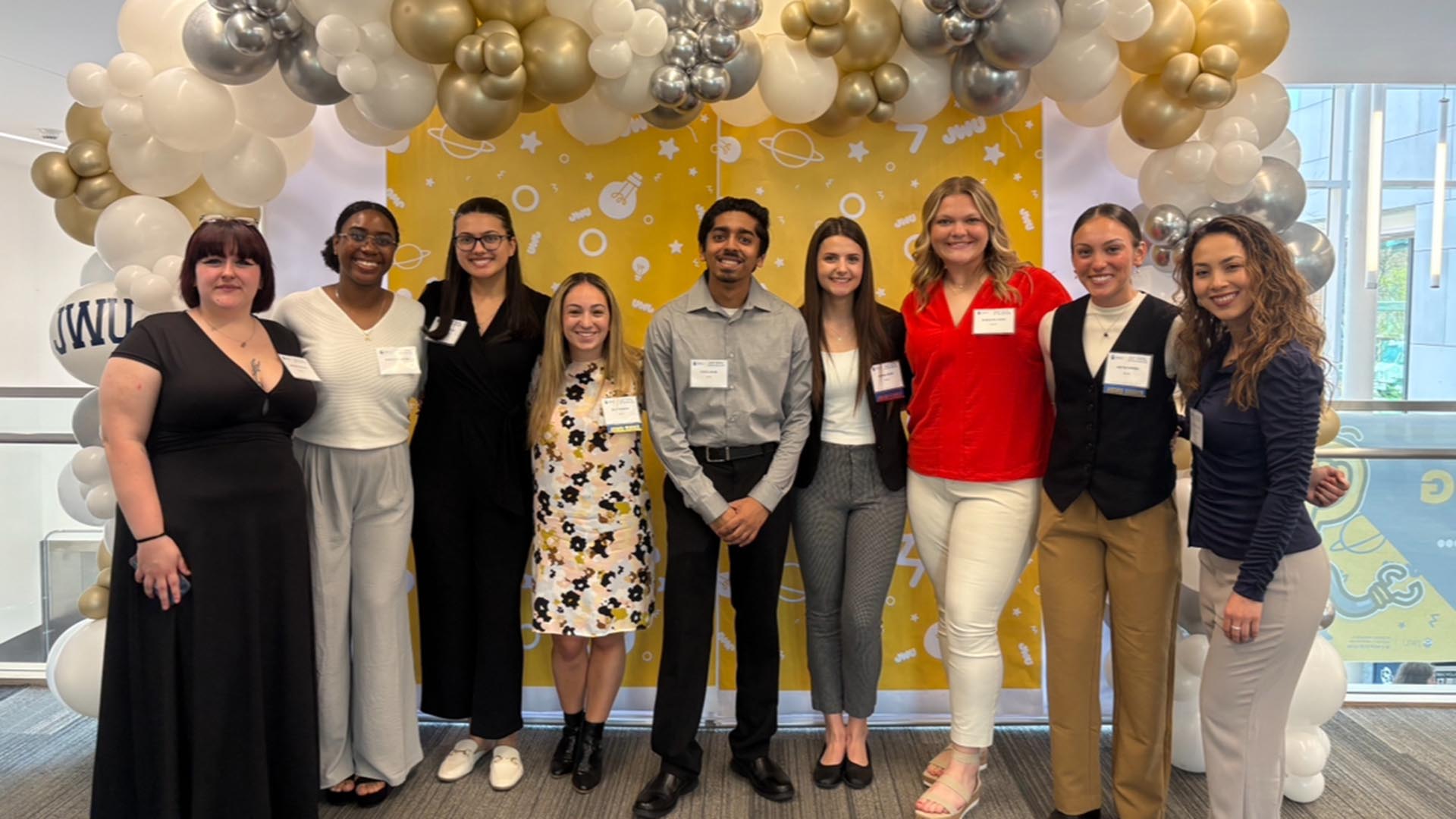
Ten JWU students — some still undergrads, others newly minted alumni — recently saw their names in print, not in a school paper or class project, but in the Rhode Island Medical Journal. The June 2025 issue features a special section of research around the topic of young adult mental health, a growing public health…
A public health degree offers graduates an array of opportunities to help people. From educational roles to overseeing entire departments, public health professionals have the option to choose a career that fits their personality.