Culinary
Alumni
Hospitality & Business
Alumni
Arts & Sciences
JWU Design Collaboration Brings Public Art to Providence
For JWU Design Professor Jonathan Harris, helping students develop their creative skills is one of the most rewarding parts of teaching. This year, one of those relationships came full circle when Harris partnered with recent Design graduate, Mat Hartung ’24, to create a public art installation for downtown Providence. The pair collaborated on a suspended, light-catching sculpture that now shines above Westminster Street as part of the city's streetscape improvement project
Combining Harris' experience in public art with Hartung's expertise in fabrication, the project transformed a mentor-student relationship into a professional partnership while celebrating the creativity that defines Rhode Island's capital city.
When the City of Providence announced the Request for Proposal (RFP), Harris immediately knew who he wanted to work with. "I've been doing these urban amenities since probably 2002," Harris said. "When this project came up, I thought of Mat immediately because he's now working with a fabrication company and learning all of these methods of fabrication. He had the skills that I needed." Having taught Hartung during his time at JWU, Harris knew the collaboration would be a natural fit. "I'd never worked with an alum before, but it seemed like the perfect opportunity," Harris said. "He was an excellent student, and I knew how to work with Mat already. I knew it would be a fun collaboration for both of us."
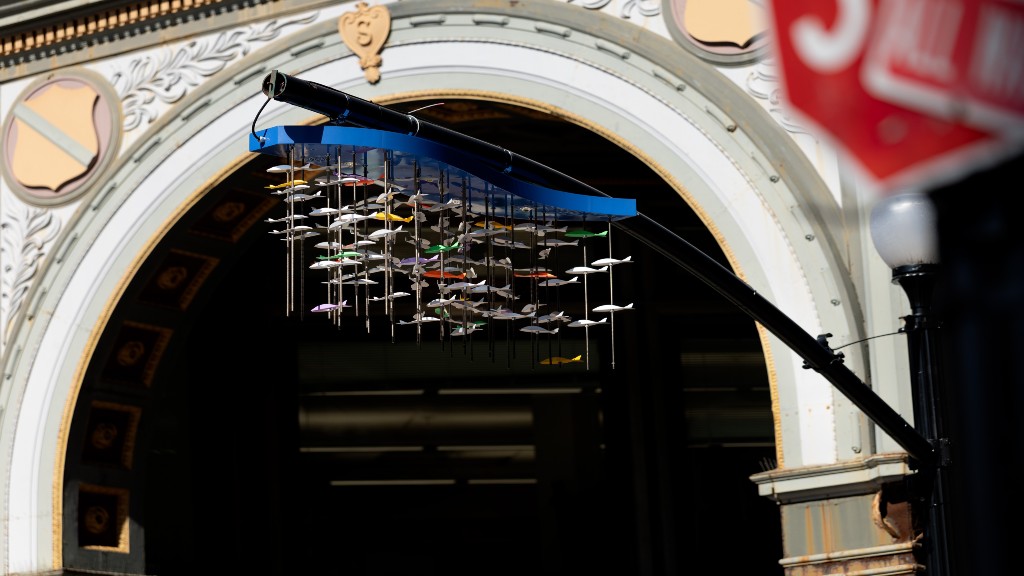
For Hartung, the invitation represented more than just a collaboration: it was a milestone early in his career. "Jonathan was one of my professors for the duration of my JWU career," Hartung said. "He and I built a great relationship throughout the years, and I would consider him a friend beyond the academic walls." After graduating in 2024, Hartung accepted a position with Design Communications LTD. in Avon, Massachusetts, where he developed technical skills as a metal fabricator that would later prove invaluable for this specific project. "Jonathan came across the opportunity to submit the proposal and asked if I would be interested in joining him," Hartung said. "With our combined skills, design knowledge and access to a manufacturing facility, we believed this project was within our capabilities."
The inspiration for the sculpture came after weeks of brainstorming and figuring out what would best represent the uniqueness of Providence, Rhode Island. “We had ideas based around the official icons of the state, including the state bird, flower and tree,” Hartung said. “A few included the anchor from the state seal, but during our brainstorming we kept coming back to Providence being the Creative Capital."
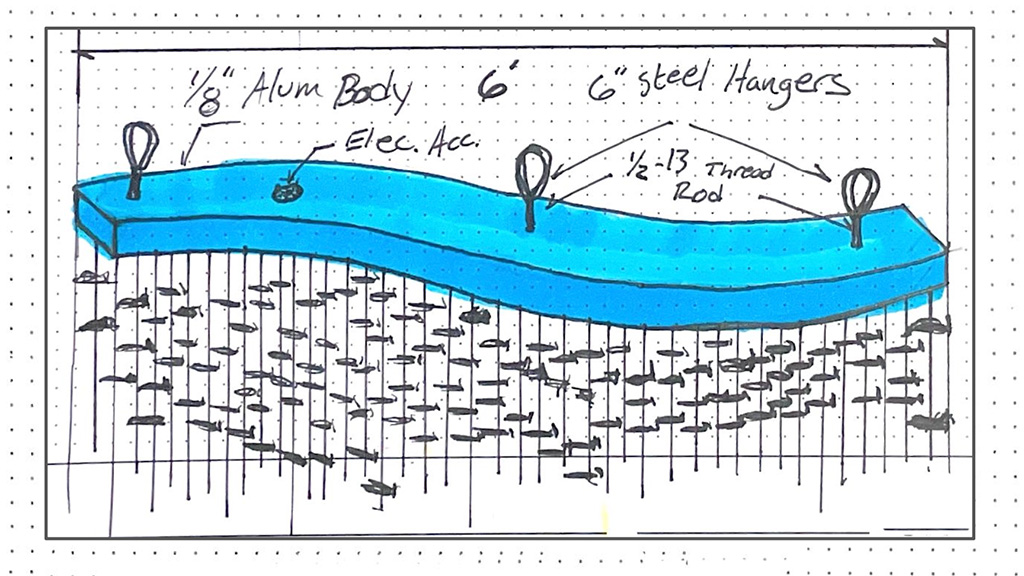
This in itself led to a simple realization; it’s the people that make this city unique. “The people make Providence the Creative Capital — everyone who supports the arts and expression of creativity,” says Hartung. “We all flourish and grow individually in our personal journeys, but only with the support, guidance and collaboration of others.”
The final design, a colorful school of reflective fish suspended from overhead, reflects this shared vision. “The different colored fish reflect the uniqueness of each individual, their style, life, and personality, but as one. As one community, one school swimming towards their own goals.” Hartung said. “Our school of fish sculpture is meant to represent the community of Providence made up of fantastically creative, unique, and supportive individuals.”
For Harris, the concept fits in naturally with his niche when it comes to public art.
“My artwork is very site-specific,” Harris said. “I learn about the location and its history, and that feeds into the proposal. They wanted something to represent Rhode Island and something that would improve the space. Those ideas, along with our history of being on the water and this idea of movement that I try to get through most of my sculptures, kind of just fell into place as Mat and I each brought a bevy of ideas together.”
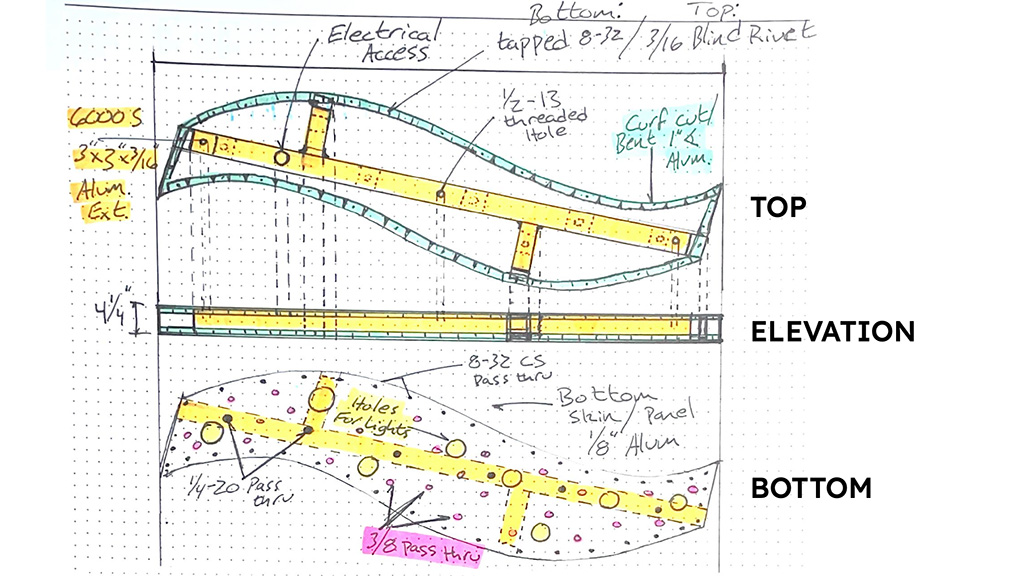
What They Gained from the Experience
This project introduced Hartung to the world of public art proposals. While Harris had years of experience responding to RFPs, this was uncharted territory for Hartung. "When applying, you have to provide evidence that you are capable of completing what you're proposing," Hartung said. "We submitted our design along with our portfolios and our résumés. This was my very first RFP, and I was amazed and truly couldn't believe that my first submission was a success."
The experience also allowed Hartung to participate in every stage of the design process, from developing the initial concept to manufacturing and finally installing the finished sculpture. "It is not often that you get to be a part of every step of a project," Hartung said. "This project allowed me to see my design through to completion while also building skills and gaining more experience every step of the way. To be able to put my name on something that has become a point of interest for people in the community is, first and foremost, an honor."
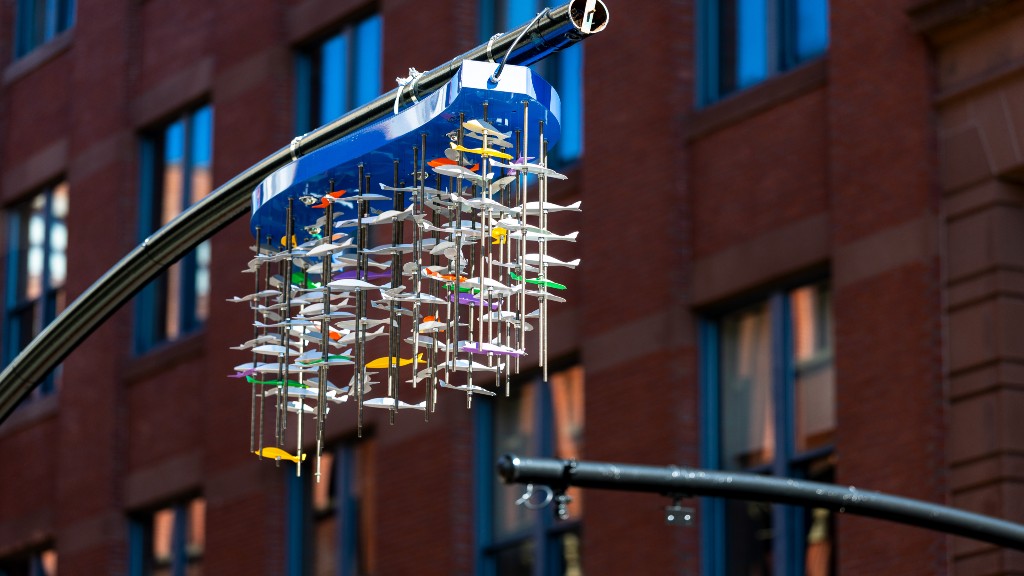
For Harris, seeing a former student become a creative partner was equally as rewarding. "Mat took the fabrication right from underneath me," Harris said. "He just did the work himself. That's exactly what you hope for in a professional. As a professor, it's exciting to watch your students grow into professionals that you can collaborate with."
Both Harris and Hartung recommend this experience and hope more JWU students pursue opportunities in public art and design. "Keep your eyes open," Harris said. "These proposals can be difficult to find, so find people who know where they are and don't be afraid to partner with someone. Most people are willing to talk to you about the process."
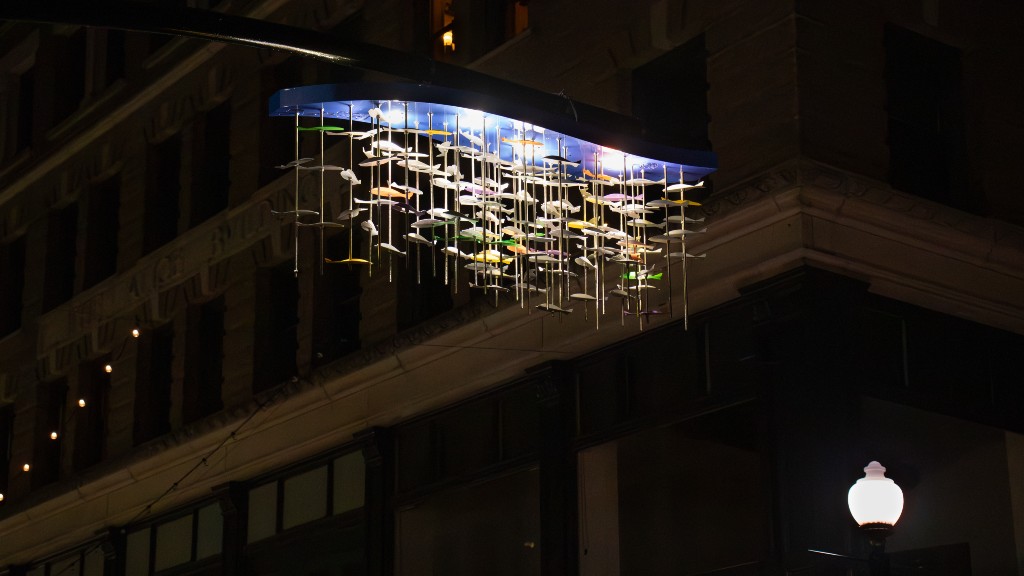
Hartung echoed this sentiment, encouraging other design majors to embrace opportunities that push them beyond their comfort zones. "I had never designed a hanging sculpture," he said. "I had never engineered something to be outside year-round or even knew where to start. I was nervous, but confident in my abilities, which made me excited to try. The entire process was a learning journey, but it all started with saying, 'Yes, I'm interested.'"
The finished sculpture now hangs as a colorful addition to downtown Providence, but for Harris and Hartung, its greatest significance lies in the partnership behind it. What began in a JWU classroom has grown into a professional collaboration—one that demonstrates how mentorship, creativity and a shared passion for design can leave a lasting mark on the community.
Related Posts
Arts & Sciences
Alumni
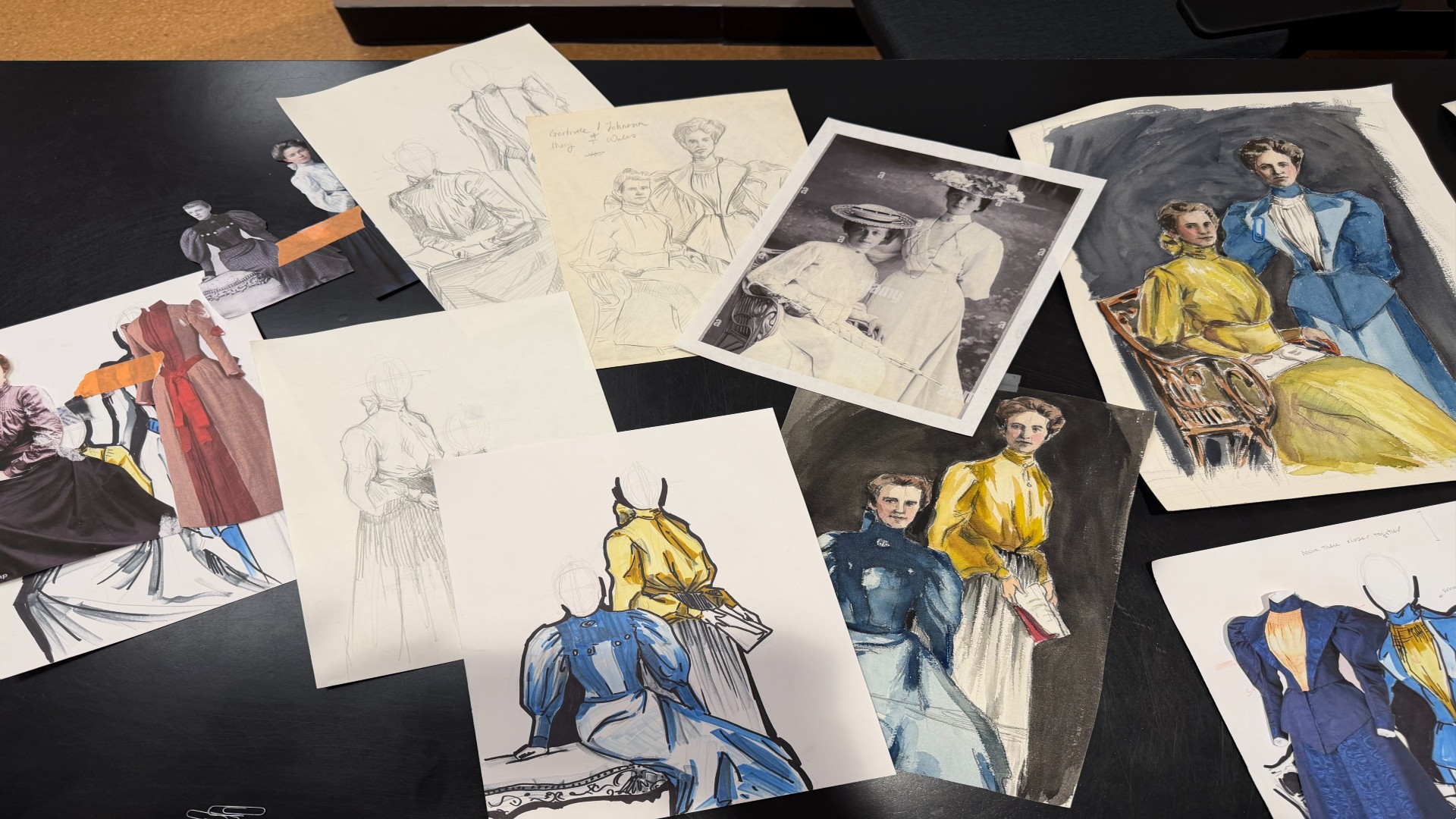
New Portrait Honors JWU Founders Gertrude Johnson and Mary Wales
Experiential Education
Arts & Sciences