Culinary
Alumni
Hospitality & Business
Culinary
Fuel for the Finish Line: Creating a Cross-Country Performance Menu
This piece is co-written by Jill Smith, JWU Charlotte’s director of communications and media relations, and JWU Providence marketing writer Andrea Feldman.
For runners, being methodical about training is crucial. Stretching. Warming up properly. Pacing yourself. But good nutrition has also been proven to boost performance. JWU Charlotte’s Athletic Performance Cuisine class recently collaborated with the men’s and women’s Cross-Country teams to see if a nutritionally-tailored menu — created by five Culinary Nutrition majors — could help push each team member to their personal best times in the next day’s race.
“It wasn’t just about fueling our bodies — it was also delicious. Everything was catered to us, so we felt special, and they felt special providing it.”
Unique Collaboration between Nutrition & Athletics
For Coach Dustin Stewart, the value of a collaboration like this one is immeasurable. “It’s a big recruiting piece,” he explained, noting that very few other schools can pair athletes with nutrition students for their pre-meals. “[This is a] sport where everything is involved — it’s not just simply showing up to workouts and going home again. How much you sleep and eating correctly is just as important as the workout. You can’t out-train a bad diet.”
JWU Charlotte Athletics is in its NCAA DIII first provisional year. “Athletics is quickly growing at this institution,” noted Coach Stewart, “And being able to bring athletics and culinary to grow together is phenomenal for the school.”
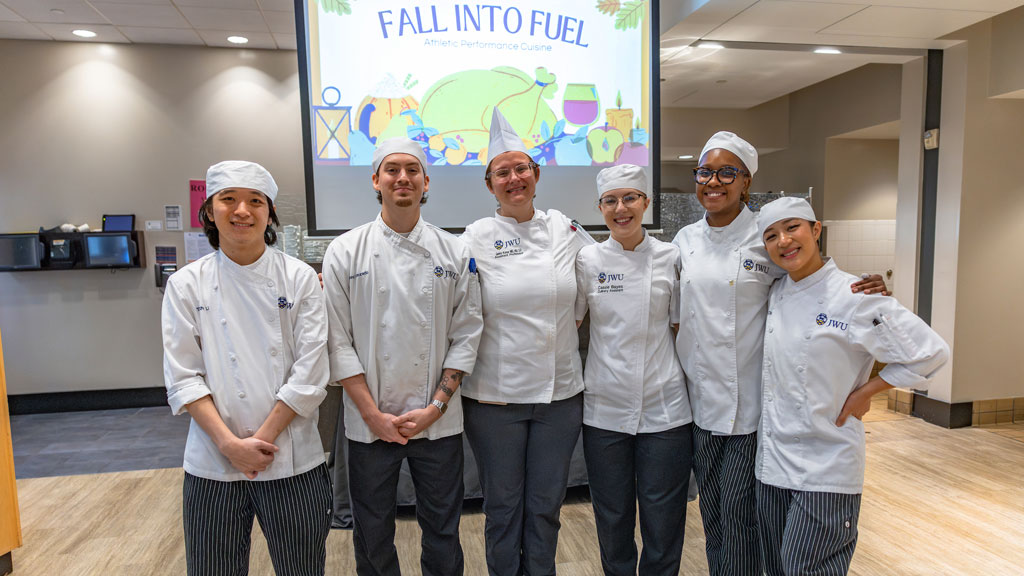
Associate Professor Komar, center, poses with her Athletic Performance Cuisine students, left to right: Tim Lee, Connor Saucedo, Cassie Bayes, Nia Lyons and Denise Diaz.
Learning How Food Can Enhance Athletic Performance
Taught by Associate Professor Genny Komar, the Athletic Performance Cuisine class emphasizes the importance of how food can enhance athletic performance and recovery.
This class culminates each fall semester with students creating and serving a Training Table menu specially tailored for an athletic team. This season, the students served what they dubbed their “Fall into Fuel” menu to the men’s and women’s cross-country team the evening before their largest meet of the year.
“We went with a fall theme for this dinner,” explained culinary nutrition major Cassandra Bayes ’26, who was part of the team that conceptualized the menu. “Typically fall brings comfort, that cozy feeling and warm vibes. And we’re trying to fuel the athletes for their race — they are eating a fall feast and turning it into fuel.”
Turning Athletic Assessments into a Delicious Menu
Weeks before the October race, Chef Komar connected with Coach Stewart to discuss the needs of his athletes, from dietary restrictions to details that might affect the runners’ overall performance and post-race recovery.
Chef Komar, who is a registered dietitian, then relayed this information to her students and guided them on how to tailor their menu selections to meet the athlete’s needs.
“This is a cumulative project,” Chef Komar noted. “Using content from the course, [my students] create an assessment of an ‘average’ college-age athlete,” which is done by establishing baseline calorie needs from the existing training schedule, then using metabolic rate equations to calculate the calories burned during exercise. “They then calculated the total calories for the meal period and designed the menu to match those requirements.”
For the nutrition students, the process of taking data and turning it into a functional menu was illuminating.
“Applying my personal experience as a former JWU cross-country runner to this course has really helped,” explained Bayes. While creating the menu, Bayes and her classmates made sure to prioritize “what’s going to make each athlete feel good for their race, while creating something that will help them feel great for their race the next day.”
Added her classmate, Connor Saucedo ’26: “There’s something really exciting about taking the food we know how to cook and preparing it so an athlete can use it to maximize their performance.”
“JWU does a really good job of simulating what happens in the real world and then giving us the resources to recreate it in class.”
Meeting Performance and Taste Standards
Days before the dinner, Chef Komar led a run-through and recipe testing to ensure the dishes met both performance and taste standards.
As the culinary nutrition students developed the Training Table menu, the athletes continued their race prep: sticking to their exercise regimen, cross-training in the weight room, logging miles and managing their academic demands. At the same time, they were buzzing with their own ideas about what this special dinner might hold.
Training Table Menu Came to Life
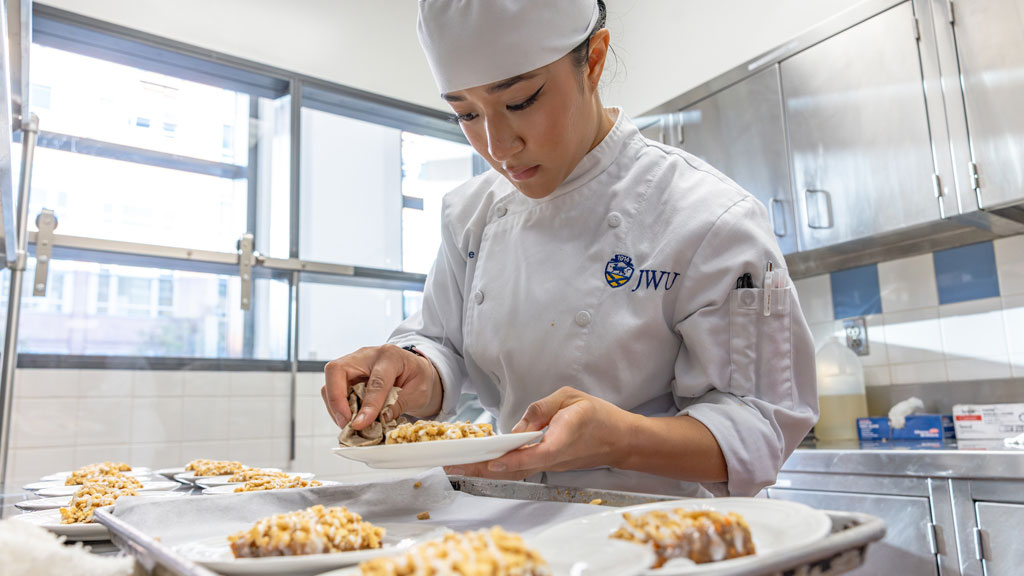
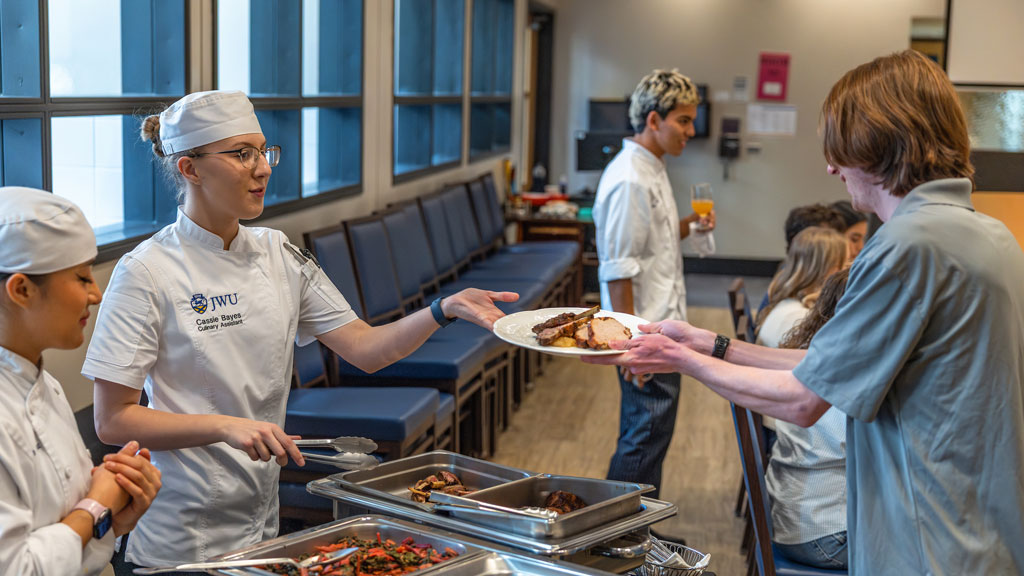
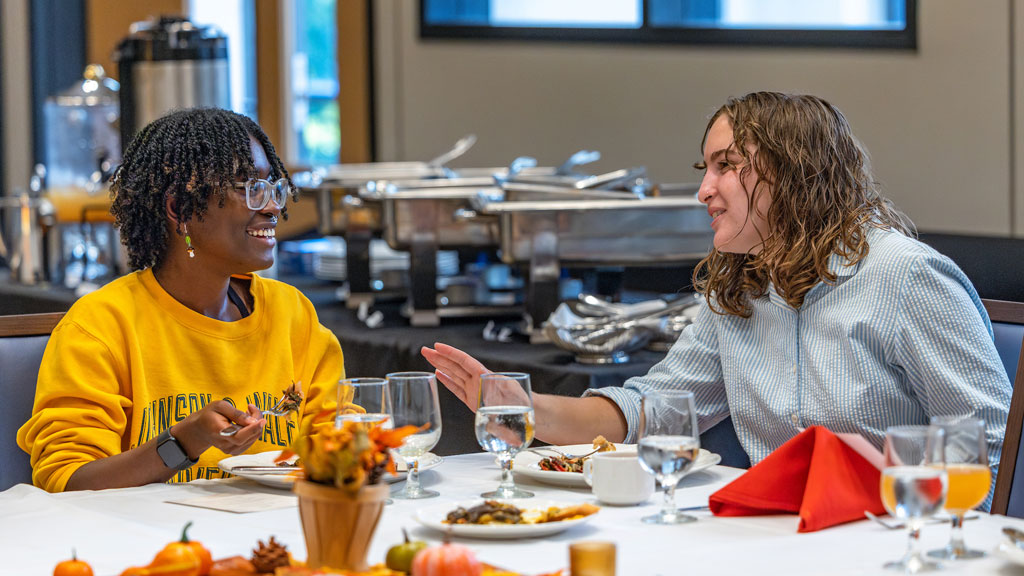
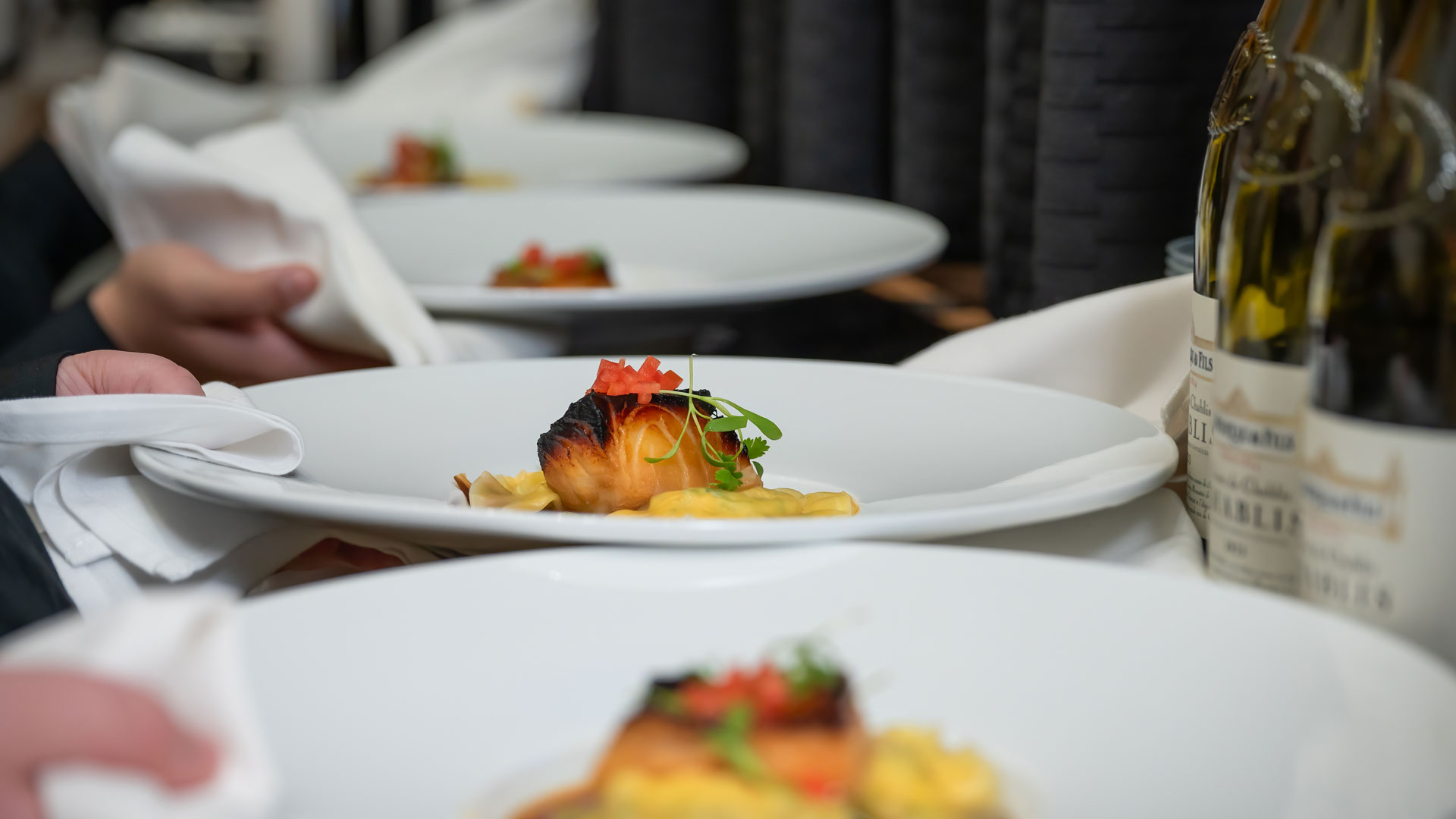
On the evening of the Training Table menu, Coach Stewart and the athletes were welcomed into a fall-themed dining room complete with crafted table settings and a beautifully arranged buffet. From Thanksgiving canapés and spiced apple cider to butternut squash lasagna, lamb chops, and a decadent salted crunch bar, the entire menu was a hit with everyone.
Prior to each course being served, the Culinary Nutrition students thoughtfully explained calorie intake and how particular ingredients might impact the runners’ athletic performance. To encourage more interaction, the group also played Kahoot, an interactive digital question-and-response game.
For Bayes, the success of the dinner proved that healthy and delicious can coexist: “I was excited to show my coach what I’ve learned but also show the team that they can be surprised by what you can eat and what can be really good for you. I was eager to show the athletes what we know and have learned but not be too ‘science-y’ about it.”
Coach Stewart was impressed, too: “It was four-course tailored meal. It wasn’t just about fueling our bodies — it was also delicious. Everything was eaten. I cleaned off every one of my plates.” He added, “Everything was catered to us, so we felt special, and they felt special providing it.”

A Fall Feast to Remember
The Fall into Fuel event showcased how JWU blends culinary expertise with athletic performance — a combination few universities can offer. Following the dinner, the nutrition students reflected on what they learned and how they anticipate that this real-life experience will prepare them for their future.
“I really like that we got the chance to test and edit our recipes,” explained nutrition student Nia Lyons ’26. “It gave us a little bit of that real-life experience with recipe and product development, something I’ll need to know as a future culinary nutritionist.”
Cross-Country runner and Hospitality Management major Aitana Matuty ’28 was inspired by seeing the nutrition students solving real-world challenges (like fueling athletes for a race) with creativity and skill: “JWU does a really good job of simulating what happens in the real world and then giving us the resources to recreate it in our school. Today we got to see that — how Chef Komar put the responsibility in her students’ hands, from creating the menu to sharing their knowledge of nutritional facts with athletes like myself.”
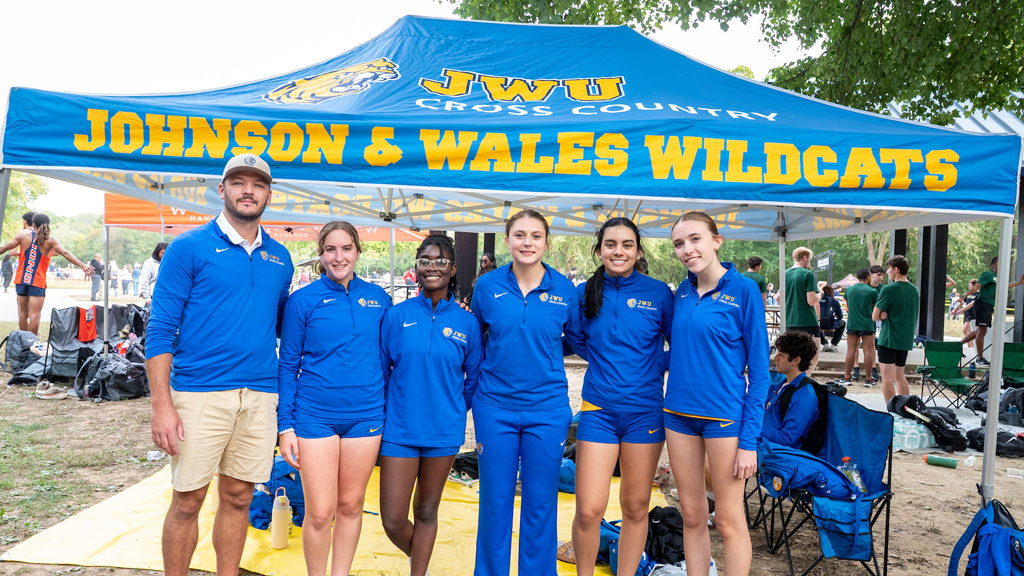
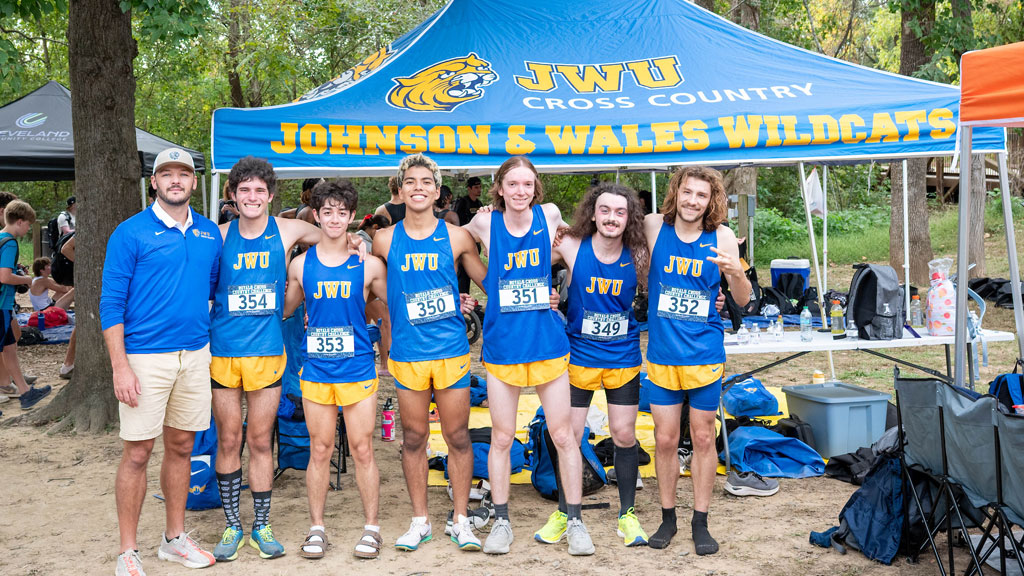
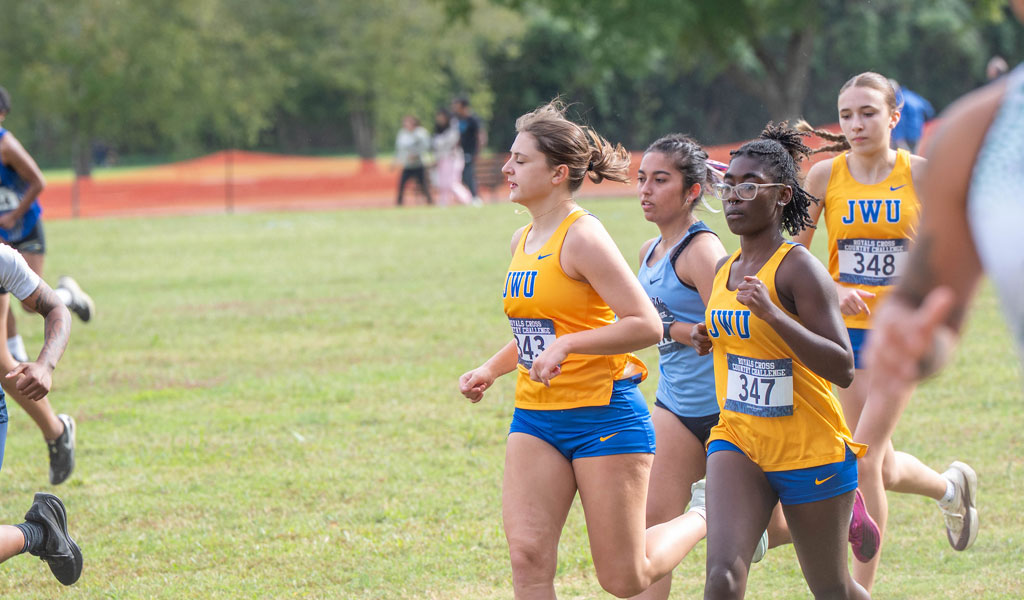
On the day of the race, the skies were blue and the entire team felt energized, hydrated and prepared. All of the athletes roared to the finish line against more than 20 regional colleges and universities. Coach Stewart beamed with pride when he noted, “They all hit personal best or season best at this meet.”
JWU Charlotte Culinary Programs Apply to JWU Transfer to JWU Visit JWU
Below: The Cross-Country teams pictured with Coach Stewart (far left in both photos). The Women’s team, left to right: Nola Soiferman, Jalynn Wright, Ava Ferraro, Aitana Matuty and Sophia Zurcher. The Men’s team, left to right: Liam Robinson, Erick Paz, Jorge Garcia, Dylan Michaud, Colby Belk and Dillon Neeley.
Related Posts

Culinary
Students
Johannah Evans Brings Passion to Scholarship Event
Hospitality & Business
Culinary
Experiential Education
Inside the Masters: Gaining Hands-On Experience at Augusta National
Health & Wellness
Culinary