News
Arts & Sciences
Health & Wellness
Experiential Education
Health & Wellness
Students
Health Science Major Sets Sights on Occupational Therapy
Last fall, Riley Filiatreault ’28 transferred to Johnson & Wales University because of the graduate healthcare opportunities JWU offered. She was on a mission to build her future.
“While I liked my time at URI, they do not have a graduate program for occupational therapy,” she shares. “Once I decided I wanted to become an occupational therapist (OT), it made sense to transfer to a school that offers the graduate program I would need. JWU has a good Occupational Therapy Doctorate (OTD) program, and I felt they would ensure I had the foundation to apply not only to the OTD program, but to other programs if needed. I also wanted smaller class sizes so I could interact more with other students as well as my professors. And being in the city has also allowed me to explore a part of the state that I had previously spent limited time in.”
She’s setting course on a path that will accelerate her goal: “I plan on applying to JWU’s OTD program next fall, in hopes of being accepted into the Combined Doctoral Degree Program.”
To gain the experience she’ll need in her career, the Health Science major interned at J. Arthur Trudeau Memorial Center, which supports Rhode Islanders with intellectual and development disabilities, this spring. Along with adult services, the Trudeau Center provides Early Intervention (EI) programs for babies and toddlers with developmental delays, home- and center-based children’s services, and treatments for kids and teens with autism and related disorders.
“I was attracted to the position at the Trudeau Center because working with kids is one of the areas of occupational therapy I am most interested in,” says Filiatreault. “I knew this would give me a clear picture about what an occupational therapist (OT) would do for therapy with this age group.”
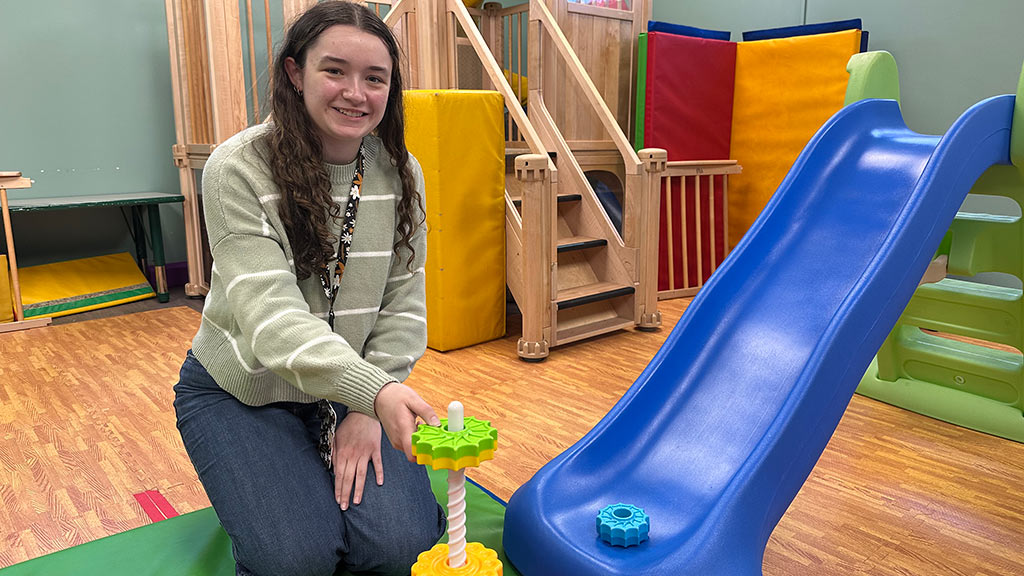
She adds, “I find working with children very rewarding as a whole. If I can have a positive influence on their lives in a small way, I will feel successful.”
Working with Kids and Families in Occupational Therapy
“During this internship, I have observed how the OT, parents and child(ren) work together during a session,” Filiatreault explains. “If the child interacts with me, I will mimic whatever my supervisor has done with the child. I will also play with siblings during their visits. A major piece of the internship is that the visits need to be done in a natural environment for the child receiving the service, so this looks like a home or daycare.”
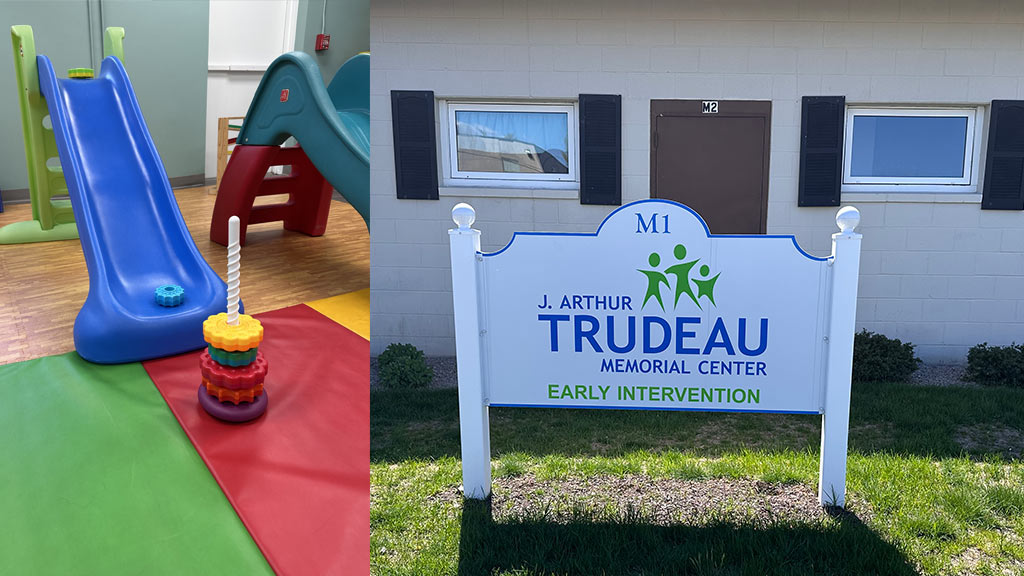
She adds, “After each session, my supervisor and I discuss the visit, particularly improvements noticed in the child[ren]’s actions and some of the treatment methods being used. She also reviews the evaluation process and progress notes with me, which shows me not only the hands-on side of OT, but the office side as well.”
Of her colleagues: “Kristin Husband, my supervisor, has been fabulous!” Filiatreault exclaims. “She encourages me to ask any questions and provides answers at a level that is clear to me as a student. My experience with all of the EI staff has been wonderful. They are all very welcoming and are willing to help if I need anything.”
She’s appreciative that Trudeau Center staff have encouraged her to make a lasting impression by building resources for staff and parents.
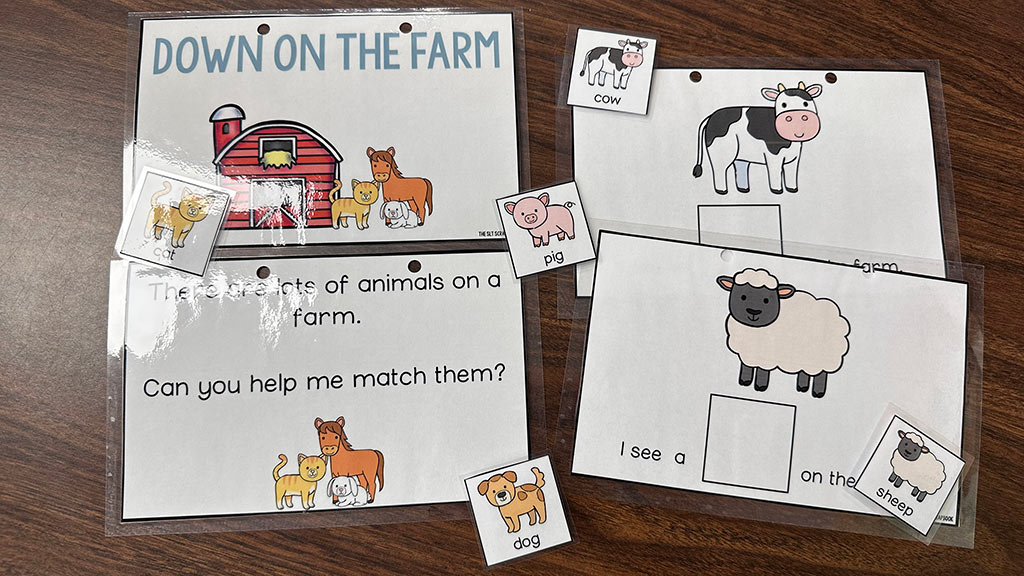
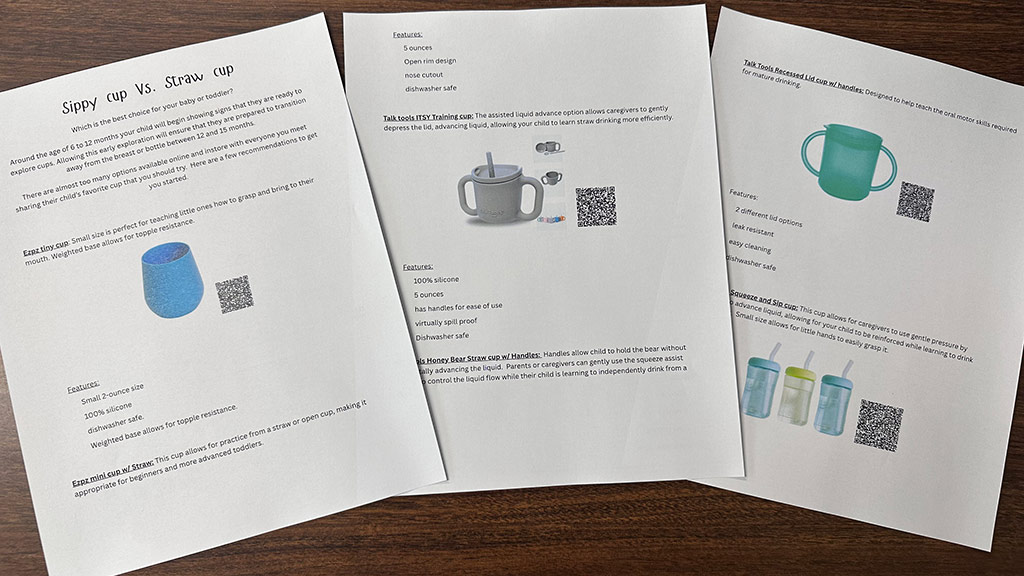
“I have created some documents and adaptive books for therapists to utilize in the future,” she shares. For instance: “I’ve been compiling a list of recommended feeding products and how they can be used. My supervisor gave me a list of items that are recommended, and I worked on a handout formatting and adding some text information if needed. This is also a tool I can save for use as my education continues.”
Growing Skills Inside and Outside the Classroom
At the Trudeau Center, Filiatreault notes, her skills “continue to develop based on experiences I have had at JWU.” A big skill she applies: “Observational skills. This has been very important, and my various labs have played a role in the development of this skill.”
Other important skills: “Psychology classes provided a foundation in human development and some expected behaviors for different age groups. Technology skills built my confidence to create the documents requested. Communication skills are also very important, as an OT needs to be able to communicate with children as well as with parents who may receive difficult news about their child's development.”
Being active on campus also helps Filiatreault expand her communication skills.
“I am a member of the ASL Club, Pre-Professional Health Club and the JWU Ski & Snowboard Club,” she reports. “I am also planning on joining [JWU’s Future Health Professionals chapter of] HOSA. HOSA is just beginning the club process, so there are limited events this semester.”
Plus, she may even launch her own student club.
“I have a very preliminary idea of starting a Pre-OT club here at JWU,” she shares, cautioning, “So far it is just an idea that I have started to discuss with other students.”
Connecting an Internship Experience to an Occupational Therapy Future
How does an internship experience tie into Filiatreault’s career plans?
“My science and psychology courses lay the foundation of working with others and how the body works,” she explains. “My internship let me see what an OT does in an EI setting, and it confirmed my belief that this is a good career choice for me. I enjoy helping others, being creative and making a positive impact on the lives of others.”
On her path to become an OT who works with children, she’ll seek another internship at a new venue next spring to interact with new people.
Meanwhile, the future occupational therapist has another interest: “I also want to learn more about working with patients who have lymphedema. There is a shortage of providers in the state who treat this condition.”
Related Posts
Hospitality & Business
Experiential Education
Students