News
Arts & Sciences
Health & Wellness
Health & Wellness
JWU Providence's Second Accelerated Nursing Program Cohort Enters the World
This article was originally published on December 19, 2025 but was updated on February 2, 2026 to reflect updated information.
“Our students have worked diligently over the past 16 months demonstrating dedication and resilience in the nursing profession,” College of Health & Wellness Dean Maura Daly Iversen, DPT, D.Sc, MPH, said of the second graduating cohort of Johnson & Wales University’s Accelerated Second Degree Bachelor of Science in Nursing (ABSN) program. “We’re so proud of all they have accomplished in this time.”
The occasion: a pinning ceremony in the Schneider Auditorium, celebrating the students’ completion of classes and clinical rotations exposing them to healthcare specialties such as pediatrics, obstetrics, acute care, mental health and community health and their entrance into a profession that creates positive outcomes.
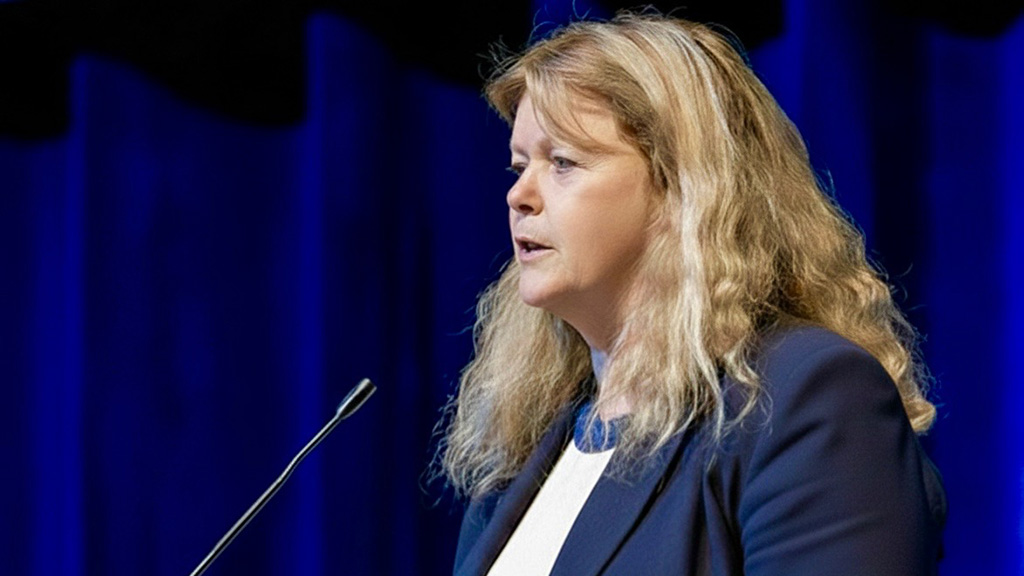
Iversen noted that skilled nurses are needed more than ever, both in Rhode Island and nationally. “You will pave the way for future cohorts,” she told the graduates. “Your future is undeniably bright.”
“You represent the Wildcat Way: pride, courage, character and community,” JWU Providence President Joseph Greene ’89, ’98 M.S., CPA, declared before thanking the cohort’s parents, friends and loved ones. “Your support to these students across the highs and lows of earning their degrees has been vital to their education,” he affirmed.
A Stately Nursing Pinning Ceremony
Nursing Program Director Kiley Medeiros, Ph.D, RN, spoke of the pinning as a sacred and time-honored tradition: “It’s more than symbolism; it’s a professional passage from student to nurse, from learner to caregiver, from aspiration to responsibility.”
“Beyond your coursework and clinical hours, you’ve learned what it’s like to be entrusted with the lives, cares and hopes of individuals,” she told the cohort. “You show service in moments of uncertainty, steadiness in times of fear and you carry life into rooms of silence.”
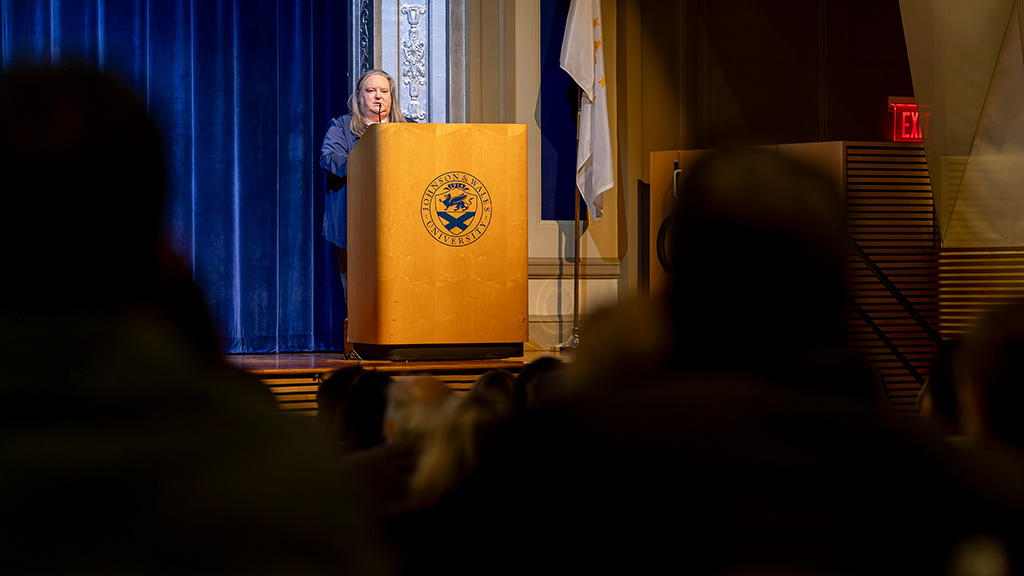
“Nurses’ quiet courage can change entire systems,” Medeiros professed. “Today, nursing remains one of the most trusted professions in the United States — not because it’s easy but because it’s built on competence and service. Within this pin lives a promise to act with integrity, show up with humility and care for human life with dignity and respect. It tells the world that this individual has been prepared and entrusted with a calling that asks for steadiness in service and a lifelong responsibility.”
>>Related: Accelerated Nursing Program Earns Accreditation with 100% NCLEX Pass Rate
Medeiros recalled feeling the full weight of the pin at her own ceremony decades ago: “In that moment, nursing stopped being something I was preparing for and became something I was entrusted with,” she said. “It was more than a milestone; it was a promise to carry this responsibility with humility and heart every day since. Your role is historic. You’re not only receiving a tradition but helping establish it.”
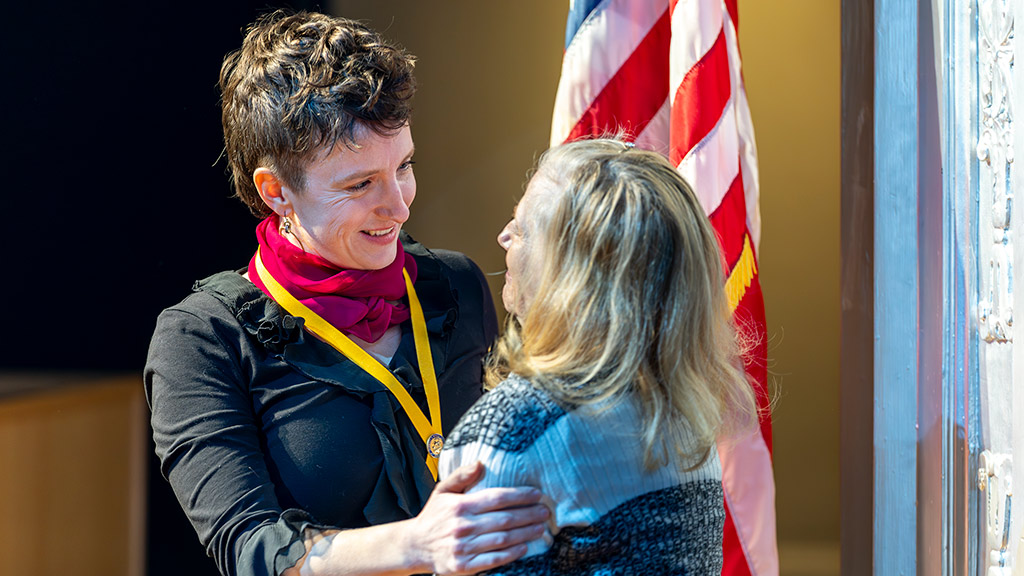
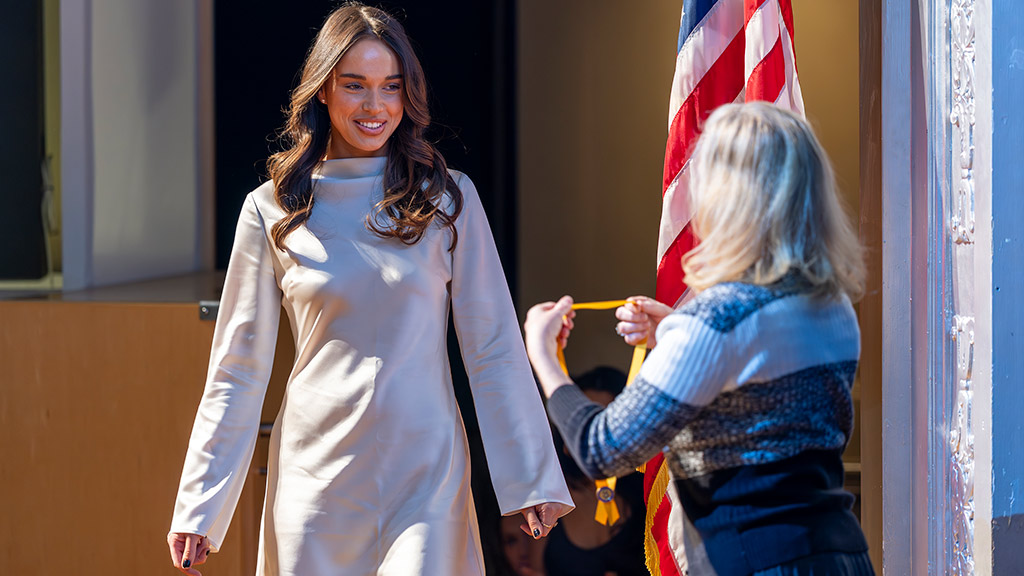
After the cohort received their pins from Assistant Professor Lisa Dumont, Ph.D., RN, CNE, CDP, and Assistant Professor Marie Woolery, DNP, PMHNP, they recited the Nursing Professional Oath.
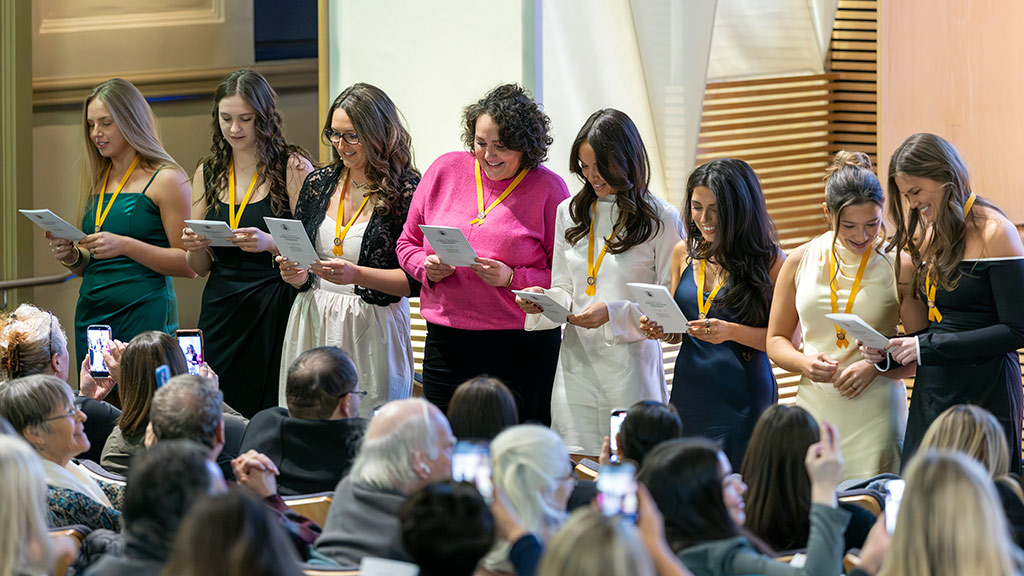
Both smiles and tears accompanied the closing remarks by Assistant Professor MaryBeth Vieira, Ph.D., RN, CNE, which began, “Remember a little over a year ago when I told you this was going to be hard and feel impossible, and you’d doubt yourself, but before you know it you’ll be graduating? Mostly I’m here to tell you, ‘I told you so.’”
Thanks to the close-knit nature of the program, Vieira was able to list individual traits of the cohort members whom she and her fellow faculty had gotten to know so well, from each students’ fiery spirit to their quiet resolve or quick wit. She also appreciated how their thoughtful questions had pushed her to even higher levels.
“In your next chapter in clinical nursing, you’re bringing kindness, compassion and care in difficult times,” stated Vieira. “You’ll provide the best possible care for patients. I have faith that you’ll be great nurses; now go out and prove it.”
A Student Speaker’s Perspective on Becoming Nurses
Class speaker Joelle Medici ’25 B.S.N. echoed the importance of the occasion: “The fact that we’re here proves that we have what it takes to be nurses,” she stated. “Somehow in the chaos of care plans, 7 a.m. clinicals and enough caffeine to power a small city, we made it. Now that I’ve made it this far, I want to go further and further and see where I end up.”
“A patient told me something I’ll never forget: ‘You are the last people who truly care,’” Medici continued. “I think about that not because it puts pressure on us but because it honors us.”
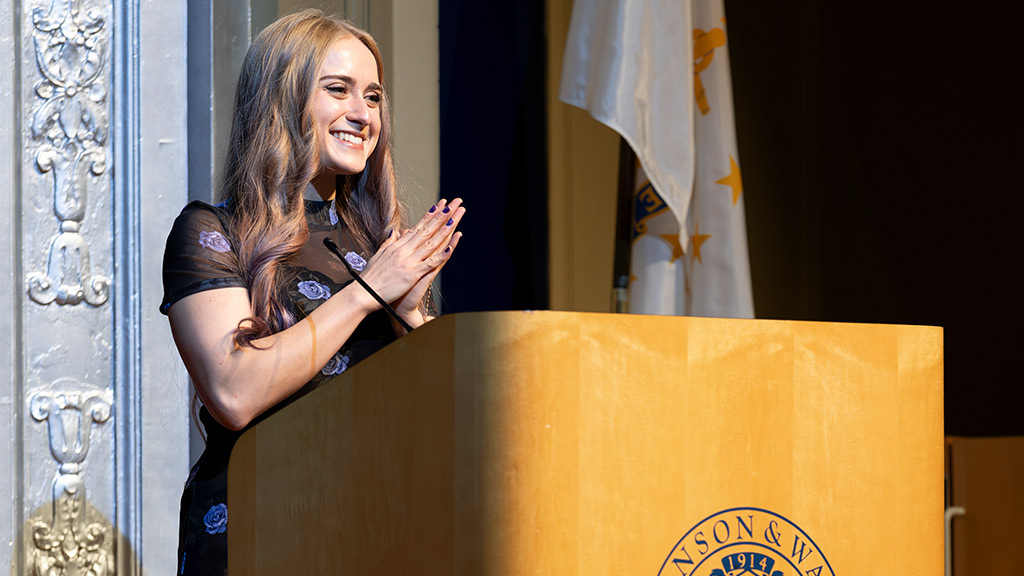
Although acknowledging the cohort’s discouragement at the Department of Education’s recent decision that nursing degrees are not professional degrees, Medici remained positive: “That patient’s words remind us that what we do matters. We are dedicated to showing up no matter what with consistency and kindness. We need to work harder to prove them wrong.”
“There’s no such thing as ‘just’ a nurse,” Medici expressed. “We’re educators, advocates, first responders and critical thinkers. We’re the ones who help people feel safe when everything around them is falling apart. We step into a profound responsibility that goes beyond tasks and titles; we care for the vulnerable, overlooked, misunderstood and ignored, and we must advocate for them fiercely, passionately and without hesitation. We need to be the person who walks into a room and brings humanity with them.”
Like President Greene, Medici recognized the cohort’s supporters. “What makes today more meaningful is that none of us got here alone,” she said. “To families and friends, thank you for supporting us through mornings, late nights, hard times and proud moments. To our faculty and our preceptors, thank you for pushing and challenging us and believing in our potential even when we doubted ourselves. My classmates: you’ve inspired me to advocate for myself and loudly stand for what’s right.”
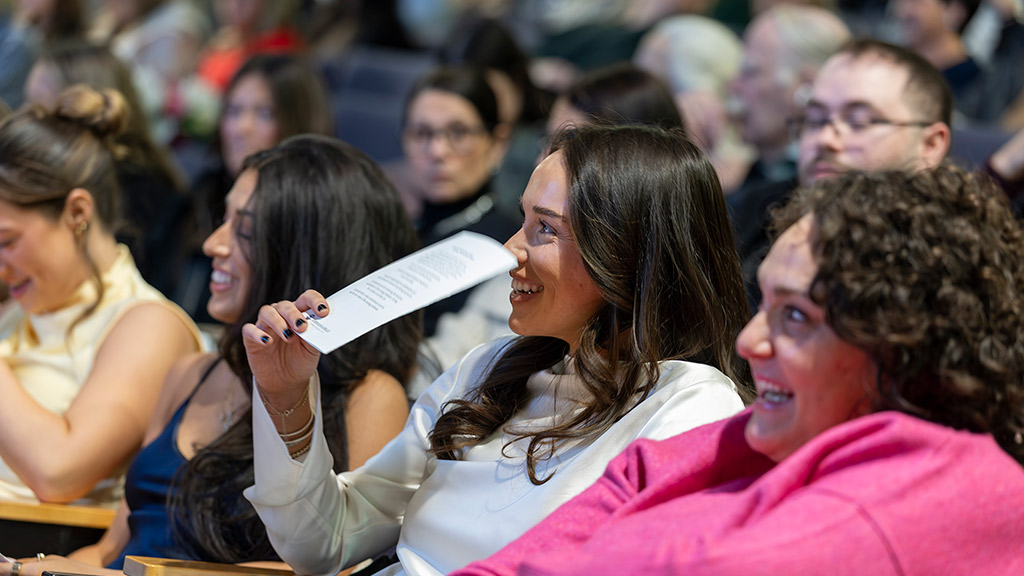
Concluded Medici: “As we step into our responsibility and roles as nurses, remember we’re not ‘just’ anything. We’re exactly what people need, what healthcare needs and what our younger selves were meant to become.”
Graduates Share What It’s Like in JWU’s Accelerated Nursing Program
How Lenna Wertenbaker '25 B.S.N. Grew Their Clinical Skills
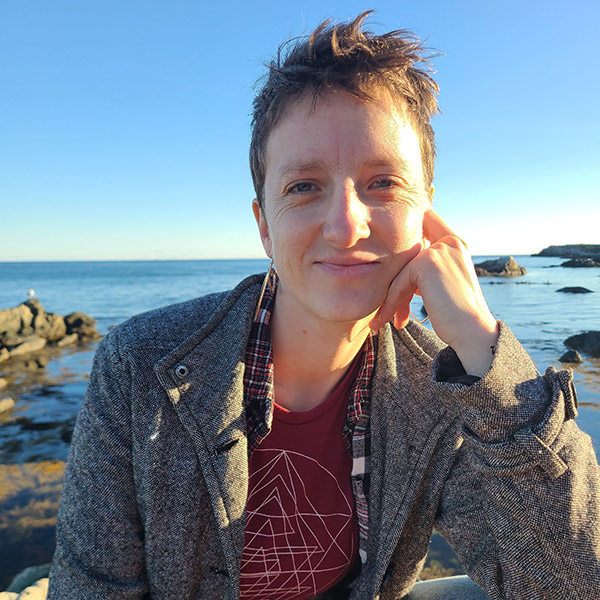
“My first bachelor’s degree was in Environmental Studies concentrating in Sustainable Agriculture at another university, and I worked in the herbal medicine field for a while,” Wertenbaker shared. “I also worked in restaurants and in advocacy and social services. In all those things, there’s a thread for me around supporting people with essential needs.”
They continued, “I thought about nursing on and off for many years, pretty much since I graduated, but I was doing other things. Now that my partner is a resident at Women & Infants Hospital and we’re here in Providence for a stretch of time, I thought, ‘If I’m going to continue my education, now would be a great time.’ I was excited that JWU offered an accelerated track, so I applied, and they accepted me.”
Wertenbaker’s ABSN Experience at JWU
“Clinicals were definitely a highlight!” they exclaimed. “My first hospital-based med-surg rotation was really exciting; I could get into the hospital and start using the skills we’d been learning. I’d already done a rotation in a nursing home, but that first hospital placement where I was flushing IVs, passing out meds, doing med evaluations — it was really exciting to get in there and use those fundamental nursing skills.”
“This past semester, I was in an ICU in South County Hospital,” continued Wertenbaker. “I had a great preceptor and really enjoyed being in the unit; it was very supportive with a great team vibe. It can be hard with so many hours to complete, but being in a unit for so many hours meant getting really comfortable there. Being one-on-one with a nurse was a different experience than being in a group.”
As for the cohort experience, Wertenbaker shared, “I’ve made good friends I hope to stay connected to. I think overall our group has a great vibe. There’s something very sweet to me about JWU’s program because it’s so small — not only an intimacy of the cohort but also the professors. I feel known by them, and I don’t think that’s necessarily the case everywhere. The small size lends itself to that. I really appreciate all the work of our professors and program administrators to make this possible.”
Applying JWU Skills to Wertenbaker’s Nursing Education
“We used so many skills in the clinical environment, such as doing assessments and medications, that we learned at JWU,” they shared. “I’d wonder, ‘What do I need to be thinking about before and after I give this medication?’ The hospital’s system will pop these up as alerts, but I wanted to rely on my own knowledge. I’d want to make sure someone’s heart rate is adequately high before giving them a medicine to lower it; if something will affect their platelets I’d want to know what they were before; if I administer a med, I’d know to check back later to see if they had the therapeutic effect we were hoping for.”
Tactile skills is another area where Wertenbaker grew. “It can be hard to learn theoretically, so it’s great to get to actually use your body and your hands doing those things,” they said. “There’s a lot you learn in class; the model of a clinical-based education makes a lot of sense to learn in didactics and then learn clinically and get those skills into your body. It’s important. Anything I did clinically I learned a lot, and I grew psychosocial skills as well.”
Wertenbaker’s Proudest Moment
“I had a moment with a patient’s family member on the floor I was working on,” they shared. “One patient had children who had been coming in and out a lot, and her daughter who knew I’m a student stopped me to say, ‘I just want you to know that you’re going to be an amazing nurse; you’ve taken such good care of my mom but also our family.’ Hearing that unprompted from a family member feels about as strong an affirmation as I can get.”
They added, “Doing well on the very first exam was another proud moment. I felt like, ‘OK, I can do this.’ It’s hard work and I was nervous coming into it.”
What’s Ahead for Wertenbaker
“My dream job is a day shift in a step-down unit in NYC (which is where I’m moving),” they said. “I’m interested in critical care in general; I want to go into an intense environment and really hone these skills. I really like critical care; it’s an area of nursing I think asks for a level of intellectual engagement from nurses that really works for me.”
“I like to be thinking about my patients in a deep way, so I prefer opportunities to go into more depth with fewer patients than surface-level care of many patients,” they continued. “I also like the complexity and the acuity of that environment. Healthcare has a great equalizer at play where, regardless of where they come from, every person is able to take care of people coming from very different life experiences. Offering them the same kind of care feels really rewarding to me.”
Leah Leclerc’25 B.S.N. Got a Head Start in Emergency Care Through JWU

“I was drawn to JWU’s ABSN program because it was close to home and offered an accelerated path into nursing, which was really important to me,” shared Leclerc. “I completed my bachelor’s degree in Biology at the University of Rhode Island, so transitioning into an ABSN felt like the perfect next step.”
Highlights of Leclerc’s JWU Graduate Experience
“I’ve created lifelong friendships with people in my cohort, which has been one of the biggest highlights, Leclerc said. “My preceptorship actually turned into the place where I’ll be working after graduation — the ER — which is amazing.”
She added, “I also got to see a live birth on my very first day of maternity clinical, which is something I’ll never forget. And even though the program is fairly new, our professors were always so supportive and open to feedback, and they genuinely cared about our success.”
How Leclerc Applied JWU Skills to Working with Patients
“One of the first skills we learned was taking vital signs, and that became something I used constantly in clinical,” she shared. “Our pharmacology course prepared us extremely well for medication administration — knowing what to assess before giving a med, which medications should never be given IV push (meaning they should be given over longer periods of time rather than quickly) as well as what side effects to monitor for.”
“The lectures were solid, but clinical was where everything came together,” Leclerc added of JWU’s program. “Especially during preceptorship, you really learn how to apply everything in real time.”
Leclerc’s Proudest ABSN Program Moment
Two highlights stood out to Leclerc.
“First, earning a 96 on my pathophysiology exam — it was a huge accomplishment for me. And second, during my ER preceptorship, being able to manage almost a full patient assignment on my own with my nurse supervising. That was the moment where I finally felt truly confident in my skills.”
What’s Ahead for Leclerc
“My dream job would be working in an outpatient infusion or surgical center,” said Leclerc. “I’d love to care for patients undergoing chemotherapy or to work in a surgical setting helping prepare patients for procedures and caring for them post-op. I feel like those environments would let me really use my nursing skills while also having the work-life balance that’s important to me.”
A Message from the Nursing Program Director to the Graduates
“The second cohort of JWU nursing students exemplified what it means to lead with intention,” expressed Medeiros. “Through thoughtfulness, conscientious practice and professional self-advocacy, they modeled the voice and values our nursing profession — and our communities — need now and in the future.”
She continued, “We are excited to see how they will carry this foundation forward as they grow into practice, leadership and service, shaping healthcare in meaningful and lasting ways.”
To see her students put their learning into practice, Medeiros won't have to travel far; many of the 2025 ABSN alumni chose to stay local. Within a month after graduating from JWU, more than half of the cohort (Paige Brooks, Madalyn Burhart, Leah Leclerc, Alexandria Lunghi, Kaylen Powers, Miranda Segalla, Kyla Strum, Cassidy [Titchenell] Bonnollo and Mackenzie Waters) had been hired by the Brown University Health system, joining the care teams at Rhode Island Hospital, The Miriam Hospital and Saint Anne's Hospital.
Related Posts
Health & Wellness
Students
White Coats Mark Physician Assistant Students’ Next Step
Health & Wellness
Culinary
JWU Nursing Students Support Dementia Caregivers Through Respite Grant Event
Students
Culinary
Health & Wellness