Students
Health & Wellness
Students
Students Lead Health Equity Discussions to Connect Community
Chances are, you or a loved one has needed healthcare, from an annual checkup to an emergency room visit — but your experience may not match everyone’s. Healthcare delivery across the nation and the world can have glaring disparities due to social, economic, geographical or environmental factors.
Students in Johnson & Wales University’s Health Equity Club are hosting a series of events called Health Equity Reflections & Refreshments (yes, there are snacks) to grapple with these issues. And students, faculty and staff from any academic area are encouraged to join because their topics are issues facing all of us. Faculty advisor Professor Samantha "Sam" Rosenthal, Ph.D., MPH, attends, as does special guests such as Professor Jennifer Swanberg, Ph.D., MMHS, OTR/L, and faculty welcome students in any major to approach them with any questions or concerns.
The best part: no one is a faculty member when sitting in a circle of people openly contributing to a discussion and learning from each other. Here, all are peers.
Meet Discussion Hosts MJ and Hannah
When attending these events, you’ll interact with two passionate student hosts representing the Health Equity Club.
Marygrace “MJ” Kasprzak ’26, a Health Science major minoring in Psychology, plans to go into medical device sales with a future goal of specializing in cardiac or orthopedics aid products.
“When I first arrived on campus, I knew I had found my home,” says Kasprzak. “Not only did I find community with fellow students and faculty, but I also saw the immense opportunity with studying health in a city like Providence. We have faculty with endless experience in healthcare related fields that are always happy to share knowledge with fellow students and even assist us in gaining opportunities such as internships or additional extracurriculars. It is due to [Senior Experiential Education & Career Advisor] Melanie Rainone that I am currently a Visionary of the Year Candidate for Blood Cancer United, the largest nonprofit charity organization that specifically focuses on blood cancer research, advocacy and education. To put it simply, JWU gave me endless opportunities to soar and push myself to be the best version of me.”
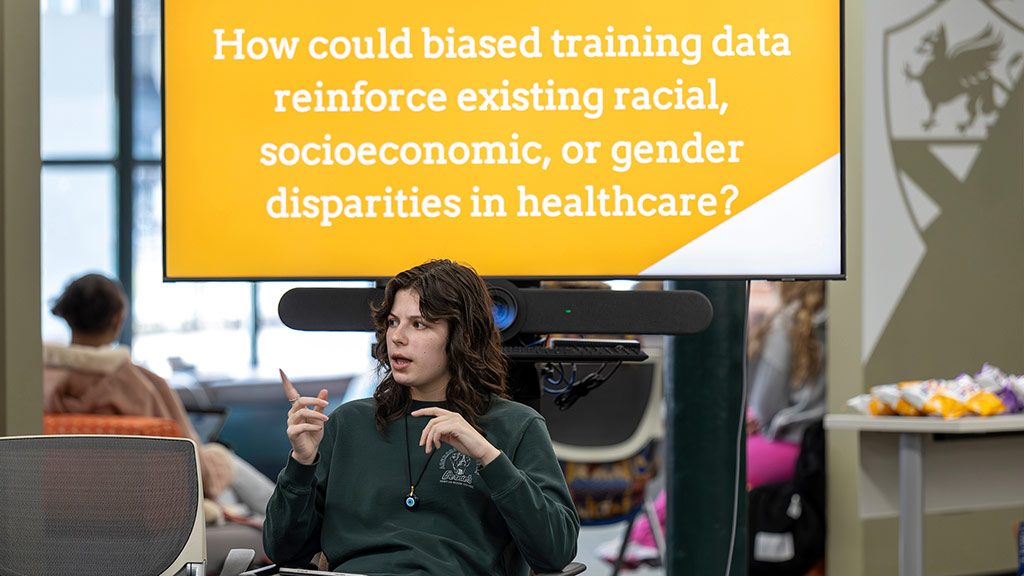
Kasprzak’s perception of the biggest challenge facing healthcare: burnout within a strained system. “Healthcare workers are entering environments with chronic understaffing, high patient acuity and administrative overload,” she explains. “The challenge also isn’t just the workload, it’s delivering high quality, compassionate care while navigating productivity metrics, documentation demands and inequities that limit what you can do for patients.”
Yet she sees a huge opportunity: “Being part of real system change, especially at the patient level. Healthcare is in a period of forced transformation, with team-based care, expanded roles for non-physician clinicians, preventive and community-based approaches, and smarter use of technology. New clinicians can shape how care is delivered by advocating for patient-centered practices, equity and sustainable workflows. Those who are adaptable, collaborative and willing to lead, even early in their careers, have a chance to improve outcomes and culture in ways that weren’t possible before.”
Hannah Pereira ’27 is a Biology major in JWU’s College of Arts & Sciences, minoring in Chemistry, who competes on the women’s volleyball team. Health is in her future; she plans to become a physician assistant and wants to stay local. Although she’s also looking at schools in Massachusetts, JWU’s Physician Assistant Studies program is her first choice after graduating in May.

“The biggest challenge for anyone entering healthcare is learning to incorporate AI effectively and ethically while maintaining patient trust in healthcare,” Pereira states. “As well as continuing to fight health inequities and ensure the incorporation of AI does not exacerbate these health disparities.”
But she can also foresee positive applications of AI: “The biggest opportunity is interacting and connecting with patients as well as utilizing AI as a tool to conduct each job more efficiently.”
A Team Effort: Choosing What Topics to Discuss
“We at the Center for Student Research and Interdisciplinary Collaboration (CSRIC) brainstorm potential ideas that other students or faculty would have interest in discussing,” Kasprzak explains, while Pereira elaborates, “We first gathered a list of possible ideas then worked together to narrow down the topics thinking about the significance and opportunity for valuable discussion.”
The goal: topics that “are relevant to our current world or could have a positive impact on current public health concerns by discussing them with our community.”
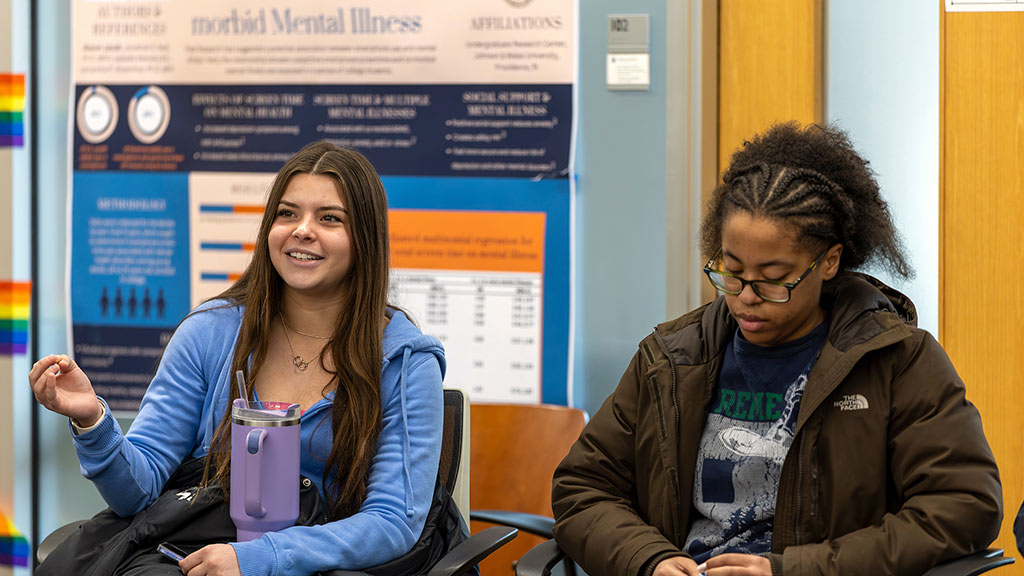
The Health Equity Club held similar discussions last semester. “Our most notable one [regarded] feminine hygiene products placed in women's bathrooms around campus,” Kasprzak recalls.
JWU Community Members on Integrating AI Into Modern Healthcare
In January, JWU community members were encouraged to read an article on artificial intelligence (AI) in healthcare and then discuss. The article’s authors argue that healthcare delivery could be more efficient, equitable and effective through AI, yet would require strategies before adoption. JWU undergraduate and graduate students as well as some faculty and staff split into two circles, forming open spaces where anyone can speak their mind and where nothing said in confidence leaves the room. The hosts had prepared questions as a guide, but conversations soon took a turn of their own, bringing lived experiences and the current climate into the discussions.
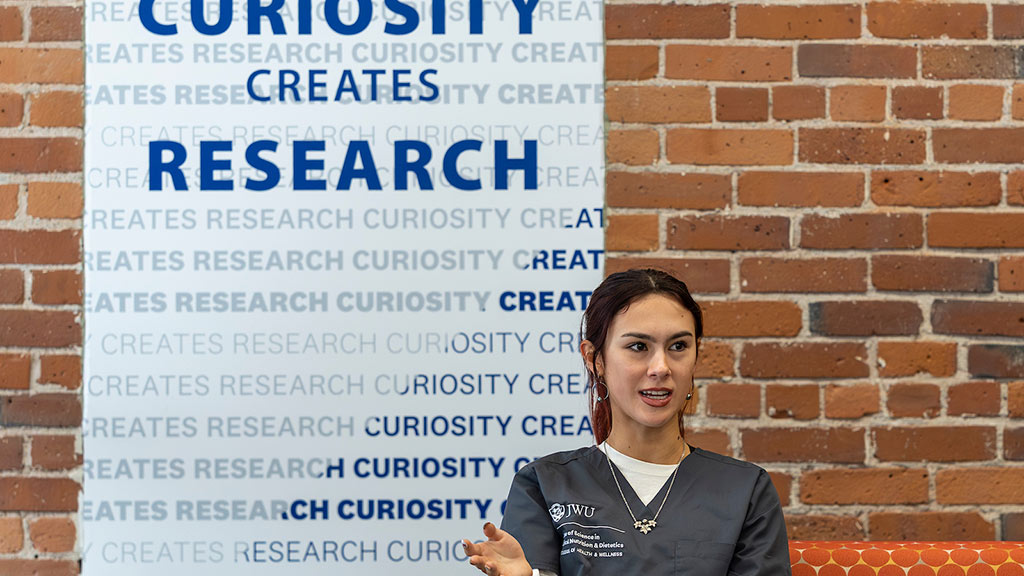
One student, from a small town in South Carolina, noted that with no local hospitals, their neighbors must drive at least an hour to access healthcare. Others shared personal experiences of asking ChatGPT for advice if they couldn’t see a doctor or a therapist, or hearing of adolescents who committed suicide after receiving ChatGPT results, or of people creating pornographic images of others on Grok. Students feel that lack of protection from AI misuse is a health issue because it can put lives at risk and perpetuate violence and misogyny.
Culture had a place in the discussions: it was noted that HBO’s “The Pitt” introduced AI in healthcare in the show’s second season to help free up doctors to see patients more quickly. Celebrities such as Matthew McConaughey copyrighting their voice or face to prevent AI from using their imagery. Wildcats with global perspectives voiced concerns about access to AI in undeveloped nations and how that will affect levels of care, while others had concerns closer to home, such as a lack of federal incentive to offset negative biases in AI or to protect people from having AI steal their work.
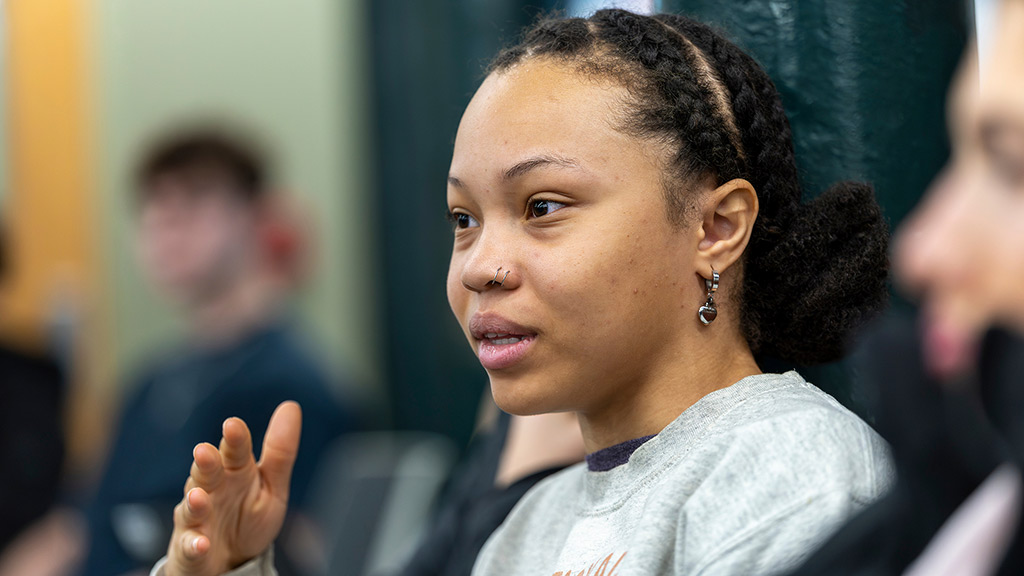
Several students were able to tie in studies they learned about in JWU classes or researched for papers, while others who are currently job searching could talk about their experiences with AI in human resources and how some algorithms reject candidates for having non-Caucasian names or photos. AI needs to be explicitly taught not to do this.
Overall, students want to see organizations and individuals invest in creating and promoting responsible use of AI. There’s a focus on leveraging AI for efficiency and cost reduction, but first, AI needs to do a better job of identifying social determinants of health and eliminating biases.
Faculty Perspective on Health Equity Reflections & Refreshments
“As a faculty member, it's incredibly encouraging to see students engaging thoughtfully with issues that will shape their future professional lives,” stated Rosenthal. “These student-led discussions reflect not only curiosity about emerging technologies like AI in healthcare, but also a deep commitment to ethical, equitable and person-centered practice.”
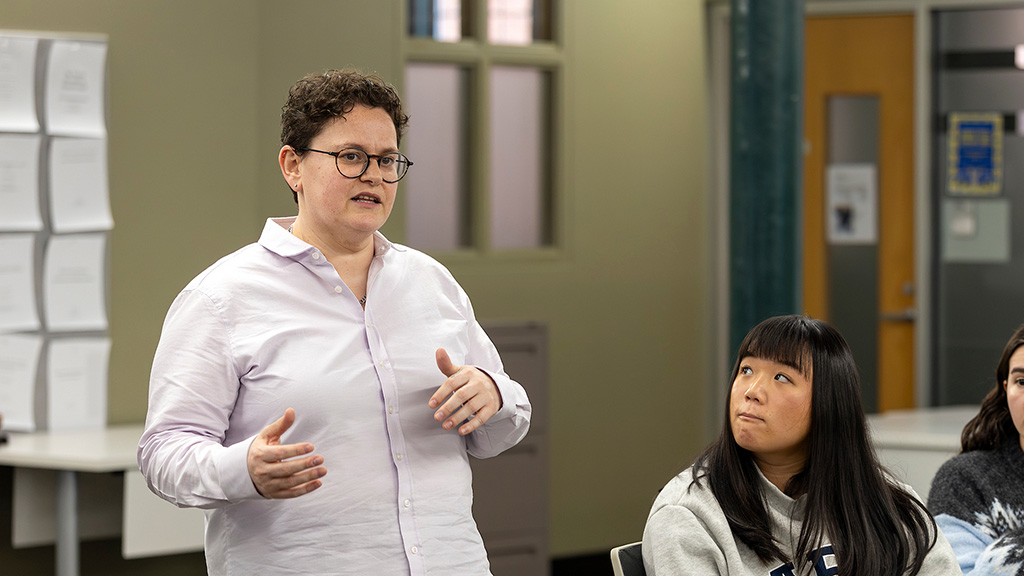
Added Rosenthal, “Watching students take ownership of these conversations gives me tremendous confidence in the next generation of healthcare leaders.”
How to Add Your Own Voice
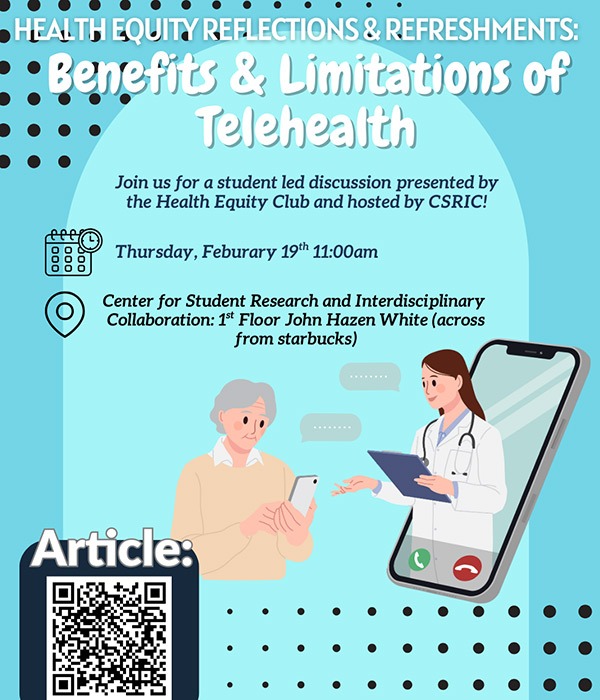
JWU community members can view details and RSVP on jwuLink to two more spring semester Health Equity Reflections & Refreshments discussions:
Benefits and Limitations of Telehealth on Thursday, February 19 at 11am
The Impact of Academic Pressure on Well-being on March 19 at 10am
All events are held on the first floor of the John Hazen White College of Arts & Sciences in CSRIC, which opened in January 2023 to provide opportunities for students to take learning to their next level.
Related Posts



Students
News
Visiting Campus? Plan a Perfect R.I. Weekend

Culinary
Students