News
Arts & Sciences
Health & Wellness
Health & Wellness
Celebrating the Achievement of JWU’s Inaugural MSCND Cohort
“It's not time that shapes us; it’s the experience,” expressed Maite-Abigail Denis, student speaker of the first graduating cohort of Johnson & Wales University’s Master of Science in Clinical Nutrition & Dietetics (MSCND) program. "Our many rotations and classes gave us a toolbox of skills we will need to equip and engage people.”
Two years ago, a small but tight-knit group of future registered dietitians (RDs) began their work of learning to improve the health and nutrition of various populations. Now, on December 11, family, friends and community members had gathered for the pinning ceremony representing the graduates’ official entrance into the profession.
“What a reason we have for celebration,” announced JWU Providence President Joseph Greene ’89, ’98 M.S., CPA to the cohort and their family, friends and community members.
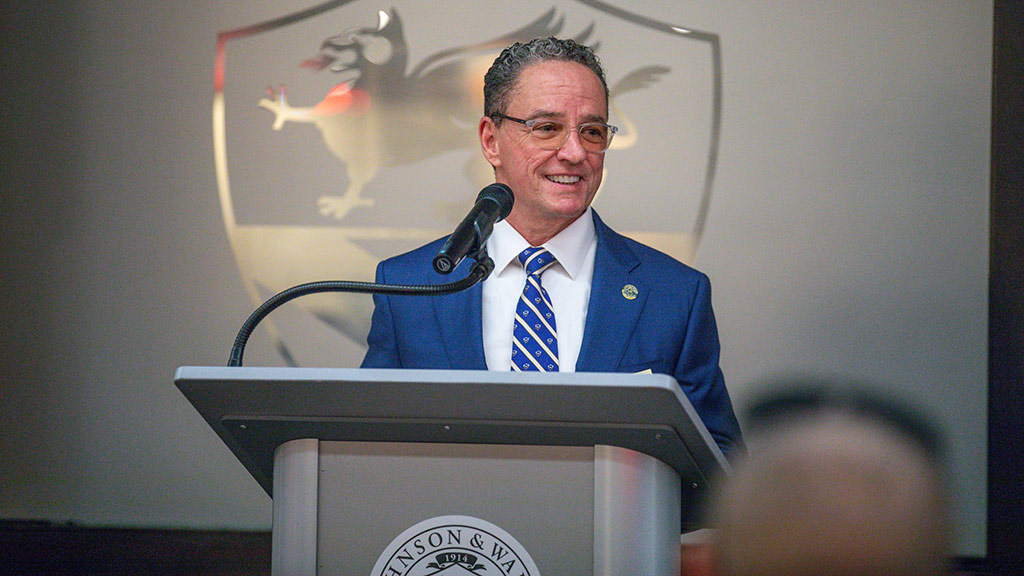
“It’s a joy to honor their achievements at the end of students’ academic journeys, knowing they’ll be leaders and changemakers and showing the world what it means to have a JWU education,” Greene stated.
Intersecting Nutrition and Culinary Education
“Dietitians provide a vital role in addressing obesity, promoting food security and sustainability and addressing disorders and diseases,” stated College of Health & Wellness Dean Maura Daly Iversen, PT, DPT, SD, MPH, FAPTA, FNAP. “So it’s fitting that we celebrate this ceremony in the Culinary Arts Museum, which chronicles the evolution of the food industry and represents the intersection of science, food and culture.”
During their rigorous studies, the MSCND students collaborated with other JWU programs including Health Science, Physical Therapy, Exercise and Sports Science, Nursing, Physician Assistant Studies, Public Health, Occupational Therapy — and, of course, culinary and nutrition programs in JWU’s College of Food Innovation & Technology. Iversen praised the graduates for working so diligently and showing such a strong commitment to the profession of nutrition and dietetics during their intensive education.
“JWU’s MSCND program is distinctive; our students gain advanced expertise in evidence-based practice while developing competencies in food science and nutrition industries,” noted Iversen, who called the graduating cohort “trailblazers” in a young and growing program.
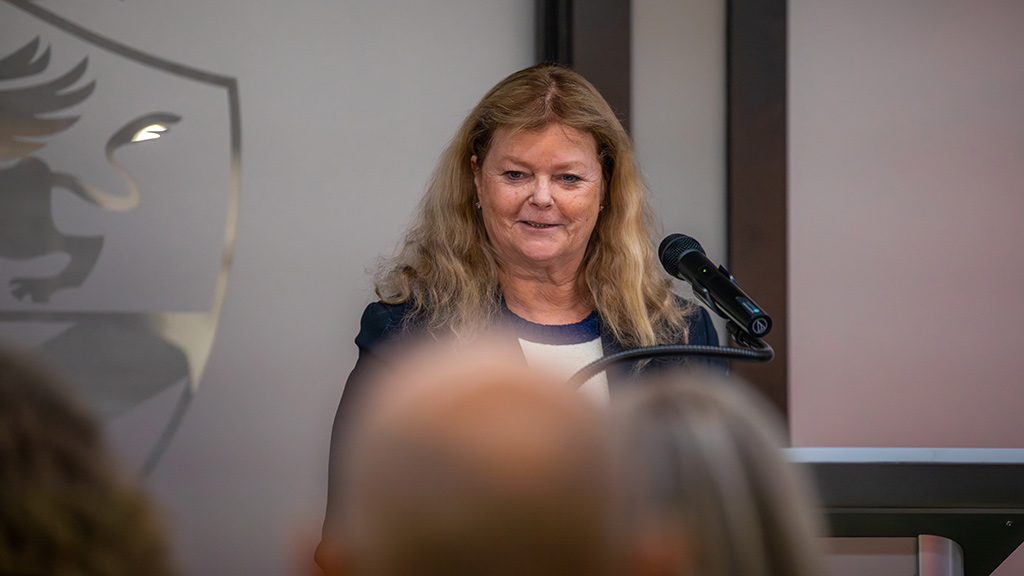
MSCND Program Director Luciana Soares, DCN, M.S., RDN, LDN, FAND spoke to that trailblazing. “You have all experienced learning, challenges, breakthroughs and incredible joy in growing as future dietitians together,” expressed Soares. “You studied together, learned together, supported each other – and your dedication and determination define this cohort.”
As student speaker at the graduate ceremony, Maite-Abigail Denis described some of the many things her cohort had learned, including how many carb exchanges are in one serving of protein (just one). She dedicated a portion of her speech to celebrating her and her classmates’ preceptors, the clinical professionals who guided them through real-world settings: “You helped us mature into what we’ll become and modeled what we want to become in the field of nutrition and dietetics. It’s a constantly evolving profession, and your mentorship will continue to shape our practice.”
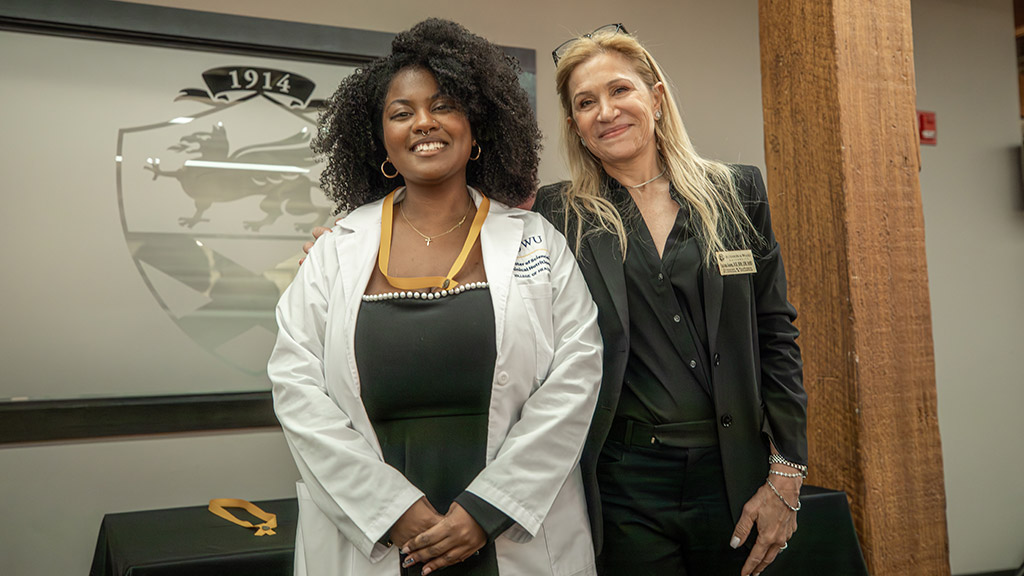
“There have been many moving parts, and it’s been a rocky road but has given us confidence,” Denis said of the MSCND program, concluding, “Now we all have the knowledge to effect that change and create a world you would love to live in.”
After the cohort received their pins and were guided by Professor Kara Cucinotta, D.C.N., M.S., RDN, LDN, CNSC in reciting the Clinical Nutrition and Dietetics Professional Oath, Soares sent them into the world with some final thoughts.
“I have watched you grow your knowledge, skills, confidence, communication, purpose and leadership,” she stated. “You’ve transformed into candidates ready to meet the complex needs of individuals and populations. It’s the beginning of your impact as RDs who have empathy, resilience and a deep understanding of what it means to care for people and help populations. May you continue with curiosity, compassion and the courage to shape the future of the profession.”
What It’s Like Being in JWU’s MSCND Program
Why Study Clinical Nutrition and Dietetics at JWU?
Maite-Abigail Denis ’25 M.S. originally wished to attend JWU as an undergraduate, but due to circumstances and proximity at the time she obtained her bachelor’s degree at another university. “It felt like a full-circle moment when I graduated and JWU launched this new program,” she said. “I especially loved the cross-section of both the clinical portion and also its ties into food — with JWU being so centered on culinary programs, it was the perfect marrying. I was always interested in food and baking but also the clinical, taking-care-of-others healthcare aspect.”
Highlights of the MSCND Program
Getting elected to speak at the pinning was a huge accomplishment for Denis (even more than passing the “nerve-wracking” final). “My classmates pretty much unanimously chose me to share our sentiment as a group to all who came to support us — to talk about our impact and how we’re looking to be active members in our community,” she shared. “That was definitely a great moment for me and nice way to sum up the program."
An unexpected highlight for Denis was getting to care for JWU’s 19 chickens on the Harborside Campus. “It was during summer when the campus was quiet, and it was one of many small but immersive activities for us,” she explained. “I also loved all of the community aspects of the program, like when we attended a health fair aimed toward the Black population in Providence; we got to speak with many community programs and initiatives and groups that offer services for affordable food, assisted living and more.”
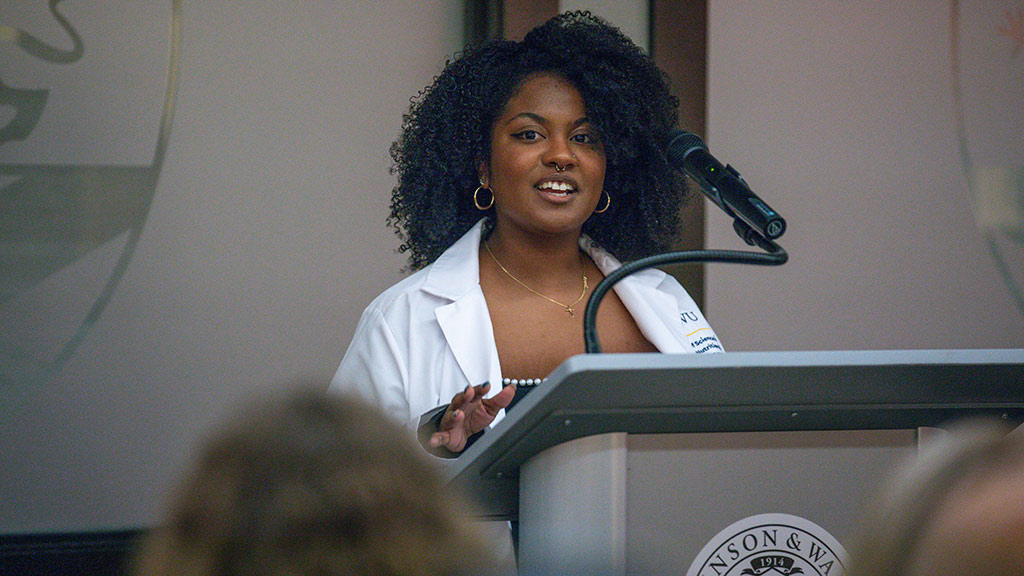
She continued, “JWU’s experiential learning was amazing. I really love the variation of the different sites we got to choose from; it wasn’t one-size-fits-all, and our experiences could differ from each other. I especially loved being able to engage with farming through Farm Fresh Rhode Island and being able to offer healthy produce to people.”
Applying JWU Skills to Improve People’s Nutrition
“One section of the program in the spring semester contained an emphasis on counseling, with a class teaching us different interviewing skills in addition to soft and hard skills like communication,” said Denis. “We got to apply them in a small practice that we put together.”
How that worked: “We requested that faculty and students in JWU’s community come engage with us in one-hour counseling sessions and bring their concerns and questions about nutrition. We sat down with them and were able to offer general advice and guide, taking the skills we learned and using them on real people, doing our best to offer as much in-depth information as possible. That was really nice.”
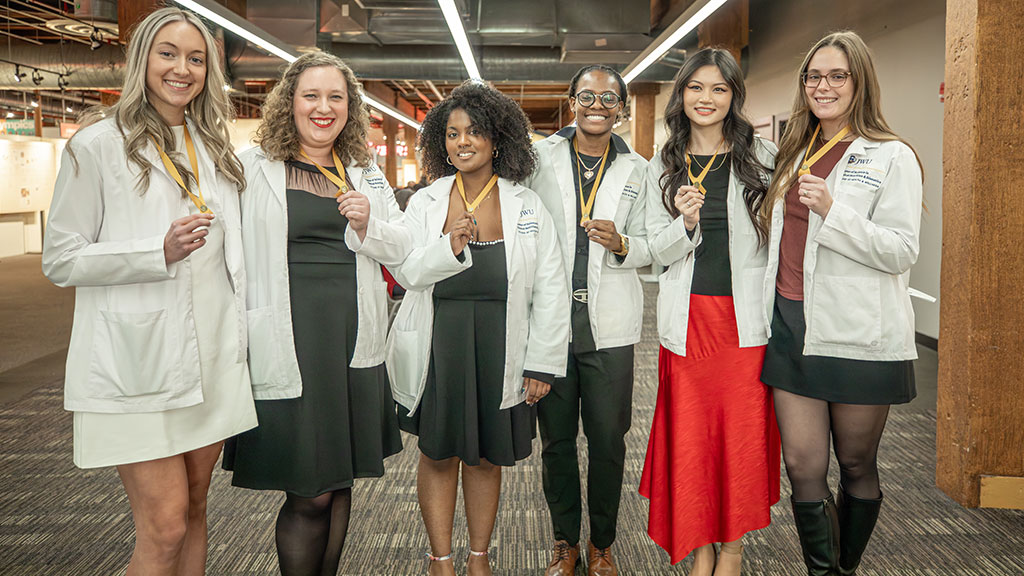
Denis didn’t sugarcoat the MSCND program experience. “It was super hard,” she expressed. “It was rigorous. We all got stressed, but no journey is easy if it’s going to be satisfying. Despite being very small, it was nice getting to know the cohort because we were all able to help each other. Our different personalities kind of melded together."
She concluded, "I think I made the right decision coming to JWU, and hopefully everything I’ve learned will turn into something I can carry with me the rest of my life.”
Growing Research Skills at JWU
All MSCND students need to complete a capstone project, and for hers, Denis studied the usefulness of intermittent fasting as secondary treatment for patients undergoing cancer treatments (specifically chemotherapy) to see if it could help patients better respond to treatments for solid tumors such as breast cancer and gastrointestinal (GI) cancer. “I looked at how intermittent fasting was used to essentially prevent things like nausea and fatigue,” she explained. “I studied how people respond to not eating before rounds, when they go through chemo, when side effects prevent them from eating well — all this can be taxing on the body, so I wanted to get as much data as possible.”
Despite few trials to draw from, Denis’ research was able to make some connections. “It seems that intermittent fasting has a benefit for these patients, showing a decrease in some associated risks and negative side effects in addition to chemo if people could stick to their regimen,” she explained. “I would apply this research to my MSCND clinicals. Clinicians who knew what I was researching would consult with me to share resources; it was really cool to be consulted even before earning my RD title.”
Denis’ Ultimate Goal
“I’d like to work with a pediatric population,” she shared. “My smaller goal is to attain Certified Diabetes Care and Education Specialist (CDCES) certification, especially dealing with adolescents who might have Type 1 diabetes.”
Why that’s important: “Kids are especially where I feel I can make a difference. I grew up in a community with a lot of food deserts, and that can negatively affect one of our most vulnerable pops (kids) who often can’t choose what’s on their plates. It’s made even worse by diabetes, so I hope to work in-patient with kids and affect their eating habits in a positive manner.”
MSCND Program Director’s Message to the Inaugural Class
“To our first MSCND graduating cohort: your growth in confidence, communication and professional readiness has been extraordinary,” Soares professed.
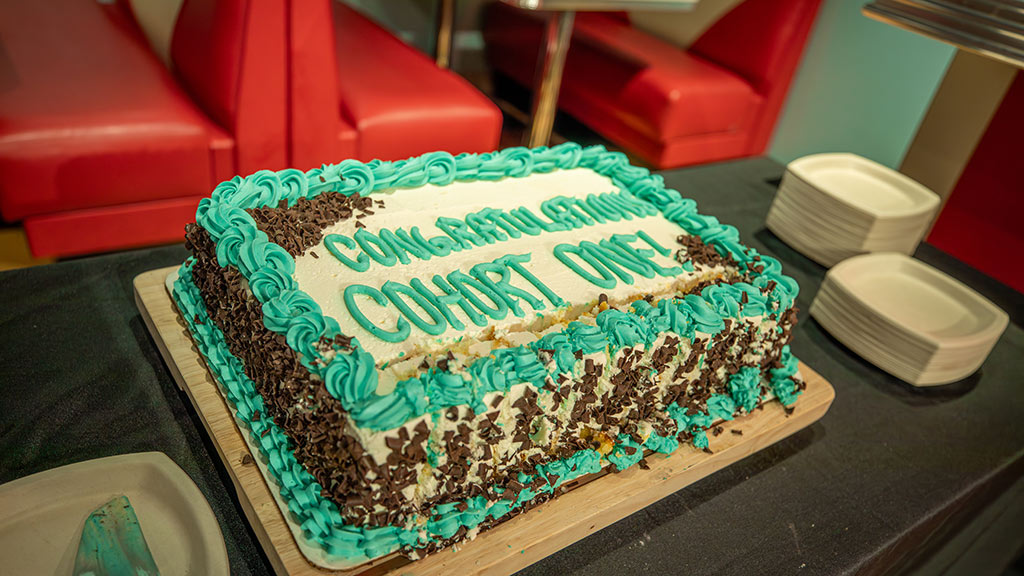
“I am so proud of you,” she continued. “You are prepared to lead the next generation of dietitians and elevate the health of the individuals and communities you will serve.”
Related Posts
Health & Wellness
Students
White Coats Mark Physician Assistant Students’ Next Step
Health & Wellness
Culinary
JWU Nursing Students Support Dementia Caregivers Through Respite Grant Event
Students
Culinary
Health & Wellness